
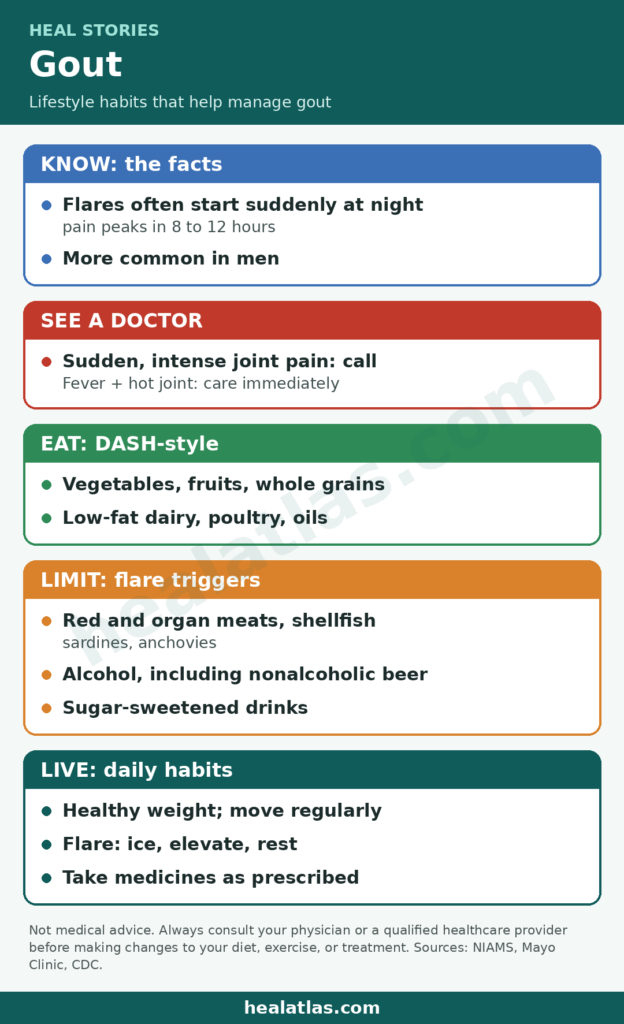
Gout causes sudden, painful flares in the joints, and daily habits can play a supporting role in managing it. This Heal Stories guide gathers what trusted health organizations say about food, drink and activity habits that support and help manage gout, alongside the care plan and any medicines your healthcare provider prescribes.
What it is
Gout is a type of arthritis caused by a buildup of uric acid crystals in a joint. It is more common in men; women usually develop it after menopause. Flares often start suddenly, frequently at night, and typically improve within a week or two. Possible triggers include certain foods, alcohol, some medications, trauma and illness. (NIAMS) Pain is likely to be most severe within the first 8 to 12 hours after a flare begins. (Mayo Clinic)
Signs that mean see a doctor
- Call your doctor if you have sudden, intense pain in a joint. Gout that goes untreated can lead to worsening pain and joint damage. (Mayo Clinic)
- Seek medical care immediately if you have a fever and a joint is hot and inflamed, which can be a sign of infection. (Mayo Clinic)
Prevention
NIAMS (page last reviewed December 2023) notes that lifestyle changes can help, but people with frequent flares or tophi usually need urate-lowering medicine as well; lifestyle changes alone are not enough for them. (NIAMS)
- Aim for a healthy weight with a reduced-calorie diet and more exercise if you are overweight. (NIAMS)
- Drink fewer alcoholic beverages, including nonalcoholic beer. (NIAMS)
- Avoid sugar-sweetened drinks. (NIAMS)
Food practices
NIAMS suggests a heart-healthy eating pattern such as the DASH diet, which is rich in vegetables, fruits, whole grains, low-fat dairy, poultry and oils. (NIAMS)
Foods to favor
- Vegetables, fruits and whole grains (NIAMS)
- Low-fat dairy products (NIAMS)
- Poultry and oils in place of red meat (NIAMS)
Foods to limit
- Red meat and organ meats, such as liver (NIAMS) (Mayo Clinic)
- Purine-rich seafood: shellfish, sardines and anchovies; Mayo Clinic also lists mussels, scallops, trout and tuna (NIAMS) (Mayo Clinic)
- Alcohol, especially beer (NIAMS) (Mayo Clinic)
- Drinks sweetened with fruit sugar (fructose) and other sugar-sweetened drinks (NIAMS) (Mayo Clinic)
A sample day of meals
An example day built on the DASH-style pattern above that leaves out every food listed to limit (no red or organ meat, shellfish, sardines, anchovies, trout, tuna, alcohol or sugary drinks). Needs vary; ask your healthcare team or a dietitian. (NIAMS)
| Meal | Example |
|---|---|
| Breakfast | Oatmeal with sliced banana and low-fat milk |
| Lunch | Grilled chicken salad with mixed vegetables and olive oil, plus a whole-grain roll |
| Snack | Low-fat yogurt and an apple |
| Dinner | Roast turkey breast with brown rice, broccoli and carrots |
| Drinks | Water through the day; no alcohol or sugary drinks |
Exercise and lifestyle habits
Regular exercise supports weight loss as part of gout care. (NIAMS) During a flare, NIAMS suggests applying ice, elevating the joint and resting it. (NIAMS) Between flares, adults generally need at least 150 minutes a week of moderate-intensity activity plus muscle strengthening on 2 or more days. (CDC)
| Habit | How often | How intense |
|---|---|---|
| Moderate activity such as brisk walking or cycling | Build toward 150 minutes a week between flares | Moderate |
| Muscle strengthening | 2 or more days a week | All major muscle groups |
| During a flare: ice, elevate, rest | Until the flare settles | Rest the joint |
| Healthy weight | Ongoing | Reduced-calorie diet if overweight |
Sources for the table: (CDC) (NIAMS)
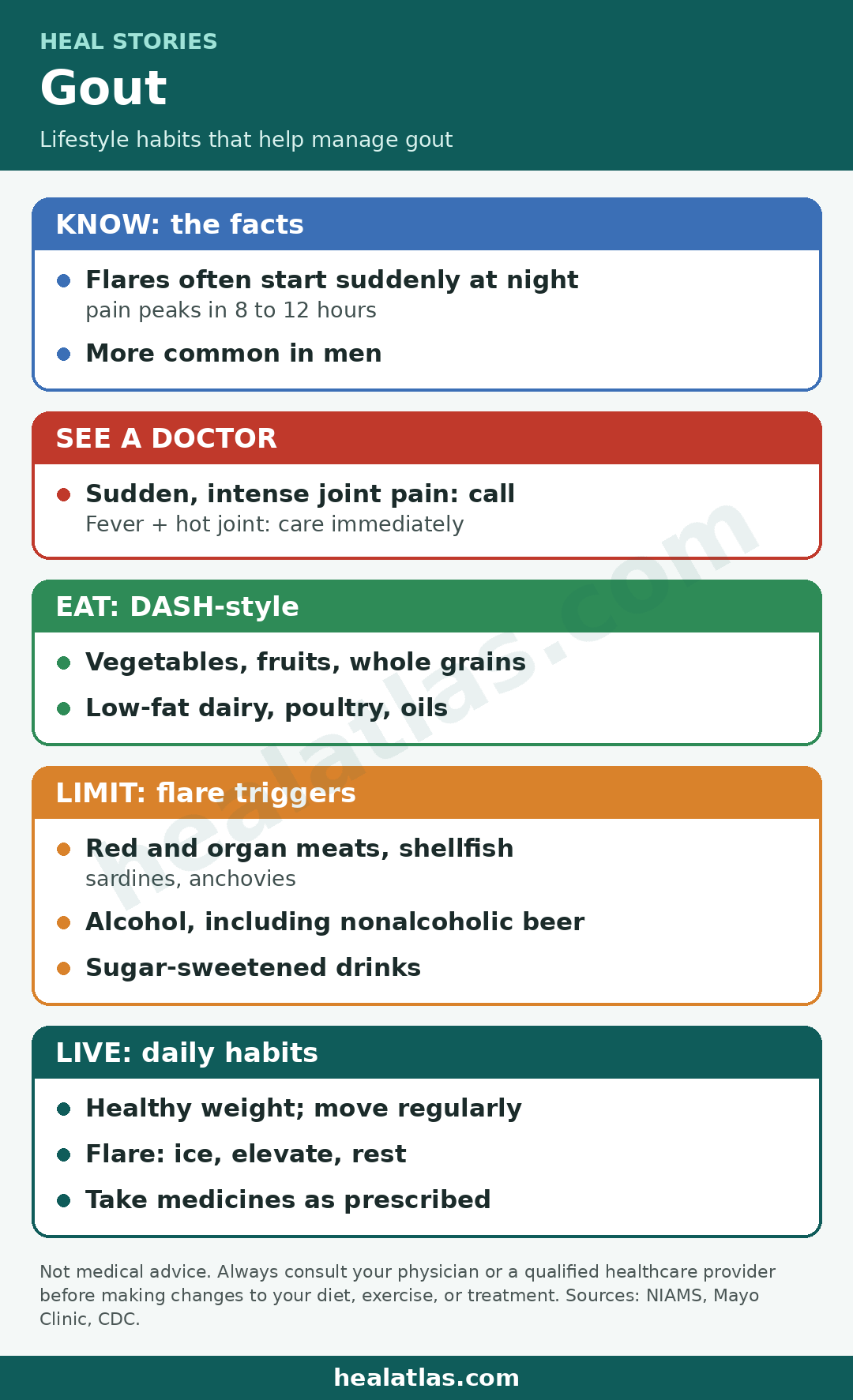
Infographic
Related on HealAtlas: Tart cherry juice: what research shows · Heal Stories: Obesity and Weight Management · Heal Stories: High Blood Pressure
FAQ
What foods should I limit with gout?
Limit red and organ meats; shellfish, sardines and anchovies; alcohol, especially beer; and sugar-sweetened drinks. Mayo Clinic also lists mussels, scallops, trout and tuna. (NIAMS) (Mayo Clinic)
Is there a diet that helps gout?
NIAMS suggests a heart-healthy pattern such as the DASH diet: vegetables, fruits, whole grains, low-fat dairy, poultry and oils. (NIAMS)
Is nonalcoholic beer okay with gout?
NIAMS advises drinking fewer alcoholic beverages, including nonalcoholic beer. (NIAMS)
What should I do during a gout flare?
NIAMS suggests applying ice, elevating the joint and resting it, and following the treatment plan from your healthcare provider. (NIAMS)
Can lifestyle changes alone manage gout?
For people with frequent flares or tophi, lifestyle changes alone are usually not enough, and urate-lowering medicine is used alongside them. (NIAMS)
When should I see a doctor about gout?
Call your doctor for sudden, intense joint pain. Seek medical care immediately if you have a fever and a joint is hot and inflamed. (Mayo Clinic)
Sources
- CDC. Adult Activity: An Overview. https://www.cdc.gov/physical-activity-basics/guidelines/adults.html (accessed Oct 25, 2026)
- NIAMS (NIH). Gout: Overview. https://www.niams.nih.gov/health-topics/gout (accessed Oct 25, 2026)
- NIAMS (NIH). Gout: Diagnosis, Treatment, and Steps to Take. https://www.niams.nih.gov/health-topics/gout/diagnosis-treatment-and-steps-to-take (accessed Oct 25, 2026)
- Mayo Clinic. Gout – Symptoms and causes. https://www.mayoclinic.org/diseases-conditions/gout/symptoms-causes/syc-20372897 (accessed Oct 25, 2026)