
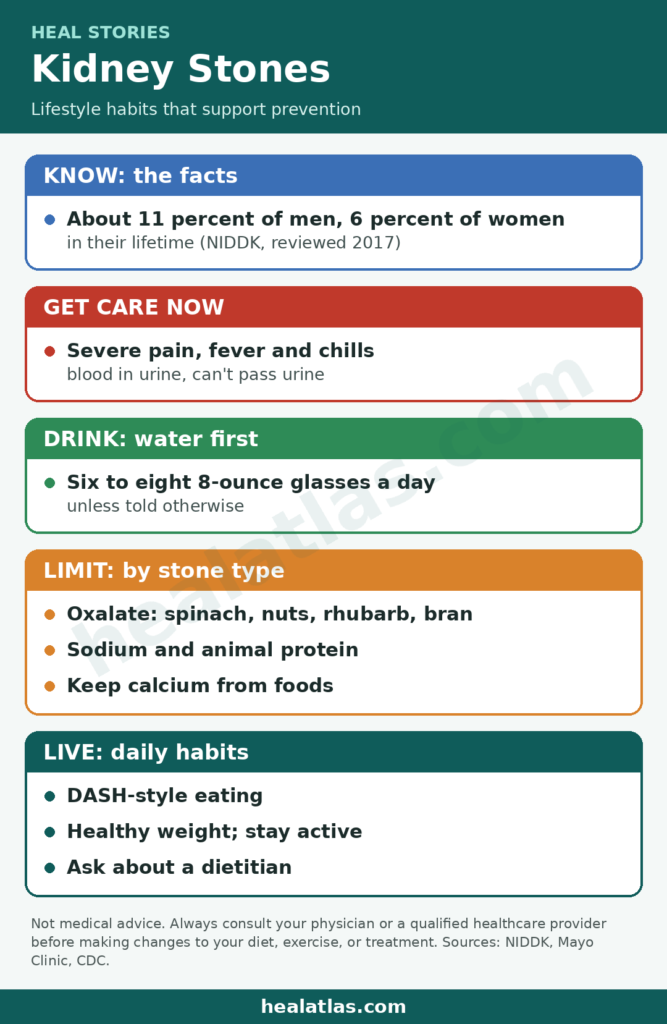
Kidney stones can be extremely painful, and people who have had one are more likely to have another. This Heal Stories guide gathers what trusted health organizations say about drinking, eating and lifestyle habits that support prevention and help manage kidney stone risk, alongside the care plan from your healthcare provider.
What it is
Kidney stones are hard, pebble-like pieces of material that form in one or both kidneys when high levels of certain minerals are in your urine. According to NIDDK (page last reviewed May 2017), about 11 percent of men and 6 percent of women in the United States have kidney stones at least once during their lifetime. Calcium stones are the most common type. (NIDDK)
Symptoms include sharp pains in your back, side, lower abdomen or groin; pink, red or brown blood in your urine; a constant need to urinate; pain while urinating; being unable to urinate or only passing a small amount; and cloudy or bad-smelling urine. Nausea, vomiting, fever and chills can also occur. (NIDDK)
Signs that mean see a doctor now
- Get care right away for pain so severe you can’t sit still or find a comfortable position, pain with nausea and vomiting, pain with fever and chills, blood in your urine, or trouble passing urine. (Mayo Clinic)
- NIDDK advises seeing a health care professional right away for any of the kidney stone symptoms listed above, because they may mean a stone or a more serious condition. (NIDDK)
- Make an appointment if you have any other signs and symptoms that worry you. (Mayo Clinic)
Prevention
- Drink enough liquid, mainly water. This is the most important thing you can do to prevent kidney stones. Many health care professionals recommend six to eight 8-ounce glasses a day unless you have kidney failure; ask how much is right for you. (NIDDK)
- Follow a DASH-style eating plan. Studies have shown the DASH diet can reduce the risk of kidney stones. (NIDDK)
- Aim for a healthy weight. Being overweight increases the risk of kidney stones. (NIDDK)
- Find out your stone type. Food changes depend on the type of stone you had, and a dietitian who specializes in kidney stone prevention can help. (NIDDK) (NIDDK)
Food practices
If you’ve had calcium oxalate stones, NIDDK suggests reducing oxalate and sodium, limiting animal protein, and getting enough calcium from foods. Calcium from food does not increase your chance of calcium oxalate stones; in the right amounts it can block other substances that cause stones. (NIDDK) (NIDDK) Talk with your doctor before taking calcium supplements. (Mayo Clinic)
Foods to favor
- Water through the day (NIDDK)
- Calcium from low-oxalate foods, such as calcium-fortified juices, cereals and breads, some vegetables and some beans (NIDDK)
- Plant proteins in place of some meat: beans, dried peas and lentils, which are high in protein and low in oxalate (NIDDK)
Foods to limit
- High-oxalate foods (for calcium oxalate stones): nuts and nut products, peanuts, rhubarb, spinach and wheat bran. Mayo Clinic also lists beets, okra, Swiss chard, sweet potatoes, tea, chocolate, black pepper and soy products. (NIDDK) (Mayo Clinic)
- Sodium: found in many canned, packaged and fast foods, condiments, seasonings and meats (NIDDK)
- Animal protein: beef, chicken, pork (especially organ meats), eggs, fish and shellfish, and dairy; you still need enough total protein (NIDDK)
A sample day of meals
An example day for someone advised to cut oxalate, sodium and animal protein, with none of the foods listed to limit except a small portion of chicken. Needs depend on your stone type; ask your health care team or a dietitian. (NIDDK)
| Meal | Example |
|---|---|
| Breakfast | Calcium-fortified cereal (not bran) with blueberries and calcium-fortified orange juice |
| Lunch | Lentil and vegetable soup made without added salt, with carrots, cauliflower and rice |
| Snack | An apple and a glass of water |
| Dinner | Small portion of grilled chicken with brown rice, green beans and a side of beans |
| Drinks | Water through the day |
Exercise and lifestyle habits
Because being overweight raises kidney stone risk, regular activity can support a healthy weight. (NIDDK) Adults generally need at least 150 minutes a week of moderate activity plus muscle strengthening on 2 or more days. (CDC) Keep drinking water during and after activity, since enough liquid is the most important habit for prevention. (NIDDK)
| Habit | How often | How intense |
|---|---|---|
| Moderate activity such as brisk walking | Build toward 150 minutes a week | Moderate |
| Muscle strengthening | 2 or more days a week | All major muscle groups |
| Drink water | Through the day, more when active | Six to eight 8-ounce glasses unless told otherwise |
Sources for the table: (CDC) (NIDDK)
Infographic

Related on HealAtlas: Heal Stories: High Blood Pressure · Calcium and vitamin D pills and fractures · Heal Stories: Obesity and Weight Management
FAQ
How much water should I drink to prevent kidney stones?
Many health care professionals recommend six to eight 8-ounce glasses a day unless you have kidney failure. Ask how much is right for you. (NIDDK)
Should I avoid calcium if I’ve had a calcium stone?
No. Calcium from food does not increase your chance of calcium oxalate stones and can help block substances that cause them. Talk with your doctor before taking calcium supplements. (NIDDK) (NIDDK) (Mayo Clinic)
Which foods are high in oxalate?
NIDDK lists nuts and nut products, peanuts, rhubarb, spinach and wheat bran. Mayo Clinic adds beets, okra, Swiss chard, sweet potatoes, tea, chocolate, black pepper and soy products. (NIDDK) (Mayo Clinic)
Does salt affect kidney stones?
Yes. Your chance of developing kidney stones increases when you eat more sodium, which is in many canned, packaged and fast foods. (NIDDK)
How common are kidney stones?
According to NIDDK (page last reviewed May 2017), about 11 percent of men and 6 percent of women in the U.S. have kidney stones at least once in their lifetime. (NIDDK)
When should I get care right away?
Get care right away for pain so severe you can’t sit still, pain with nausea and vomiting or with fever and chills, blood in your urine, or trouble passing urine. (Mayo Clinic)
Sources
- CDC. Adult Activity: An Overview. https://www.cdc.gov/physical-activity-basics/guidelines/adults.html (accessed Oct 25, 2026)
- NIDDK (NIH). Definition & Facts for Kidney Stones. https://www.niddk.nih.gov/health-information/urologic-diseases/kidney-stones/definition-facts (accessed Oct 25, 2026)
- NIDDK (NIH). Symptoms & Causes of Kidney Stones. https://www.niddk.nih.gov/health-information/urologic-diseases/kidney-stones/symptoms-causes (accessed Oct 25, 2026)
- NIDDK (NIH). Eating, Diet, & Nutrition for Kidney Stones. https://www.niddk.nih.gov/health-information/urologic-diseases/kidney-stones/eating-diet-nutrition (accessed Oct 25, 2026)
- NIDDK (NIH). Treatment for Kidney Stones. https://www.niddk.nih.gov/health-information/urologic-diseases/kidney-stones/treatment (accessed Oct 25, 2026)
- Mayo Clinic. Kidney stones – Symptoms and causes. https://www.mayoclinic.org/diseases-conditions/kidney-stones/symptoms-causes/syc-20355755 (accessed Oct 25, 2026)