

Type 2 diabetes is a lifelong condition, and healthy habits are one important part of managing it. This Heal Stories guide gathers what trusted health organizations say about food, activity and lifestyle habits that support blood glucose management. These habits work alongside the treatment plan and medicines your healthcare team prescribes, not in place of them.
What it is
Type 2 diabetes, the most common type of diabetes, occurs when your blood glucose, also called blood sugar, is too high because your body doesn’t make enough insulin or doesn’t use insulin well. You are more likely to develop it if you are age 45 or older, have a family history of diabetes, or have overweight or obesity. (NIDDK) CDC’s National Diabetes Statistics Report estimates that 40.1 million people in the United States had diagnosed or undiagnosed diabetes in 2023, about 12.0% of the population. (CDC)
Symptoms often come on slowly and may include more thirst, more urination, more hunger, tiredness, blurred vision, slow-healing sores, frequent infections, and numbness or tingling in the hands or feet. (Mayo Clinic)
Signs that mean get help
- Severe low blood glucose is an emergency. If blood glucose drops very low you may lose consciousness or have a seizure, and it needs to be treated right away. People who give glucagon should call 911 right away afterward, or call 911 if no glucagon kit is available. (NIDDK)
- Know the milder signs of low blood glucose, such as feeling shaky, hungry, tired, dizzy, confused or irritable, a fast heartbeat, or a headache, especially if you take insulin or certain diabetes medicines. Ask your care team how to treat them. (NIDDK)
- Make an appointment with your healthcare professional if you have any symptoms of type 2 diabetes. (Mayo Clinic)
Everyday habits for managing diabetes
If you have prediabetes rather than diabetes, see Heal Stories: Prediabetes.
Healthy living may help keep your blood pressure, cholesterol and blood glucose in the ranges your health care professional recommends, and may help prevent or delay diabetes-related problems. (NIDDK)
- Follow your meal plan and ask your health care team when to eat, since the best timing can depend on your diabetes medicines and activity. (NIDDK)
- Get regular physical activity and don’t sit for long periods: get up every 30 minutes and move for a few minutes. (NIDDK) (Mayo Clinic)
- Get enough sleep and quit smoking or using tobacco products. (NIDDK)
- Aim for a healthy weight. If you have overweight or obesity, a healthy meal plan with regular activity may help you reach and maintain a healthy weight. (NIDDK)
- Keep taking your prescribed medicines. If diet and exercise aren’t enough to manage blood sugar, diabetes medicines or insulin therapy may help; talk with your care team before making any change. (Mayo Clinic)
Food practices
The plate method helps you control portions without counting: using a 9-inch plate, fill half with nonstarchy vegetables, one quarter with high-fiber carb foods, and one quarter with protein foods. If you take insulin, carb counting can help you know how much insulin to take. (NIDDK)
Foods to favor
- Nonstarchy vegetables: leafy greens, peppers, carrots and green beans (half the plate) (NIDDK)
- High-fiber carb foods: brown rice, whole grains, beans and fruits (a quarter of the plate) (NIDDK)
- Protein foods: lean meats, fish, dairy, or tofu and other soy products (a quarter of the plate) (NIDDK)
- Drinks with little or no added sugar: water, low-fat or non-fat milk, and unsweetened tea, coffee or sparkling water (NIDDK)
Foods to limit
- Foods high in saturated fat and foods high in sodium (NIDDK)
- Sugary foods such as cookies and cakes, and sweet drinks such as soda, juice, flavored coffee and sports drinks (NIDDK)
- Alcohol: with insulin or certain diabetes medicines it can make blood glucose drop too low. If you drink, eat food when you do and check your blood glucose afterward. (NIDDK)
A sample day of meals
An example day built with the plate method and none of the foods listed to limit. Your meal plan, carb amounts and timing should come from your health care team, based on your medicines. (NIDDK)
| Meal | Example |
|---|---|
| Breakfast | Vegetable omelet with peppers and leafy greens, a slice of whole-grain toast, and berries |
| Lunch | Half plate leafy greens and carrots, a quarter brown rice, a quarter grilled chicken |
| Snack | Non-fat plain yogurt |
| Dinner | Baked fish with green beans and a small serving of beans |
| Drinks | Water, unsweetened tea or sparkling water |
Exercise and lifestyle habits
Ask your health care team which activities are safe for you, and whether to eat before, during or after physical activity, since some medicines such as sulfonylureas or insulin can make blood glucose drop too low during activity. (NIDDK)
| Habit | How often | How intense |
|---|---|---|
| Aerobic activity (walking, dancing, swimming) | At least 150 minutes a week; about 30 minutes on most days | Moderate: you breathe harder |
| Strength or resistance training | 2 times a week | Weights, wall pushups or arm raises |
| Balance and stretching | 2 or 3 times a week | Gentle; check safety if you have nerve or vision problems |
| Break up sitting | Every 30 minutes | Move for a few minutes |
Sources for the table: (NIDDK) (Mayo Clinic)
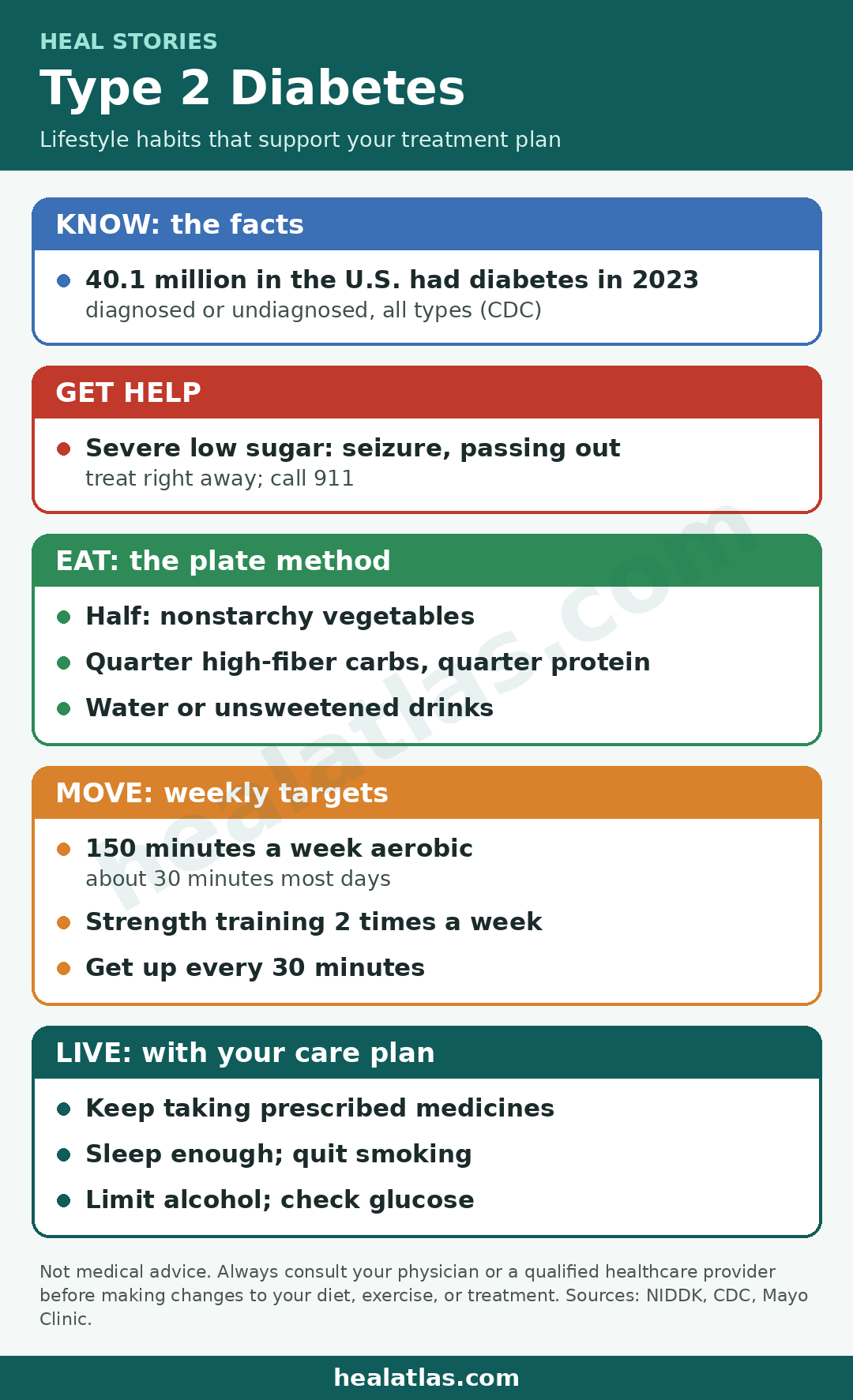
Infographic
Related on HealAtlas: Heal Stories: Prediabetes · Heal Stories: Obesity and Weight Management · Soleus pushup and blood sugar
FAQ
Can lifestyle changes replace diabetes medicine?
No. Healthy eating and activity support blood glucose management alongside your treatment plan. If diet and exercise aren’t enough, medicines or insulin may help; talk with your care team before any change. (Mayo Clinic) (NIDDK)
What is the plate method?
On a 9-inch plate, fill half with nonstarchy vegetables, a quarter with high-fiber carb foods such as brown rice or beans, and a quarter with protein foods. (NIDDK)
How much exercise should I aim for?
NIDDK says most adults should try to get at least 150 minutes of moderate activity a week, plus strength training two times a week and balance and stretching two or three times a week. (NIDDK)
What are the signs of low blood glucose?
Feeling shaky, hungry, tired, dizzy, confused or irritable, a fast heartbeat, or a headache. Severe low blood glucose can cause seizures or loss of consciousness and needs treatment right away. (NIDDK)
Can I drink alcohol with type 2 diabetes?
Limit alcohol. With insulin or certain medicines it can cause low blood glucose. If you drink, eat food and check your blood glucose afterward, and talk with your care team. (NIDDK)
How common is diabetes?
CDC estimates 40.1 million people in the U.S. had diagnosed or undiagnosed diabetes of any type in 2023, about 12.0% of the population. Type 2 is the most common type. (CDC) (NIDDK)
Explore more on HealAtlas: healthy Bengali food (East Indian healing foods) · healthy Gujarati food (Western India)
Sources
- NIDDK (NIH). Type 2 Diabetes. https://www.niddk.nih.gov/health-information/diabetes/overview/what-is-diabetes/type-2-diabetes (accessed Oct 25, 2026)
- NIDDK (NIH). Healthy Living with Diabetes. https://www.niddk.nih.gov/health-information/diabetes/overview/diet-eating-physical-activity (accessed Oct 25, 2026)
- NIDDK (NIH). Low Blood Glucose (Hypoglycemia). https://www.niddk.nih.gov/health-information/diabetes/overview/preventing-problems/low-blood-glucose-hypoglycemia (accessed Oct 25, 2026)
- CDC. National Diabetes Statistics Report. https://www.cdc.gov/diabetes/php/data-research/index.html (accessed Oct 25, 2026)
- Mayo Clinic. Type 2 diabetes – Symptoms and causes. https://www.mayoclinic.org/diseases-conditions/type-2-diabetes/symptoms-causes/syc-20351193 (accessed Oct 25, 2026)