
World Healing Foods
Traditional healthy foods from regions around the world, and what trusted health organizations say about them. Each guide covers signature foods and dishes, the strength of the evidence, and watch-outs such as salt, saturated fat and sugar. Foods may support an overall healthy eating pattern; they are not medicine.
Guides

South Indian
Idli, sambar, rasam, curd rice and millets: what research says, plus salt and fat watch-outs.
Read the guide →
North Indian
Dal, rajma, chana, whole-wheat roti and dahi, with notes on ghee, sweets and salt.
Read the guide →
East Indian (Bengali)
Fish, masoor dal, leafy greens and panta bhat, with notes on sweets and fried snacks.
Read the guide →
Western India (Gujarat, Maharashtra, Goa)
Dals, bajra and jowar millets, dhokla and Goan fish, with sugar and farsan watch-outs.
Read the guide →
Japanese
Fish, soy, seaweed, green tea and vegetables, plus the soy sauce sodium watch-out.
Read the guide →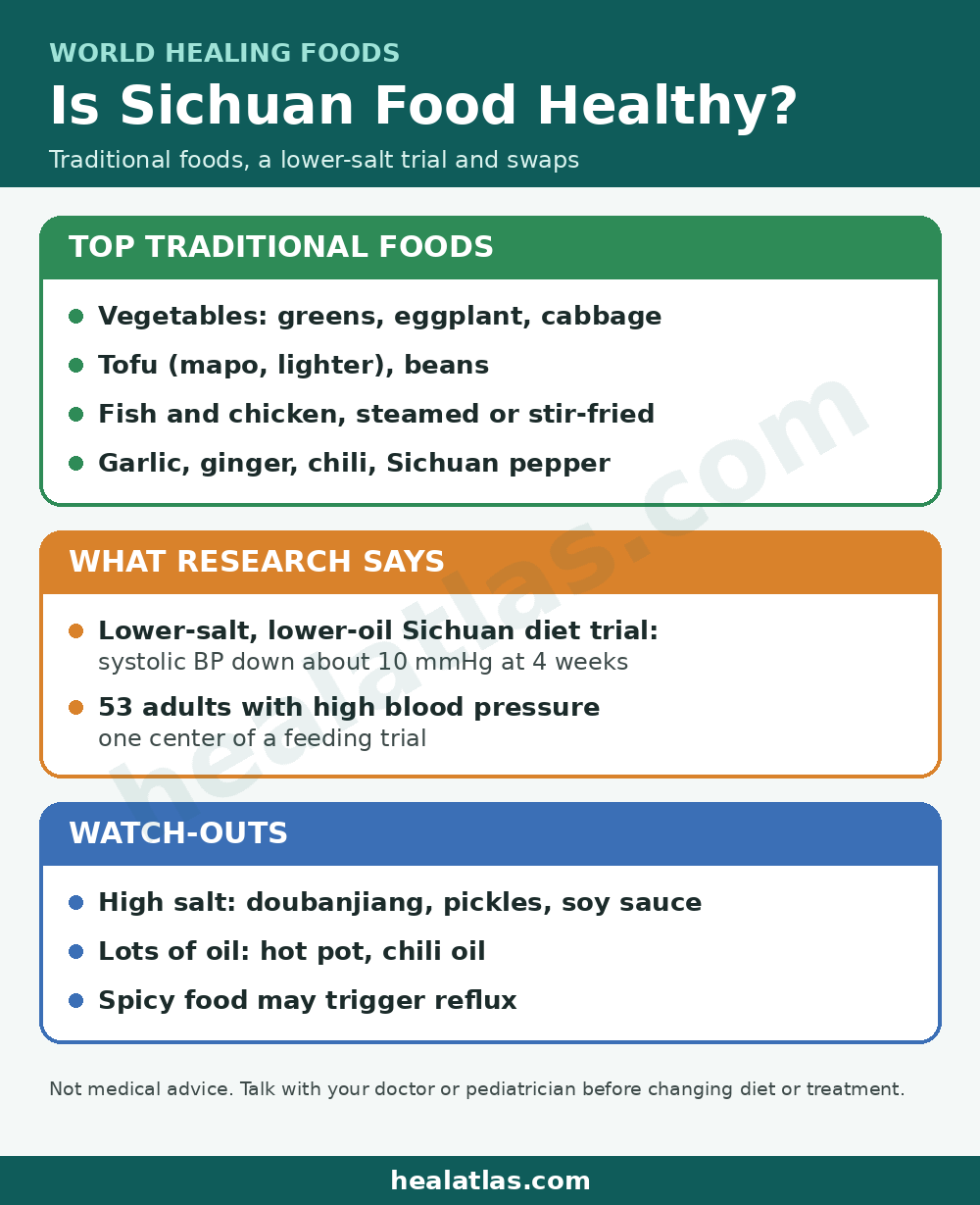
Sichuan
Is Sichuan food healthy? A lower-salt Sichuan diet trial, plus oil and salt swaps.
Read the guide →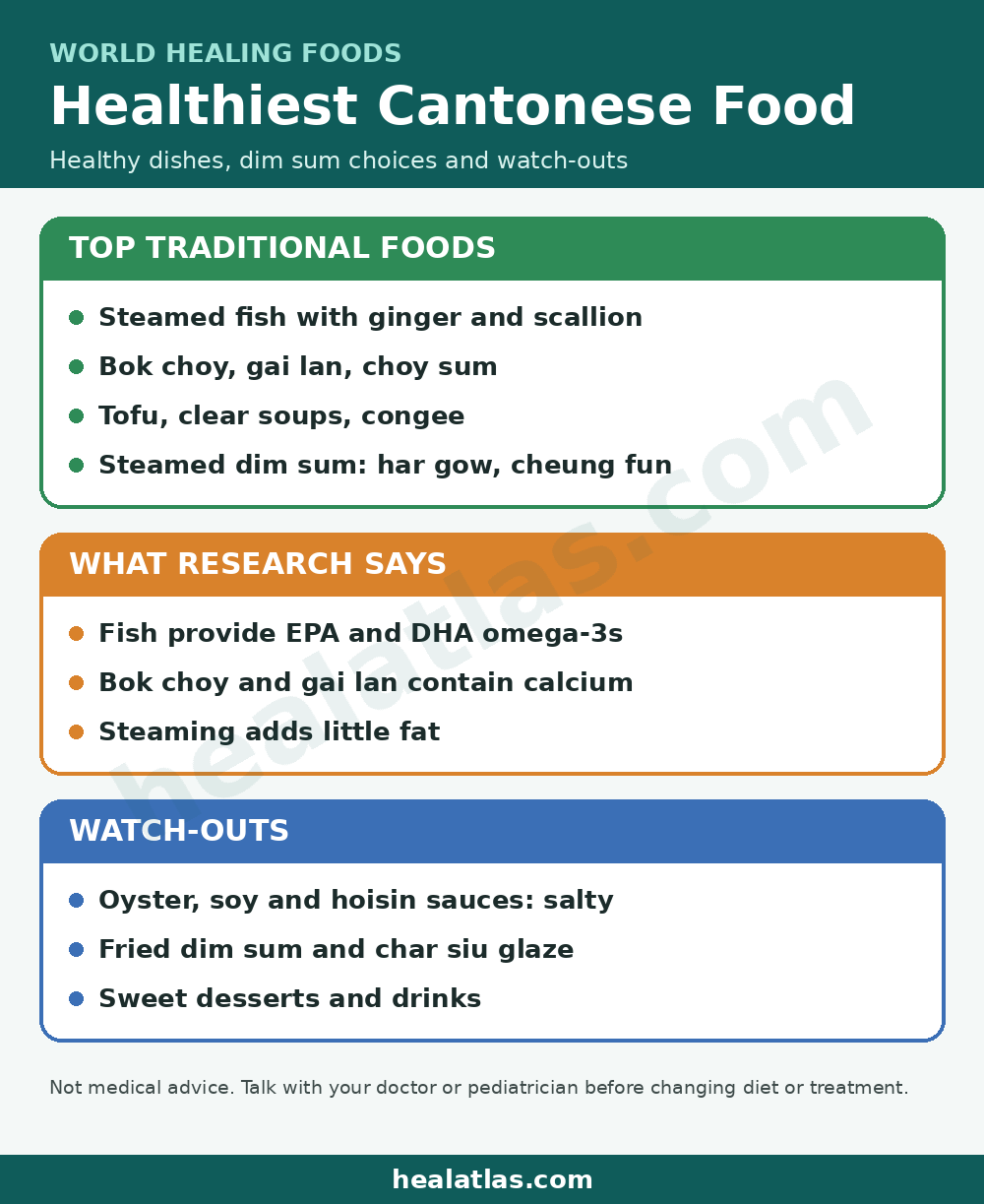
Cantonese
Steamed fish with ginger and scallion, greens, tofu and healthy dim sum choices.
Read the guide →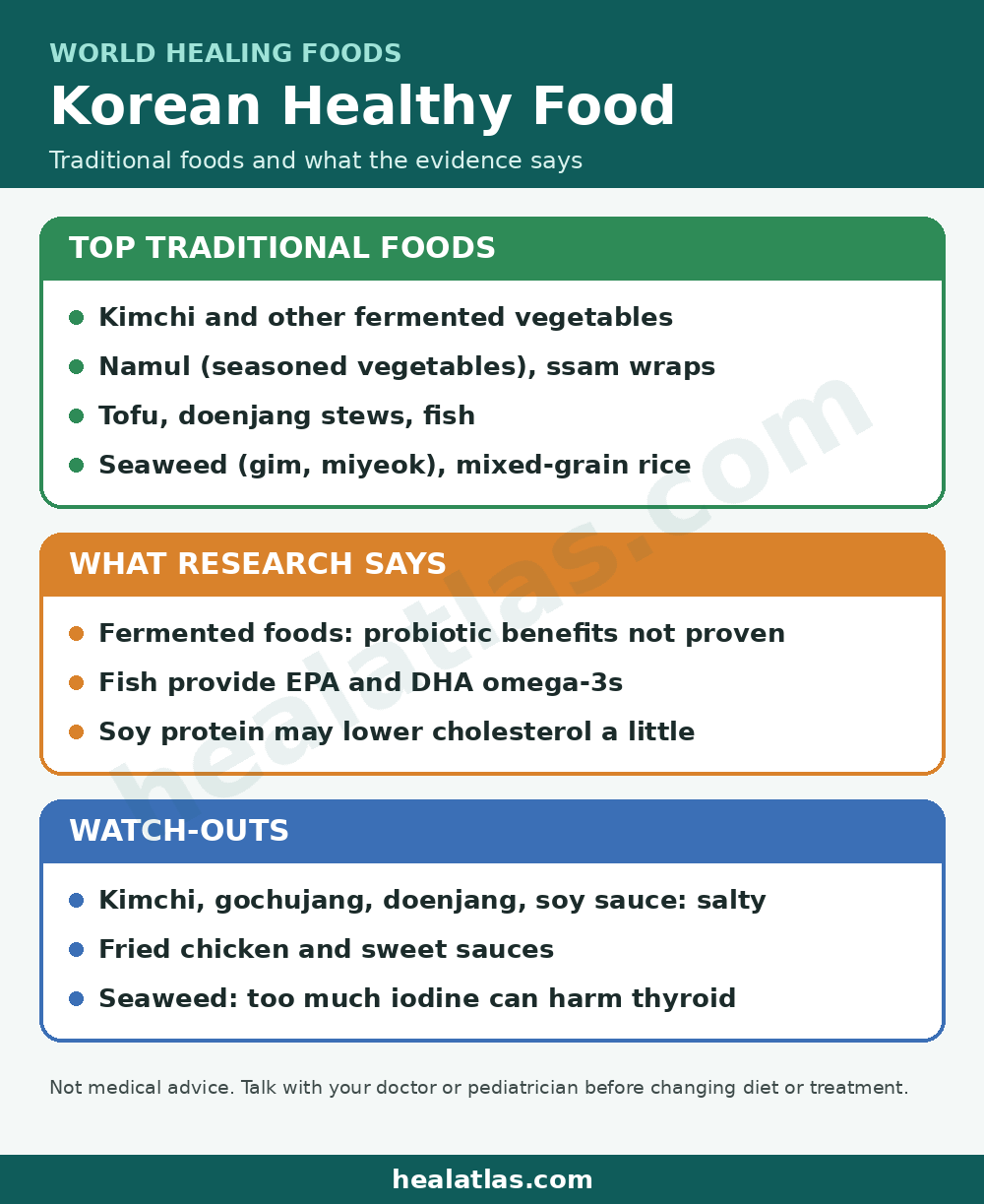
Korean
Kimchi, namul, tofu, fish and seaweed, with sodium watch-outs for pastes and sauces.
Read the guide →
Thai
Herb-rich tom yum, larb and stir-fried greens, plus fish sauce, coconut milk and sugar tips.
Read the guide →
Mediterranean
A Mediterranean diet foods list by region: Greek, Italian, Spanish and Levantine staples.
Read the guide →
Slovenian and Central European
Buckwheat, barley and beans, sauerkraut, pumpkin seed oil, walnuts and rye bread.
Read the guide →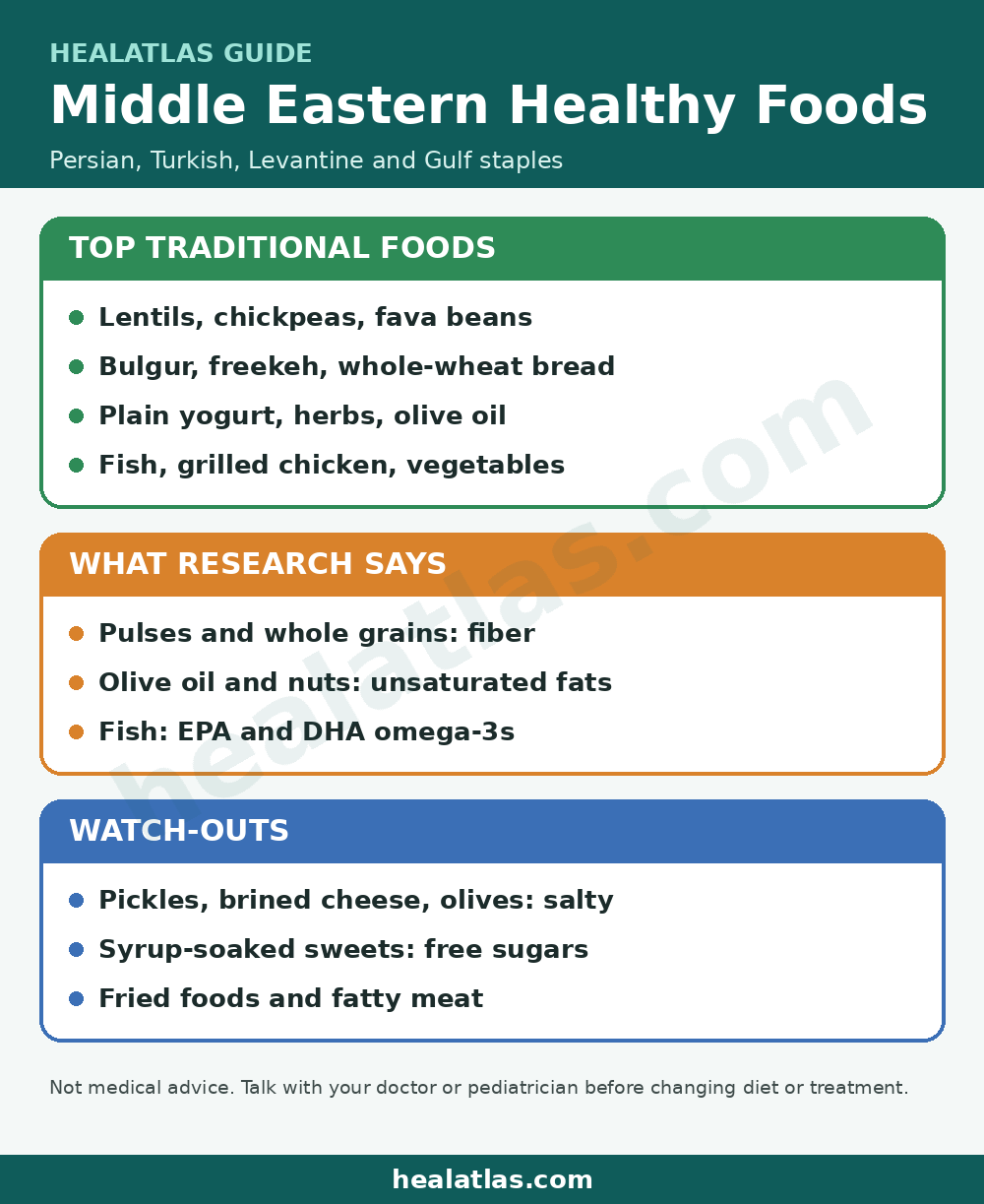
Middle Eastern
Persian, Turkish, Levantine and Gulf staples: lentils, chickpeas, bulgur and yogurt.
Read the guide →
African (West, East, North)
Beans, millet, leafy greens, okra and fish, with palm oil and bouillon notes.
Read the guide →
Latin American
Beans, corn, quinoa, avocado and fish from Mexico, Central and South America.
Read the guide →


Pakistani and Bangladeshi
Dal, chana, whole-wheat roti, fish and greens, with ghee and salt tips.
Read the guide →

Indonesian
Tempeh, tofu, gado-gado, fish and red rice, with soy sauce and coconut notes.
Read the guide →

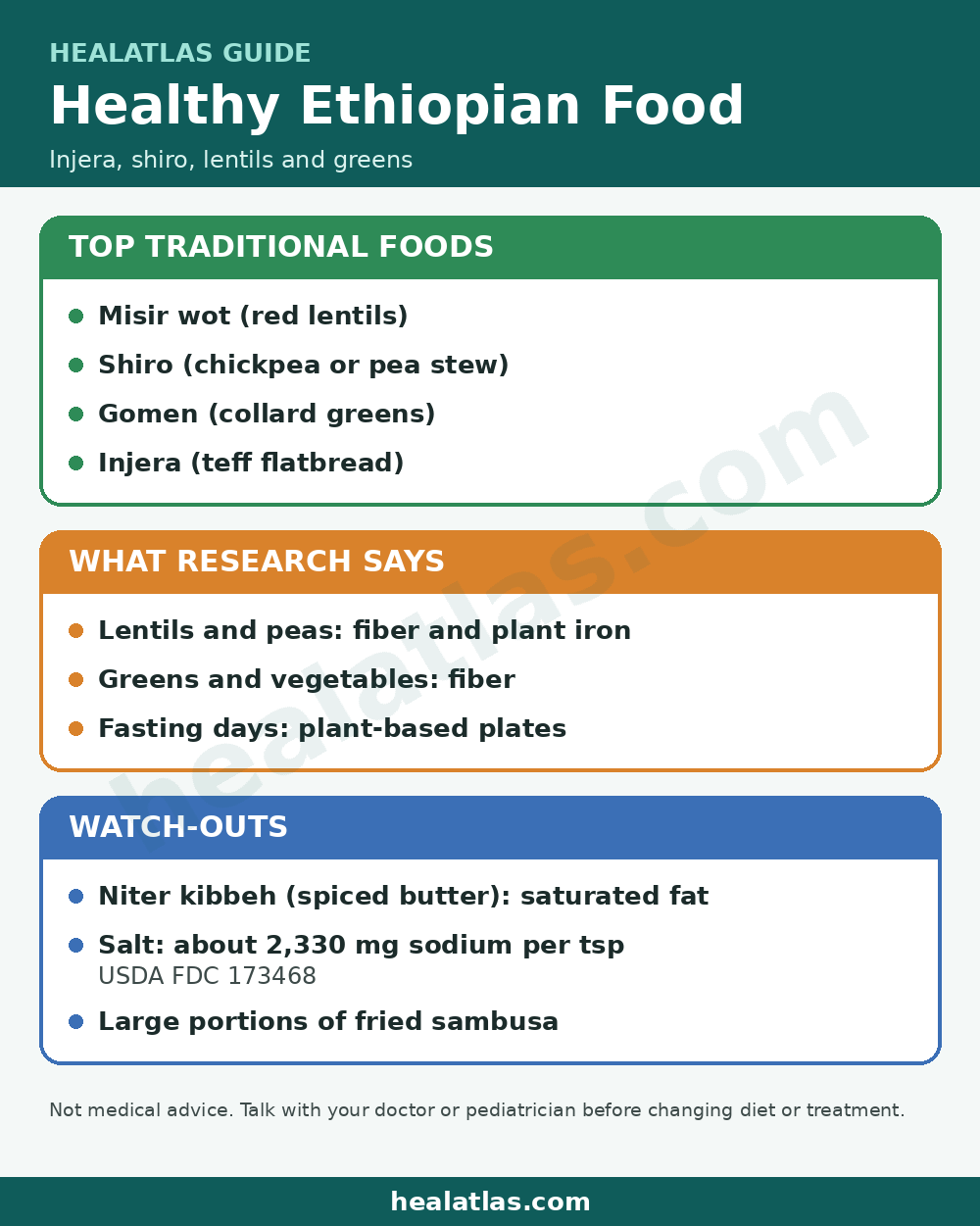
Ethiopian
Injera, shiro, misir wot and gomen, with fasting-day plates and butter notes.
Read the guide →

How we judge the evidence
We cite NIH, WHO, CDC, Mayo Clinic and similar sources for every health claim and say plainly when evidence is limited. For example, WHO advises getting most carbohydrates from whole grains, vegetables, fruits and pulses, and keeping sodium under 2,000 mg a day for adults. (WHO) (WHO)
Explore more
FAQ
What are world healing foods?
Our name for traditional foods from regional cuisines that fit a healthy eating pattern, such as pulses, whole grains, vegetables, fish and fermented foods. WHO advises basing carbohydrates on whole grains, vegetables, fruits and pulses. (WHO)
Can traditional foods replace medicine?
No. Foods may support overall health as part of a balanced diet, but they do not replace treatment. Do not stop or change any medicine without talking to your healthcare provider. (WHO)
How do I choose healthier dishes from any cuisine?
Build meals around whole grains, vegetables, fruits and pulses, favor unsaturated fats such as olive oil and fish over butter and ghee, and use herbs and spices instead of extra salt. (WHO) (Mayo Clinic)
Are fermented foods like kimchi and sauerkraut probiotics?
They can contain live microbes, but NIH notes that probiotic benefits are strain-specific and not established for most uses. (NIH NCCIH)
Which traditional foods are high in salt?
Pickles, soy sauce, miso, sauerkraut and cured meats are common examples. WHO recommends adults keep sodium under 2,000 mg a day; one tablespoon of soy sauce can have more than 800 mg. (WHO) (Mayo Clinic)
Sources
- Mayo Clinic. Sodium: How to tame your salt habit. https://www.mayoclinic.org/healthy-lifestyle/nutrition-and-healthy-eating/in-depth/sodium/art-20045479 (accessed Oct 25, 2026)
- World Health Organization. Healthy diet fact sheet. https://www.who.int/news-room/fact-sheets/detail/healthy-diet (accessed Oct 25, 2026)
- World Health Organization. Sodium reduction fact sheet. https://www.who.int/news-room/fact-sheets/detail/sodium-reduction (accessed Oct 25, 2026)
- NCCIH (NIH). Probiotics: Usefulness and Safety. https://www.nccih.nih.gov/health/probiotics-usefulness-and-safety (accessed Oct 25, 2026)