

Irritable bowel syndrome (IBS) is common, and everyday habits can make a real difference in how you feel. This Heal Stories guide gathers what trusted health organizations say about food, activity and lifestyle habits that support and help manage IBS symptoms, alongside the care plan you build with your healthcare provider.
What it is
IBS is a group of symptoms, including pain in your abdomen and changes in your bowel movements, that occur together. According to NIDDK (page last reviewed November 2017), about 12 percent of people in the United States have IBS. Women are up to two times more likely than men to develop it, and people younger than age 50 are more likely to develop it. (NIDDK)
Signs to get checked
- Make an appointment with a healthcare professional if you have a persistent change in bowel habits or other signs or symptoms of IBS. They may indicate a more serious condition. (Mayo Clinic)
- Get checked promptly for more serious signs: weight loss, diarrhea at night, rectal bleeding, iron deficiency anemia, unexplained vomiting, or pain that isn’t relieved by passing gas or a bowel movement. (Mayo Clinic)
Prevention and everyday habits
Triggers differ from person to person. Common ones include certain foods and drinks, such as wheat, dairy products, citrus fruits, beans, cabbage, milk and carbonated drinks, as well as stress. (Mayo Clinic) NIDDK lists increasing physical activity, reducing stress and getting enough sleep among the changes that may help. (NIDDK)
- Ask before probiotics. Talk with your doctor before taking probiotics or other dietary supplements. (NIDDK)
- Mental health therapies such as cognitive behavioral therapy, gut-directed hypnotherapy and relaxation training may help improve symptoms. (NIDDK)
Food practices
Your doctor may recommend eating more fiber, avoiding gluten, or following a special eating plan called the low FODMAP diet. A dietitian can help you with these changes. (NIDDK)
Foods to favor
- Fiber, added slowly. Adults generally need 22 to 34 grams of fiber a day. Add it gradually, by about 2 to 3 grams a day, to help reduce gas and bloating. (NIDDK)
- Soluble fiber, found in beans, fruit and oat products, may be more helpful than insoluble fiber. (Beans are also a common trigger and are high in FODMAPs, so test them carefully.) (NIDDK) (Mayo Clinic)
- Low-FODMAP choices if your doctor recommends that plan, ideally with help from a dietitian (NIDDK)
Foods to limit
- High-FODMAP fruits: apples, apricots, blackberries, cherries, mango, nectarines, pears, plums, watermelon, and fruit juices (NIDDK)
- High-FODMAP vegetables: artichokes, asparagus, beans, cabbage, cauliflower, garlic, lentils, mushrooms, onions, and sugar snap or snow peas (NIDDK)
- High-FODMAP dairy: milk, soft cheeses, yogurt and ice cream (NIDDK)
- Wheat and rye, plus honey, high-fructose corn syrup, and sweeteners ending in “-ol” (NIDDK)
- Gluten (wheat, barley and rye) if your doctor suggests a trial without it (NIDDK)
- Carbonated drinks and citrus fruits, common triggers for some people (Mayo Clinic)
A sample day of meals
An example day that leaves out every trigger food listed above (no wheat, dairy, citrus, beans, cabbage, onion, garlic or carbonated drinks). Your own triggers may differ; work with a dietitian. (NIDDK) (Mayo Clinic)
| Meal | Example |
|---|---|
| Breakfast | Oatmeal made with water, topped with strawberries |
| Lunch | Rice bowl with grilled chicken, carrots and spinach |
| Snack | A small handful of walnuts |
| Dinner | Baked salmon with boiled potatoes and zucchini |
| Drinks | Water through the day |
Exercise and lifestyle habits
Increasing physical activity, reducing stress and getting enough sleep may help improve IBS symptoms. (NIDDK) For general health, adults need at least 150 minutes of moderate-intensity activity a week plus muscle-strengthening activity on 2 or more days. (CDC)
| Habit | How often | How intense |
|---|---|---|
| Moderate activity such as brisk walking | Build toward 150 minutes a week | Moderate: you can talk but not sing |
| Muscle strengthening | 2 or more days a week | All major muscle groups |
| Stress reduction or relaxation training | Daily, a few minutes | Gentle |
| Enough sleep | Every night | Regular schedule |
Sources for the table: (CDC) (NIDDK)
Infographic
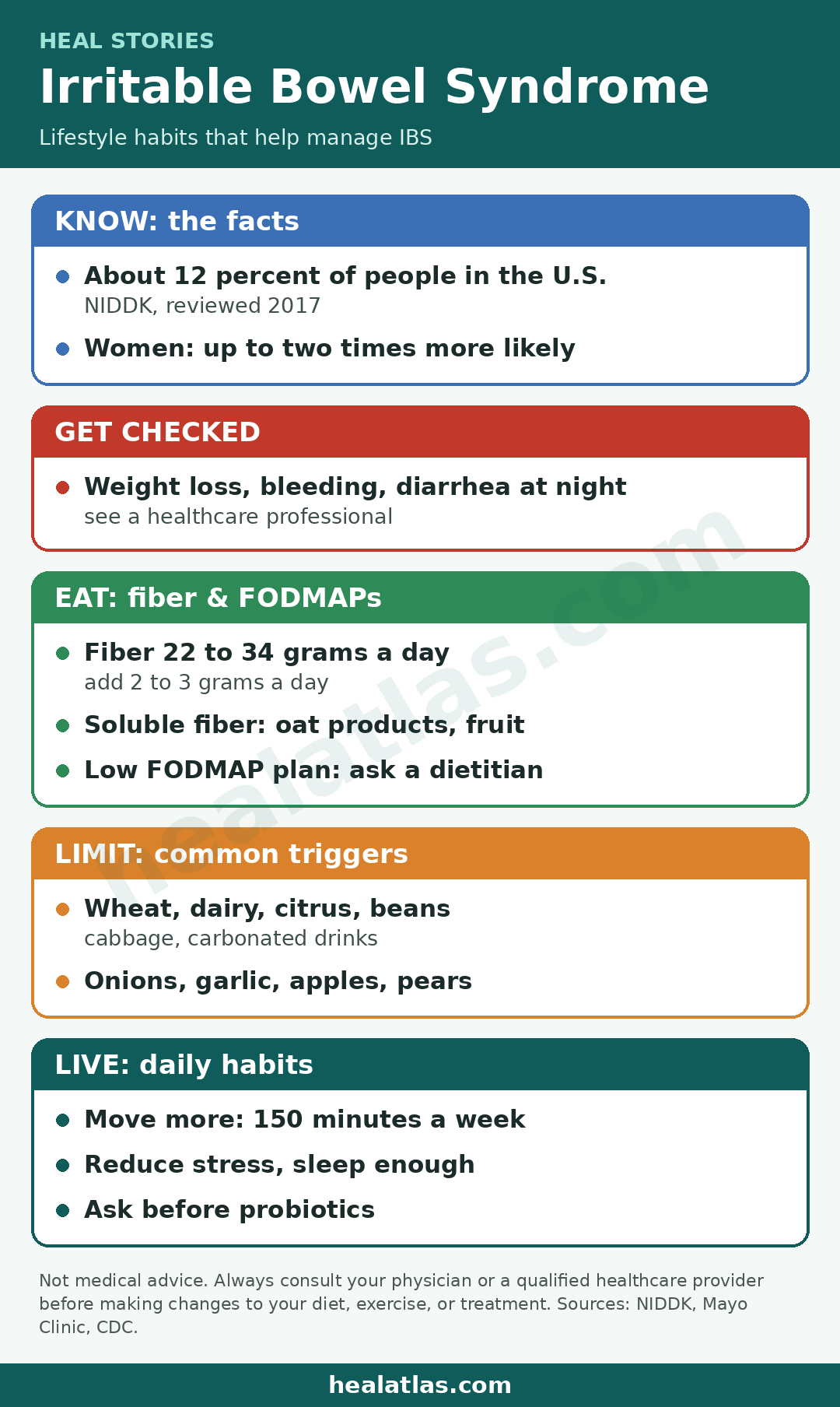
Related on HealAtlas: Low-FODMAP diet: a 3-phase guide · Trapped gas and bloating relief · Heal Stories: Constipation
FAQ
How common is IBS?
According to NIDDK (page last reviewed November 2017), about 12 percent of people in the United States have IBS. Women and people younger than 50 are more likely to develop it. (NIDDK)
What foods commonly trigger IBS?
Common triggers include wheat, dairy products, citrus fruits, beans, cabbage, milk and carbonated drinks. Triggers vary from person to person. (Mayo Clinic)
What is the low FODMAP diet?
It is an eating plan that limits foods high in certain carbohydrates, such as some fruits, vegetables, dairy, wheat and rye. Your doctor may recommend it, and a dietitian can help. (NIDDK)
How much fiber should I eat with IBS?
Adults generally need 22 to 34 grams a day. Add fiber slowly, by 2 to 3 grams a day, to reduce gas and bloating. Soluble fiber may be more helpful. (NIDDK)
Can stress make IBS worse?
Yes. Stress is a common trigger. Reducing stress, relaxation training, cognitive behavioral therapy and gut-directed hypnotherapy may help improve symptoms. (Mayo Clinic) (NIDDK)
When should I see a doctor about IBS?
Make an appointment for a persistent change in bowel habits. Get checked promptly for weight loss, diarrhea at night, rectal bleeding, iron deficiency anemia, unexplained vomiting or pain not relieved by passing gas or stool. (Mayo Clinic)
Sources
- CDC. Adult Activity: An Overview. https://www.cdc.gov/physical-activity-basics/guidelines/adults.html (accessed Oct 25, 2026)
- NIDDK (NIH). Definition & Facts for Irritable Bowel Syndrome. https://www.niddk.nih.gov/health-information/digestive-diseases/irritable-bowel-syndrome/definition-facts (accessed Oct 25, 2026)
- NIDDK (NIH). Treatment for Irritable Bowel Syndrome. https://www.niddk.nih.gov/health-information/digestive-diseases/irritable-bowel-syndrome/treatment (accessed Oct 25, 2026)
- NIDDK (NIH). Eating, Diet, & Nutrition for Irritable Bowel Syndrome. https://www.niddk.nih.gov/health-information/digestive-diseases/irritable-bowel-syndrome/eating-diet-nutrition (accessed Oct 25, 2026)
- Mayo Clinic. Irritable bowel syndrome – Symptoms and causes. https://www.mayoclinic.org/diseases-conditions/irritable-bowel-syndrome/symptoms-causes/syc-20360016 (accessed Oct 25, 2026)