
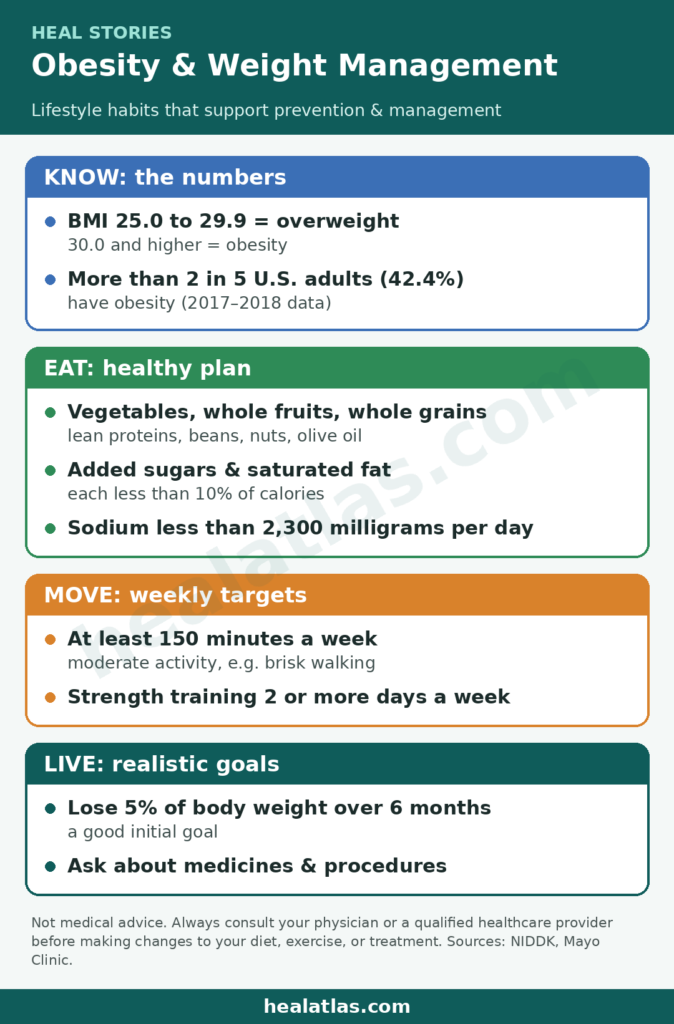
Obesity is a common, complex disease, and even modest weight loss can improve or prevent related health conditions. This Heal Stories guide gathers what trusted health organizations say about everyday habits that support prevention and management of obesity, alongside the care plan you build with your healthcare provider. (Mayo Clinic)
What it is
Obesity is a complex disease involving having too much body fat, and it increases the risk of heart disease, diabetes, high blood pressure, high cholesterol, liver disease, sleep apnea and certain cancers. A body mass index (BMI) of 25.0 to 29.9 is overweight, and 30.0 and higher is obesity. BMI doesn’t directly measure body fat, so many healthcare professionals also measure waist circumference. (Mayo Clinic)
Based on 2017–2018 national survey data, more than 2 in 5 U.S. adults (42.4%) have obesity. (NIDDK)
Signs that mean see a doctor now
- Call 911 for heart attack warning signs, such as chest discomfort; discomfort in one or both arms, the back, neck, jaw or stomach; shortness of breath; or a cold sweat, nausea or lightheadedness. Obesity raises the risk of heart disease and stroke. (AHA) (Mayo Clinic)
- If you’re concerned about your weight or weight-related health conditions, ask your healthcare professional about obesity management. (Mayo Clinic)
- If you have heart disease, high blood pressure, or diabetes, talk with your health care professional before you start regular physical activity. (NIDDK)
Prevention
- Set a realistic goal with your health care professional. Losing 5% of your body weight over a period of 6 months may be a good initial goal; if you weigh 200 pounds, that means losing 10 pounds. (NIDDK)
- Use a structured program. Safe and successful weight-loss programs typically include 14 or more counseling sessions over 6 months and at least 150 minutes per week of moderate-intensity aerobic activity. (NIDDK)
- Seek support from family, friends, health professionals, or a support group. (NIDDK)
- Ask about all options. Prescription medicines and weight-loss procedures are other options for treating obesity. (Mayo Clinic)
Food practices
A healthy eating plan includes a variety of healthy, nutritious foods. (NIDDK)
Foods to favor
- Vegetables of all types, and fruits, especially whole fruits rather than fruit juices (NIDDK)
- Whole grains, such as brown rice, oats, and whole-wheat bread (NIDDK)
- Fat-free or low-fat milk, yogurt, and cheese, or fortified soy beverages (NIDDK)
- Lean meats, poultry, eggs, seafood, beans, peas, lentils, nuts, seeds, and soy products (NIDDK)
- Oils such as olive oil and oils found in seafood, nuts, and avocados (NIDDK)
Foods to limit
- Added sugars and saturated fat, each to less than 10% of calories per day (NIDDK)
- Sodium, or salt, to less than 2,300 milligrams per day (NIDDK)
- High-calorie beverages such as sugared soft drinks and alcohol, fast food, and oversized portions (Mayo Clinic)
A sample day of meals
An example day built from the food groups above. Calorie needs vary; your healthcare team can help tailor a plan. (NIDDK)
| Meal | Example |
|---|---|
| Breakfast | Oats with whole fruit and low-fat yogurt |
| Lunch | Whole-wheat wrap with lean poultry or beans, vegetables, and avocado |
| Snack | Vegetables with a handful of nuts |
| Dinner | Baked seafood, brown rice, and vegetables cooked in olive oil |
| Drinks | Water; skip sugared soft drinks and limit alcohol |
Exercise and lifestyle habits
Physical activity can help you lose excess weight and stay at a healthy weight. (NIDDK)
| Habit | How often | How intense |
|---|---|---|
| Moderate aerobic activity, such as brisk walking or dancing | At least 150 minutes a week | Moderate intensity |
| Muscle strengthening | 2 or more days a week | All major muscle groups |
| A specific walking goal | e.g. 15 to 30 minutes before work or at lunch on Mondays and Fridays | Moderate |
| Screen time | Cut back | Screen hours are highly associated with weight gain |
| Monitoring | Daily food and activity; weekly weight | — |
Sources for the table: (NIDDK) (NIDDK) (Mayo Clinic)
Infographic

Related on HealAtlas: Heal Stories: Prediabetes · Heal Stories: High Cholesterol · HIIT for older adults: lose body fat without losing muscle
FAQ
What BMI counts as obesity?
A BMI of 30.0 and higher is obesity, and 25.0 to 29.9 is overweight. BMI doesn’t directly measure body fat, so waist circumference may also be measured. (Mayo Clinic)
What is a realistic first weight-loss goal?
Losing 5% of your body weight over 6 months may be a good initial goal, which is 10 pounds if you weigh 200 pounds. Set your goal with your health care professional. (NIDDK)
How much exercise helps?
Healthy adults should aim for at least 150 minutes a week of moderate-intensity aerobic activity, such as brisk walking or dancing, plus muscle-strengthening activities on two or more days a week. (NIDDK)
Which foods should I limit?
Limit added sugars and saturated fat each to less than 10% of calories per day, and sodium to less than 2,300 milligrams per day. Sugared soft drinks and alcohol can add many calories. (NIDDK) (Mayo Clinic)
Are medicines or surgery options?
Yes. Prescription medicines and weight-loss procedures are other options for treating obesity. Discuss them with your healthcare team. (Mayo Clinic)
What makes a weight-loss program safe and successful?
Such programs typically include 14 or more counseling sessions over 6 months, an eating plan based on your needs, at least 150 minutes per week of moderate activity, and regular monitoring and feedback. (NIDDK)
Sources
- NIDDK (NIH). Overweight & Obesity Statistics. https://www.niddk.nih.gov/health-information/weight-management/adult-overweight-obesity/definition-facts (accessed Oct 25, 2026)
- NIDDK (NIH). Treatment for Overweight & Obesity. https://www.niddk.nih.gov/health-information/weight-management/adult-overweight-obesity/treatment (accessed Oct 25, 2026)
- NIDDK (NIH). Healthy Eating & Physical Activity for Life. https://www.niddk.nih.gov/health-information/weight-management/adult-overweight-obesity/eating-physical-activity (accessed Oct 25, 2026)
- Mayo Clinic. Obesity – Symptoms and causes. https://www.mayoclinic.org/diseases-conditions/obesity/symptoms-causes/syc-20375742 (accessed Oct 25, 2026)
- American Heart Association. Warning Signs of a Heart Attack. https://www.heart.org/en/health-topics/heart-attack/warning-signs-of-a-heart-attack (accessed Oct 25, 2026)