
Migraine is a common neurological condition that can disrupt daily life. This Heal Stories guide gathers what trusted health organizations say about everyday habits that support prevention and management of migraine, alongside the treatment plan you build with your healthcare provider.
What it is
A migraine is a headache that can cause intense throbbing pain or a pulsing feeling, usually on one side of the head, often with nausea, vomiting, and extreme sensitivity to light and sound. A migraine usually lasts 4 to 72 hours if it’s not treated. Some people have an aura, such as flashes of light or blind spots, before or with a migraine. (Mayo Clinic)
Treatments can help manage symptoms. (NINDS) Women are three times more likely than men to have migraines. (Mayo Clinic)
Signs that mean see a doctor now
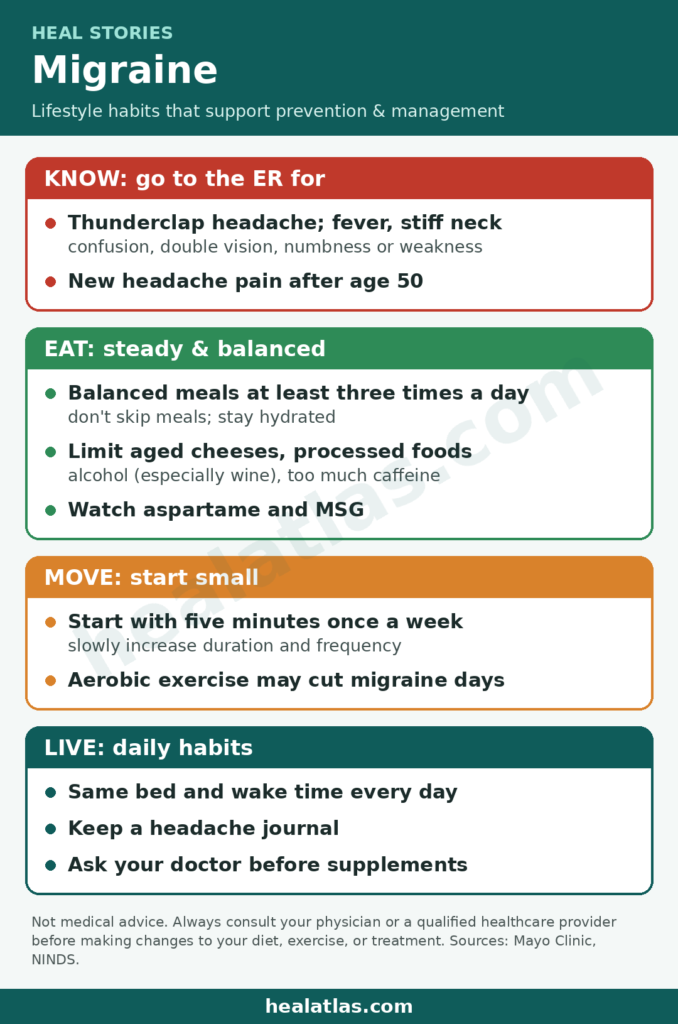
- See your healthcare professional right away or go to the emergency room for an abrupt, very bad headache like a thunderclap; headache with a fever, stiff neck, confusion, seizures, double vision, or numbness or weakness in any part of the body (these could be signs of a stroke); headache after a head injury; a chronic headache that is worse after coughing, exertion, straining or sudden movement; or new headache pain after age 50. (Mayo Clinic) NINDS also advises calling or seeing a doctor right away for a sudden, severe headache, possibly with a stiff neck, or a headache that gets worse over days or weeks or changes in pattern. (NINDS)
- If you have a history of headaches, see your healthcare professional if the pattern changes or your headaches suddenly feel different. (Mayo Clinic)
- Taking pain relievers too often can cause medication overuse headaches, for example aspirin or ibuprofen for more than 14 days a month, or triptans for more than nine days a month. A doctor can help make a plan for safe medicine use. (Mayo Clinic) (NINDS)
Prevention
Triggers differ from person to person and include too much or not enough sleep, emotional stress, strong smells, loud or sudden noises, low blood sugar or skipped meals, and tobacco. (NINDS) A headache journal can help a doctor understand what is causing your headaches. (NINDS)
- Keep a regular sleep schedule: go to bed and wake up at the same time every day. (NINDS)
- Eat regular meals and drink enough water. (NINDS)
- Exercise, and avoid food and beverages that trigger episodes. (NINDS)
- Manage stress with therapy, mindfulness, biofeedback, or other relaxation techniques. (Mayo Clinic) The American Headache Society lists biobehavioral therapies, including cognitive behavioral therapy, biofeedback, relaxation therapies, and mindfulness-based therapies, as possibly appropriate for acute and/or preventive migraine treatment. (American Headache Society)
- Talk with your doctor first if you’re considering dietary supplements for migraine; combinations of some medicines and supplements can cause unwanted, even dangerous, side effects. (NINDS)
Food practices
Mayo Clinic’s SEEDS approach includes eating healthy, well-balanced meals at least three times a day and staying hydrated. (Mayo Clinic)
Foods to favor
- Healthy, well-balanced meals at least three times a day (Mayo Clinic)
- Plenty of fluids, especially if a migraine episode includes vomiting (NINDS)
- Small amounts of caffeine may help relieve symptoms during a migraine episode’s early stages (NINDS)
Foods to limit
- Aged cheeses, processed meats such as deli meats, and salty foods, which might trigger migraines in some people (Mayo Clinic) (NINDS)
- Alcohol, especially wine, and too much caffeine, such as in coffee; caffeine withdrawal can also be a trigger (Mayo Clinic) (NINDS)
- Food additives such as the sweetener aspartame and the preservative MSG (Mayo Clinic) (NINDS)
- Skipping meals, which also can bring on a migraine (Mayo Clinic)
A sample day of meals
An example day of regular, balanced meals that avoids common trigger foods. Triggers vary; a headache or diet journal helps you learn yours. (Mayo Clinic) (NINDS) (NINDS)
| Meal | Example |
|---|---|
| Breakfast | Oatmeal with fruit; water |
| Lunch | Fresh (not processed) chicken or beans with vegetables and brown rice |
| Snack | Fruit and unsalted nuts, if nuts aren’t a trigger for you |
| Dinner | Baked fish with vegetables and potatoes, made without MSG |
| Drinks | Water through the day; limit alcohol and too much caffeine |
Exercise and lifestyle habits
Mayo Clinic suggests starting small, even five minutes once a week, and slowly increasing duration and frequency. (Mayo Clinic) A meta-analysis found moderate quality evidence that aerobic exercise can decrease the number of migraine days, with a mean reduction of 0.6 migraine days a month. (PubMed meta-analysis) Intense physical exertion might provoke migraines in some people, so build up gradually. (Mayo Clinic)
| Habit | How often | How intense |
|---|---|---|
| Aerobic activity (walking, cycling, swimming) | Start with five minutes once a week; build toward at least 150 minutes a week | Build up slowly; intense exertion can trigger some migraines |
| Muscle strengthening | 2 or more days a week | All major muscle groups |
| Sleep | Same bed and wake time every day | — |
| Meals and water | At least three meals a day; drink enough water | — |
| Headache diary | Every migraine day | Bring it to appointments |
Sources for the table: (Mayo Clinic) (CDC) (NINDS)
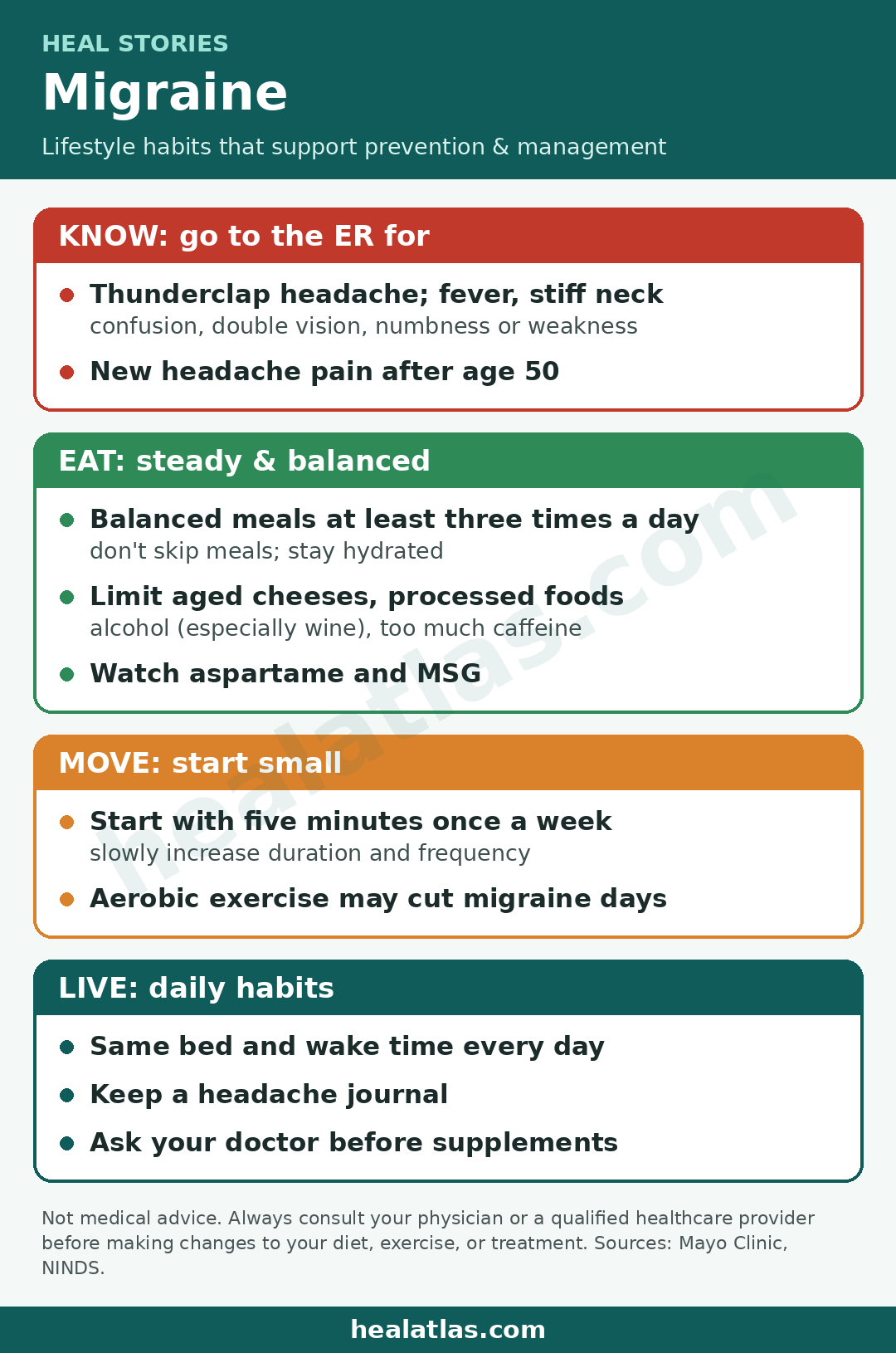
Infographic
Related on HealAtlas: Heal Stories: Poor Sleep (Insomnia) · Vestibular migraine diet: foods, triggers and relief · Migraine with aura may raise stroke risk
FAQ
Which foods can trigger migraine?
Aged cheeses, salty and processed foods, alcohol (especially wine), too much caffeine or caffeine withdrawal, aspartame, and MSG can trigger migraines in some people, and skipping meals also can bring one on. Nuts, especially salted ones, can also be a trigger for some people. A diet journal can help you track your own triggers. (Mayo Clinic) (NINDS)
When is a headache an emergency?
Go to the emergency room or see your healthcare professional right away for an abrupt thunderclap headache; headache with fever, stiff neck, confusion, seizures, double vision, numbness or weakness; a headache after a head injury; or new headache pain after age 50. (Mayo Clinic)
Does exercise help migraine?
A meta-analysis found moderate quality evidence that aerobic exercise can decrease the number of migraine days, by a mean of 0.6 days a month. Start small and build up gradually. (PubMed meta-analysis) (Mayo Clinic)
Does caffeine help or hurt migraine?
Small amounts of caffeine may help relieve symptoms during a migraine episode’s early stages, but too much caffeine can trigger a migraine. (NINDS) (Mayo Clinic)
Can taking pain relievers too often cause headaches?
Yes. Medication overuse headaches may occur with aspirin or ibuprofen for more than 14 days a month or triptans for more than nine days a month. A doctor can help make a plan for safe medicine use. (Mayo Clinic) (NINDS)
What can I do during a migraine episode?
Rest in a quiet, dark room, put a cool cloth or ice pack on your forehead, and drink lots of fluid, especially if the episode includes vomiting. (NINDS)
Sources
- CDC. Adult Activity: An Overview. https://www.cdc.gov/physical-activity-basics/guidelines/adults.html (accessed Oct 25, 2026)
- NINDS (NIH). Migraine. https://www.ninds.nih.gov/health-information/disorders/migraine (accessed Oct 25, 2026)
- Mayo Clinic. Migraine – Symptoms and causes. https://www.mayoclinic.org/diseases-conditions/migraine-headache/symptoms-causes/syc-20360201 (accessed Oct 25, 2026)
- NINDS (NIH). Headache. https://www.ninds.nih.gov/health-information/disorders/headache (accessed Oct 25, 2026)
- Ailani J, et al. The American Headache Society Consensus Statement: Update on integrating new migraine treatments into clinical practice. Headache. 2021;61(7):1021-1039. PMID 34160823. https://pubmed.ncbi.nlm.nih.gov/34160823/ (accessed Oct 25, 2026)
- Lemmens J, et al. The effect of aerobic exercise on the number of migraine days, duration and pain intensity in migraine: a systematic literature review and meta-analysis. J Headache Pain. 2019. PMID 30764753. https://pubmed.ncbi.nlm.nih.gov/30764753/ (accessed Oct 25, 2026)