
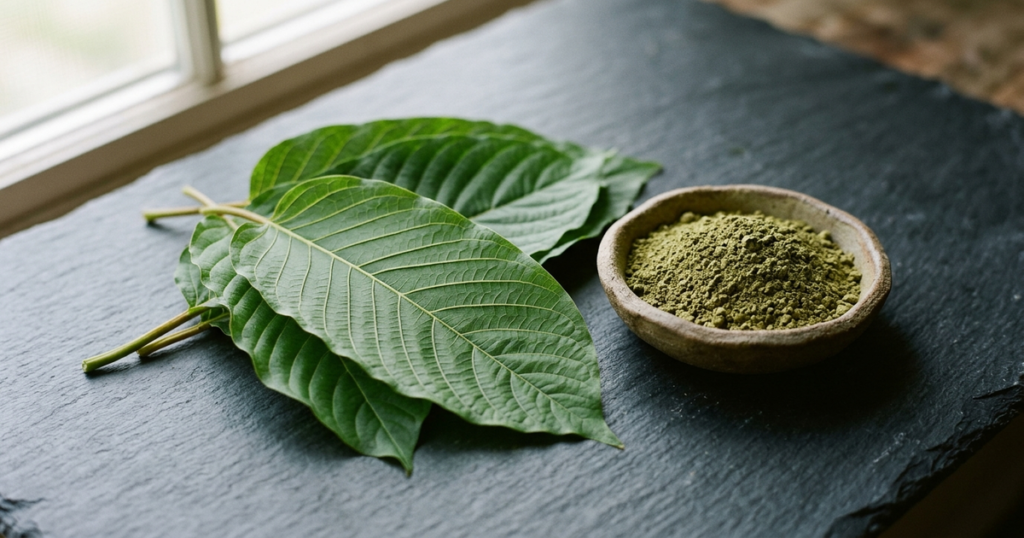
Over the past eighteen months, convenience stores and smoke shops across the United States have seen a surge in products marketed under the banner of kratom. Many of these items, however, bear little resemblance to traditional botanical preparations. Instead, they feature an isolated alkaloid known as 7-hydroxymitragynine (commonly called 7-OH). While consumers often purchase these items assuming they are mild botanical supplements for daily stress or joint stiffness, toxicologists warn that concentrated 7-OH represents an entirely distinct pharmacological entity with potent opioid activity.
The regulatory and clinical picture reached a historic turning point in October 2026. Following sharp increases in poison center calls and severe withdrawal reports, the U.S. Department of Health and Human Services (HHS) and the Drug Enforcement Administration (DEA) issued updated scientific recommendations and an emergency Notice of Intent. The federal action establishes strict quantitative thresholds to place concentrated 7-OH products under temporary Schedule I control, while explicitly leaving natural botanical leaf kratom unscheduled. Understanding the sharp divide between traditional leaf and concentrated retail derivatives is vital for consumers and clinicians alike.
Botanical Kratom Leaf vs. Concentrated 7-OH: A Critical Distinction
To understand why federal regulators and pharmacologists draw a firm line, one must examine the natural alkaloid chemistry of Mitragyna speciosa, the Southeast Asian tree known as kratom. In raw crushed leaf or whole-leaf powder, the dominant alkaloid is mitragynine, comprising roughly 1% to 2% of the dried leaf mass. In contrast, 7-hydroxymitragynine occurs naturally only in trace amounts—typically less than 0.02% to 0.05% of dry plant weight, representing well under 1% of total alkaloid content.
In traditional leaf preparations, the ratio of mitragynine to 7-OH exceeds 500 to 1, and often tops 1000 to 1. At these trace levels, 7-OH functions as a minor constituent, while the overall behavioral profile remains governed by mitragynine and dozens of supporting polyphenols and minor alkaloids.
By contrast, modern retail ‘7-OH’ products sold in blister packs are produced by chemically oxidizing mitragynine to yield concentrated isolates. A single retail tablet commonly contains 15 to 30 milligrams of purified 7-hydroxymitragynine. Consuming one tablet delivers an exposure comparable to ingesting several kilograms of raw botanical leaf in a single dose—an exposure impossible from natural plant material.
Receptor Pharmacology: Why 7-OH Rewires Opioid Cascades
Both compounds interact with human opioid receptors, but their downstream cellular pharmacology differs profoundly. Mitragynine acts as an atypical partial agonist at the mu-opioid receptor (MOR). Laboratory cellular studies indicate that mitragynine exhibits biased signaling, activating pain-relieving cascades with minimal recruitment of beta-arrestin-2—the intracellular protein primarily tied to severe opioid-induced respiratory depression and rapid receptor tolerance.
Furthermore, mitragynine displays a pharmacological ceiling effect in animal models, meaning higher doses do not linearly produce escalating opioid receptor activation. It also modulates alpha-2 adrenergic and serotonergic pathways, contributing to its mild stimulant-like effects at lower botanical exposures.
In contrast, 7-hydroxymitragynine is a high-affinity partial agonist at the mu-opioid receptor with a functional potency that rivals or exceeds classical prescription opioids. While the human liver naturally metabolizes a small fraction of ingested mitragynine into 7-OH via CYP3A4 enzymes, direct oral intake of concentrated 7-OH bypasses this rate-limiting step entirely. Purified 7-OH readily penetrates the central nervous system, driving rapid receptor desensitization and reinforcement pathways characteristic of potent opioids.
The 2026 MME Potency Landmark: Measuring Real-World Potency
Until recently, the comparative clinical potency of these products remained poorly defined. That gap was addressed in an exhaustive, peer-reviewed multi-study assessment published on October 6, 2026, in Regulatory Toxicology and Pharmacology.
The research team synthesized functional in vitro and in vivo pharmacological data across 13 distinct studies to calculate precise Morphine Milligram Equivalent (MME) values for individual alkaloids:
- Mitragynine: Exhibited a geometric mean MOR-referenced potency of 0.13 MME relative to morphine. Because of its partial agonist ceiling, traditional botanical leaf products yielded a modest average of 2.7 MME per serving.
- 7-Hydroxymitragynine: Exhibited a geometric mean potency of 4.3 MME—meaning it is more than four times as potent as clinical morphine per milligram at the mu-opioid receptor, and 33 times more potent than mitragynine.
- Mitragynine Pseudoindoxyl: A related oxidation derivative displayed a geometric mean potency of 4.8 MME.
- Concentrated Commercial Tablets: Across tested commercial 7-OH tablets, the mean per-serving exposure reached an estimated 31.0 MME.
To place 31 MME into clinical context: standard clinical guidelines from the Centers for Disease Control and Prevention (CDC) urge caution when prescribing opioid regimens exceeding 20 to 50 MME per entire day. A single retail tablet of concentrated 7-OH can deliver over 30 MME in one acute dose, explaining why unsuspecting consumers can develop acute physical dependence, tolerance, and debilitating withdrawal symptoms in as little as two to three weeks of routine daily use.
Comparing Botanical Kratom and Concentrated 7-OH Formulations
The following table outlines the key chemical, pharmacological, and regulatory differences separating natural botanical kratom from commercially concentrated 7-OH products:
| Pharmacological & Regulatory Parameter | Traditional Botanical Leaf (Powder/Tea) | Concentrated 7-OH Retail Tablets & Shots | Clinical & Consumer Significance |
|---|---|---|---|
| Dominant Active Alkaloid | Mitragynine (1.0%–2.0% dry weight) | 7-Hydroxymitragynine (15–30 mg per unit) | Botanical leaf is mitragynine-dominant; retail pills deliver pure isolated 7-OH. |
| Alkaloid Ratio (Mitragynine to 7-OH) | 500:1 to 1000:1 (natural trace ratio) | Less than 10:1 (often pure 7-OH isolate) | Federal threshold sets 100:1 ratio as cutoff for Schedule I temporary control. |
| Mu-Opioid Receptor (MOR) Potency | Geomean 0.13 MME (relative to morphine) | Geomean 4.3 MME (relative to morphine) | 7-OH is over 33-fold more potent than mitragynine at mu-opioid receptors. |
| Per-Serving Morphine Equivalent | Average 2.7 MME per standard serving | Up to 31.0 MME per single tablet | Concentrated tablets equal or exceed doses of strong clinical prescription opioids. |
| Physical Dependence Liability | Moderate; self-limiting via partial ceiling | High; rapid tolerance and severe withdrawal | Concentrated isolates induce classical opioid withdrawal syndromes. |
| October 2026 Federal Status | Exempt from emergency scheduling | Proposed Schedule I Temporary Control | DEA and HHS target concentrated products while leaving natural leaf accessible. |
Source: Regulatory Toxicology and Pharmacology (2026; PMID: 42838255); U.S. Department of Health and Human Services (HHS).
The October 2026 HHS and DEA Regulatory Thresholds
Recognizing the acute public health hazards of high-potency products, HHS and the DEA announced a targeted regulatory approach under the Controlled Substances Act in October 2026. Rather than a blanket ban on the whole botanical plant, the framework introduces two objective scientific thresholds triggering Schedule I temporary control:
- Concentration Threshold: The product contains 7-hydroxymitragynine or mitragynine pseudoindoxyl exceeding 1.0 mg per gram in solids or 1.0 mg per milliliter in liquids.
- Alkaloid Ratio Threshold: The ratio of primary natural mitragynine to 7-OH (or combined 7-OH and MGPI) is less than 100 to 1.
This dual threshold isolates semi-synthetic opioid formulations disguised as dietary supplements, while protecting consumers who use unadulterated botanical plant material.
Clinical Management: Navigating Physical Dependence and Safe Discontinuation
For individuals who develop physical dependence on concentrated 7-OH tablets, abrupt cessation can trigger significant withdrawal: restless legs, diffuse muscle aches, chills, insomnia, gastrointestinal distress, and rebound anxiety. Peer-reviewed medical literature, including a 2026 study in the Hawaii Journal of Health & Social Welfare, documents that standard opioid use disorder protocols—specifically buprenorphine-naloxone (Suboxone)—can successfully stabilize patients with severe 7-OH dependence.
Furthermore, clinical toxicologists confirm that acute toxic exposures respond to standard naloxone (Narcan) reversal. Healthcare professionals advise that anyone seeking to discontinue regular use of concentrated 7-OH should not attempt abrupt cold-turkey cessation alone, but should consult a qualified healthcare provider or addiction specialist for a structured transition.
Sources and Further Reading
- Regulatory Toxicology and Pharmacology (2026): Beyond kratom: Concentrated 7-hydroxymitragynine and mitragynine pseudoindoxyl products, an MME potency assessment (DOI: 10.1016/j.yrtph.2026.106272).
- Hawaii Journal of Health & Social Welfare (2026): Managing 7-Hydroxymitragynine Use Disorder with Buprenorphine-Naloxone (DOI: 10.62547/GAHW6645).
- Journal of Adolescent Health (2026): Increasing Awareness of 7-Hydroxymitragynine and the Threat of Emerging Opioids (DOI: 10.1016/j.jadohealth.2026.06.027).
- Current Pain and Headache Reports (2026): Perioperative Pain in the Era of Emerging and Unregulated Substances: Recognition, Risk Assessment, and Management (DOI: 10.1007/s11916-026-01564-7).
- U.S. Food and Drug Administration (FDA): FDA Public Health Focus and Pharmacovigilance on Concentrated Kratom Alkaloids.
Related Reading
- NIH Discovers Pain Reliever With Minimal Addiction Risk
- Suanzaoren for Insomnia: Science Behind Jujube Seed for Sleep
- Acupuncture for Pain Management: What Science Says
Disclosure: This content is for informational purposes only and is not medical advice. Always consult a qualified healthcare provider before making changes to your health regimen.