
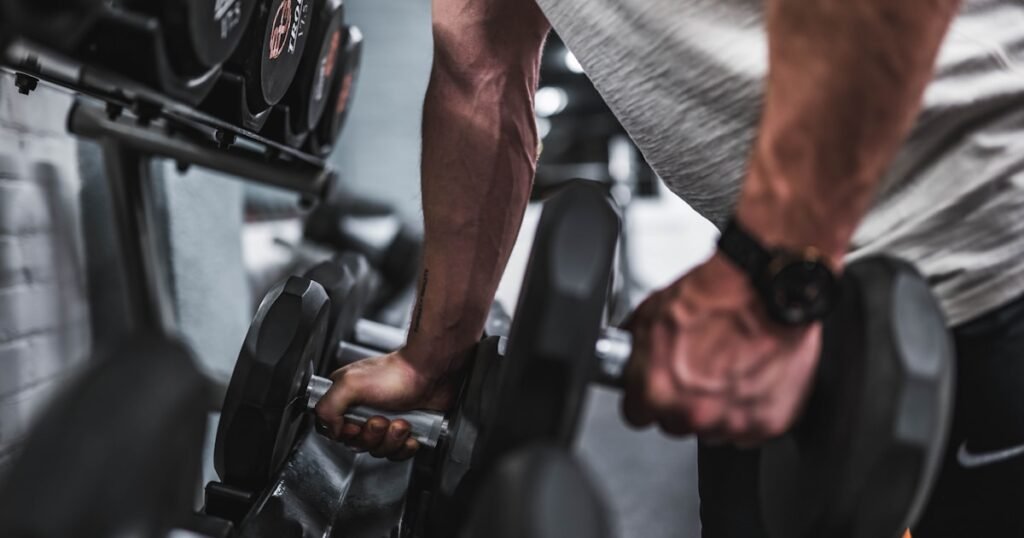
A simple squeeze of a handheld device may reveal more about your future health than most laboratory tests. Over the past decade, an unlikely metric — the force your hand generates when it grips — has become one of the most consistent predictors of longevity in large population studies. Researchers now describe grip strength as a low-cost, high-signal marker of biological aging that outperforms many traditional risk factors.
Here is what the evidence actually shows, why grip strength matters far beyond the gym, and what studies suggest about training it at any age.
Why Grip Strength Is Getting So Much Attention
Grip strength is easy to measure with a handheld dynamometer, requires no blood draw or imaging, and reflects the health of the entire neuromuscular system. Because it tracks with total body strength, muscle mass, and even nerve function, researchers view it as a practical proxy for overall physiological reserve.
The turning point came in 2015 with the Prospective Urban Rural Epidemiology (PURE) study, published in The Lancet. Researchers led by Darryl Leong followed 139,691 adults across 17 countries for a median of four years. They reported that each 5-kilogram decrease in grip strength was associated with a 16% higher risk of death from any cause, a 17% higher risk of cardiovascular death, and a 7% higher risk of heart attack. Notably, grip strength was a stronger predictor of mortality than systolic blood pressure in that dataset.
A large 2018 analysis of nearly half a million adults in the UK Biobank, published in The BMJ by Celis-Morales and colleagues, reinforced the pattern. Lower grip strength was linked with higher mortality from cardiovascular disease, respiratory disease, chronic obstructive pulmonary disease, and several cancers, including colorectal, lung, and breast cancer.
What Grip Strength Actually Reflects
Grip strength does not act on the body directly; it acts as a signal. According to reviews in journals such as Age and Ageing and the Journal of Cachexia, Sarcopenia and Muscle, several underlying processes appear to drive the association:
Muscle mass and sarcopenia
Age-related muscle loss, known as sarcopenia, accelerates after roughly age 40, with studies indicating losses of about 3–8% per decade that speed up after 60. The European Working Group on Sarcopenia in Older People uses low grip strength as a core diagnostic criterion because hand strength tracks closely with total lean mass.
Neuromuscular health
Producing force requires healthy motor neurons, efficient nerve-to-muscle communication, and coordinated fiber recruitment. Declines in grip can reflect early changes in the nervous system that also affect balance and fall risk.
Inflammation and metabolic health
Research published in journals such as Experimental Gerontology has linked low grip strength with higher levels of inflammatory markers, insulin resistance, and unfavorable body composition — all conditions tied to chronic disease.
What the Numbers Look Like
Normative data compiled by Bohannon and colleagues, and referenced by the American Society of Hand Therapists, offer a rough sense of typical adult values measured with a Jamar-style dynamometer:
- Men in their 30s: approximately 46–50 kg (dominant hand)
- Women in their 30s: approximately 28–32 kg
- Men in their 60s: approximately 39–42 kg
- Women in their 60s: approximately 24–26 kg
These are population averages, not personal targets. Individual results vary with hand size, dominant hand, technique, and prior injury. The trend over time in your own measurements is generally more informative than a single reading compared to a table.
Beyond Mortality: Grip Strength and Daily Function
Longitudinal work by Rantanen and colleagues, following participants from midlife into older age, found that lower midlife grip strength predicted disability, difficulty with daily tasks, and reduced independence decades later. Related studies have linked grip strength with:
- Cognitive health: A 2022 analysis in The Journal of Gerontology reported associations between higher grip strength and slower cognitive decline in older adults, though causation is not established.
- Bone density and fracture risk: Weaker grip has been linked with lower bone mineral density and higher fracture risk after falls.
- Post-surgical recovery: In some surgical cohorts, preoperative grip strength predicts complications and length of hospital stay.
Can You Train Grip Strength?
Grip strength responds to training at essentially every age studied. A 2019 review in Sports Medicine found that resistance training programs consistently improved grip strength in older adults, including participants in their 80s and 90s. Even shorter interventions of 8–12 weeks produced measurable gains.
Practical, well-studied approaches include:
Compound resistance training
Movements like deadlifts, rows, pull-ups, and farmer’s carries load the hand and forearm heavily and translate into whole-body strength. National physical activity guidelines from the U.S. Department of Health and Human Services recommend muscle-strengthening activities on at least two days per week.
Loaded carries
Walking with a heavy weight in each hand — often called a farmer’s carry — challenges grip endurance, posture, and core stability at the same time.
Dead hangs and pulling work
Hanging from a sturdy bar for short intervals, or performing rows and pull-ups, trains grip along with the shoulders and upper back.
Everyday movement
Carrying groceries in your hands instead of loading a cart, gardening with hand tools, opening jars without assistive devices, and using kettlebells or dumbbells in home routines all contribute to maintaining grip.
What Grip Strength Is Not
Grip strength is a useful signal, not a diagnosis. A single measurement cannot predict any individual’s future disease risk, and weaker grip alone does not cause disease. Rather, it reflects the same underlying processes — muscle loss, inactivity, chronic inflammation, and metabolic dysfunction — that also drive cardiovascular disease, cancer, and cognitive decline.
Researchers also caution that grip strength should be interpreted alongside other measures such as walking speed, chair-stand time, and cardiorespiratory fitness. Together, these functional measures paint a more complete picture of healthy aging than any single number.
Bottom Line
Studies indicate that grip strength is one of the most practical, evidence-backed markers of overall health and longevity currently available. It is inexpensive to measure, responds to training at any age, and reflects the underlying vitality of the muscular, nervous, and metabolic systems.
Research suggests that maintaining and even improving grip strength through regular resistance training and daily activity may support independence, reduce the risk of falls, and align with the broader habits associated with longer, healthier lives. If you are considering a new exercise program — particularly with existing joint issues, heart conditions, or other medical concerns — consult your healthcare provider or a qualified fitness professional before starting.
Disclosure: This content is for informational purposes only and is not medical advice. Always consult a qualified healthcare provider before making changes to your health regimen.