
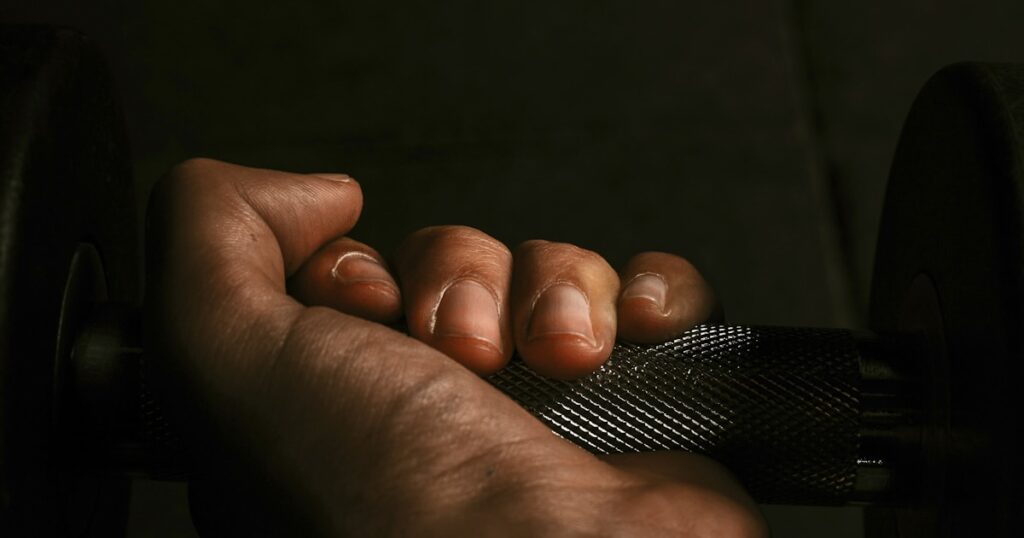
Few measurements are as simple, cheap, and predictive as squeezing a small handheld device as hard as you can. Yet grip strength — the maximum force your hand can generate — is increasingly viewed by researchers as a window into overall health, muscular function, and even how long you may live. A growing body of large, long-running studies has tied a firm handshake to lower mortality, healthier hearts, and slower cognitive decline.
What Grip Strength Actually Measures
Grip strength is typically assessed with a hand-held dynamometer that captures peak force in kilograms or pounds. Because it recruits the small muscles of the hand and forearm — and depends on nerves, tendons, and coordination — it reflects far more than hand power alone. Researchers often treat it as a proxy for total-body muscle strength, general physical function, and even “biological reserve,” the body’s capacity to withstand stress.
The measurement has become popular in clinical and epidemiological research because it is fast, low-cost, and highly reproducible. Physical therapists, geriatricians, and sports scientists routinely use it to track patients over time.
The Link Between Grip Strength and Longevity
The landmark PURE (Prospective Urban Rural Epidemiology) study, published in The Lancet in 2015, followed nearly 140,000 adults across 17 countries. The researchers reported that every 5 kilogram (about 11 pound) reduction in grip strength was associated with a 16% higher risk of death from any cause, a 17% higher risk of cardiovascular death, and a 7% higher risk of heart attack. Importantly, grip strength was a stronger predictor of death than systolic blood pressure in that dataset.
Subsequent meta-analyses have echoed these findings. A 2018 study in BMJ analyzed data from nearly half a million adults in the UK Biobank and found that lower grip strength was associated with higher risk of death from cardiovascular disease, respiratory disease, and several cancers — even after adjusting for smoking, physical activity, and body composition.
These are observational studies, so they show association rather than causation. Weak grip does not directly shorten life, but it appears to signal underlying processes — such as sarcopenia (age-related muscle loss), chronic inflammation, or reduced physical activity — that raise health risks.
Heart, Metabolism, and Bone
Grip strength has been linked to a range of physiological systems beyond skeletal muscle:
- Cardiovascular health. Analyses from the UK Biobank suggest that stronger grip is associated with lower rates of heart failure, coronary artery disease, and stroke, independent of exercise habits.
- Metabolic health. Research indicates weaker grip correlates with insulin resistance, higher risk of type 2 diabetes, and worse outcomes in people with existing diabetes.
- Bone density. Studies in postmenopausal women and older men suggest that grip strength tracks with hip and spine bone mineral density, reflecting the shared role of loaded muscle contraction in bone maintenance.
Grip Strength and the Brain
The connection between grip strength and cognition has drawn growing attention. A 2022 analysis of more than 190,000 UK Biobank participants published in BMC Medicine found that higher grip strength was associated with a lower risk of developing dementia over an average follow-up of nine years. Similar patterns have been reported in Korean, Chinese, and European cohorts.
Neuroimaging studies suggest that grip strength correlates with brain volume in regions tied to memory and executive function. Researchers hypothesize that shared factors — vascular health, systemic inflammation, physical activity levels, and neuromuscular integrity — may explain the overlap.
How Much Grip Strength Is Enough?
There is no universally agreed cutoff for “healthy” grip strength, but several reference values are commonly cited. The European Working Group on Sarcopenia in Older People (EWGSOP2) uses thresholds of less than 27 kilograms in men and less than 16 kilograms in women as suggestive of low muscle strength that warrants further evaluation. The U.S. Foundation for the National Institutes of Health has proposed similar cutoffs (26 kg for men, 16 kg for women).
Age matters. Grip strength typically peaks between the late 20s and mid 30s, plateaus through the 40s, and declines gradually thereafter — a decline that accelerates after age 60 in many people. Some loss with age is normal; a rapid drop or a value well below age-matched norms may signal an issue worth discussing with a clinician.
Can You Train Grip Strength?
Grip strength responds to training, and modest improvements are achievable at nearly any age. Practical options that studies and clinicians commonly cite include:
- Heavy compound lifts. Exercises such as deadlifts, rows, farmer carries, and pull-ups load the hands with substantial weight and are among the most effective ways to build grip.
- Loaded carries. Walking short distances holding kettlebells, dumbbells, or heavy grocery bags trains grip endurance and full-body stability.
- Dead hangs. Hanging from a pull-up bar for time challenges grip and shoulder stability; research on older adults suggests even brief regular hangs may improve function.
- Hand grippers. Adjustable spring-loaded grippers or soft therapy putty can be useful for beginners, rehabilitation, or travel.
- Wrist and forearm work. Wrist curls, reverse curls, and rotational exercises support the forearm muscles that assist grip.
Two to three sessions per week that include grip-heavy movements are sufficient for most people. Progress is usually measurable within 8 to 12 weeks. As with any new training, people with arthritis, tendinopathy, or prior hand or wrist injuries should progress carefully and consult a physical therapist or physician if pain develops.
How to Measure Your Own
Inexpensive digital dynamometers are available for home use. Standard protocols involve sitting with the elbow bent to 90 degrees, arm unsupported, and squeezing at maximum effort for 3 to 5 seconds. Testers typically average the best of two or three trials on the dominant hand. Recording a baseline and rechecking every few months can flag trends earlier than waiting for symptoms.
The Bigger Picture
Grip strength is not a magic marker. It cannot replace a comprehensive physical exam, blood work, or imaging when clinical questions arise. And boosting a grip score will not, on its own, add years to life. But the research suggests grip strength is a useful, low-cost signal of the muscular, metabolic, and neurological reserves that support healthy aging.
For clinicians, it may help identify patients at higher risk who could benefit from earlier intervention. For individuals, tracking and training grip alongside broader strength, aerobic fitness, and daily movement is a practical way to invest in long-term function — the ability to open jars, carry groceries, catch a fall, or lift a grandchild well into later decades.
Disclosure: This content is for informational purposes only and is not medical advice. Always consult a qualified healthcare provider before making changes to your health regimen.