
For decades, the message on blood pressure has been consistent: once you start medication, you stay on it. Yet a growing body of research is challenging that assumption. Trials in older adults and people with well-controlled readings suggest that carefully deprescribing — reducing or stopping antihypertensive drugs under medical supervision — may be reasonable for select patients. Here is what recent evidence shows about who may benefit, who should not attempt it, and how the process typically works.
What “Deprescribing” Actually Means
Deprescribing is the planned, monitored reduction or withdrawal of a medication that may no longer be providing benefit or that may be causing harm. It is not simply skipping doses. The term was formalized in geriatric medicine literature over the last decade and now appears in guidelines from organizations including the American College of Cardiology and the European Society of Hypertension, which recognize that older adults on multiple blood pressure drugs sometimes experience more risks than gains.
According to a 2020 review in JAMA Internal Medicine, polypharmacy — taking five or more prescription drugs — affects roughly 4 in 10 adults over age 65 in the United States. Antihypertensives are among the most commonly prescribed. That reality has pushed researchers to ask a simple question: for whom is continued treatment still the right call?
Who Might Be a Candidate
Research suggests deprescribing may be worth discussing with a healthcare provider for people who fit several of these patterns:
- Older adults with consistently low or normal readings on two or more antihypertensive drugs.
- People experiencing side effects such as dizziness, lightheadedness on standing (orthostatic hypotension), fatigue, or falls.
- Frail individuals in whom the risk of a fall-related fracture may outweigh long-term cardiovascular benefit.
- Those who have made durable lifestyle changes — weight loss, reduced sodium, regular activity, better sleep, less alcohol — that have lowered baseline blood pressure.
The 2017 American College of Cardiology / American Heart Association guideline defines high blood pressure as 130/80 mm Hg or higher. But guideline authors also emphasize that treatment targets in adults over 75, especially those with limited life expectancy or multiple chronic conditions, should be individualized.
What Recent Trials Show
The most-cited deprescribing trial is OPTIMISE, published in JAMA in 2020. Researchers randomized 569 patients aged 80 and older who were taking two or more antihypertensives and had a systolic reading below 150 mm Hg. Half were assigned to a structured medication reduction; half continued usual care. Twelve weeks later, blood pressure control (defined as systolic below 150 mm Hg) was similar between groups — 86 percent in the reduction arm versus 88 percent in usual care. The difference was small enough that the authors concluded medication reduction was “non-inferior” over the short term. Serious adverse events did not differ significantly.
A separate analysis from the SPRINT trial, published in The Lancet Healthy Longevity, found that intensive blood pressure lowering reduced cardiovascular events even in adults over 75 — a reminder that stopping medication is not universally safe. The takeaway from combined evidence: benefit depends heavily on baseline risk, frailty, and how well readings are controlled.
A 2019 Cochrane review of withdrawal studies concluded that for some older adults with well-controlled hypertension, stopping medication under supervision did not lead to a large short-term rise in blood pressure or cardiovascular events. However, the review authors noted that long-term (multi-year) safety data are still limited, and that any withdrawal should be paired with close follow-up.
Why Stopping Abruptly Can Be Risky
Some blood pressure medications carry specific risks if discontinued without a taper. Beta-blockers, for instance, can cause a rebound rise in heart rate and blood pressure if stopped suddenly, which in people with underlying heart disease has been linked to angina, heart attack, or dangerous rhythm changes. Clonidine, a centrally acting drug, is well known for rebound hypertension after abrupt withdrawal.
Other classes — ACE inhibitors, ARBs, thiazide diuretics, calcium channel blockers — generally do not cause rebound in the same way, but readings can still drift upward within days to weeks, and the change may be silent. That is one reason blood pressure often needs to be measured at home during a deprescribing trial.
How the Process Typically Works
Studies of successful deprescribing describe a fairly consistent workflow:
- Baseline assessment. A clinician reviews all medications, recent readings, symptoms, kidney function, and cardiovascular history.
- One drug at a time. Guidelines generally recommend reducing or removing a single agent rather than several at once, so the effect is measurable.
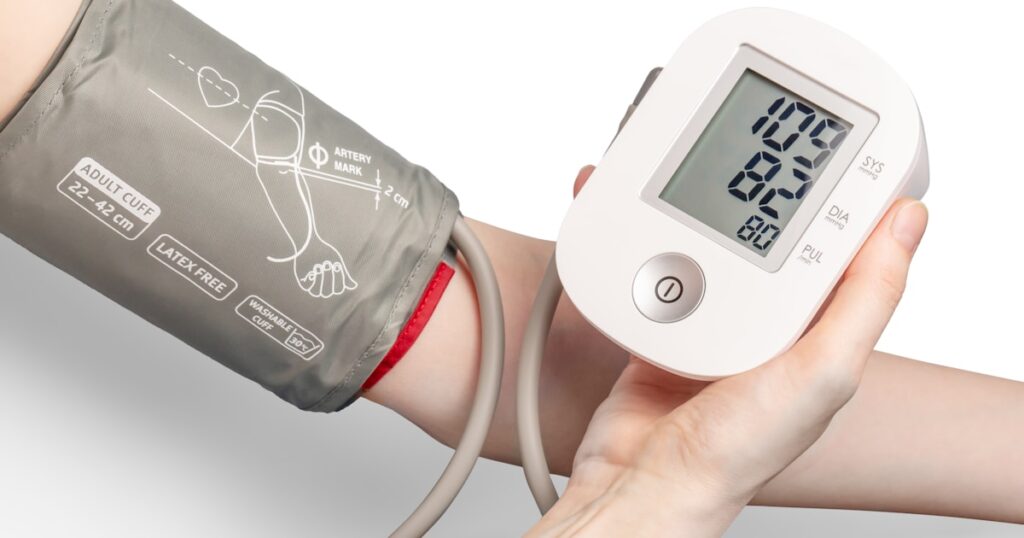
- Home monitoring. The American Heart Association recommends validated upper-arm devices, with readings taken in the morning and evening for at least a week after each change.
- Scheduled follow-up. Trials typically re-check readings at 4, 8, and 12 weeks, and add labs (electrolytes, kidney function) when relevant.
- Clear stop rules. If systolic pressure rises above an agreed threshold or new symptoms emerge, the medication is restarted.
Lifestyle Changes That Support Lower Readings
Non-drug approaches have strong evidence in trials such as DASH, PREMIER, and TRIUMPH. According to the National Heart, Lung, and Blood Institute, the interventions with the largest average effects on systolic pressure include:
- Weight loss (roughly 1 mm Hg drop per kilogram lost, on average).
- The DASH dietary pattern (about 11 mm Hg reduction in trial participants with hypertension).
- Sodium reduction to under 1,500 mg per day (5 to 6 mm Hg reduction on average).
- Regular aerobic activity — roughly 150 minutes weekly.
- Limiting alcohol to two drinks daily for men and one for women, or less.
These changes rarely replace medication in people with severe hypertension, but they can shift the balance in borderline cases and support a monitored deprescribing trial.
When Not to Stop
Research consistently identifies scenarios in which continued treatment remains important: a recent heart attack or stroke, heart failure, chronic kidney disease, diabetes with proteinuria, or persistently elevated readings above 140/90 mm Hg. In these situations, evidence supports staying on therapy at guideline-recommended doses.
The Bottom Line
Deprescribing blood pressure medication is not about abandoning treatment — it is about matching treatment to changing needs. For a subset of older adults with well-controlled readings, structured medication reduction appears reasonable and, in trials, has not led to worse short-term outcomes. But the decision is individual, requires monitoring, and should never be made unilaterally. Anyone considering a change should first speak with the clinician who prescribes their medication.
Disclosure: This content is for informational purposes only and is not medical advice. Always consult a qualified healthcare provider before making changes to your health regimen.