
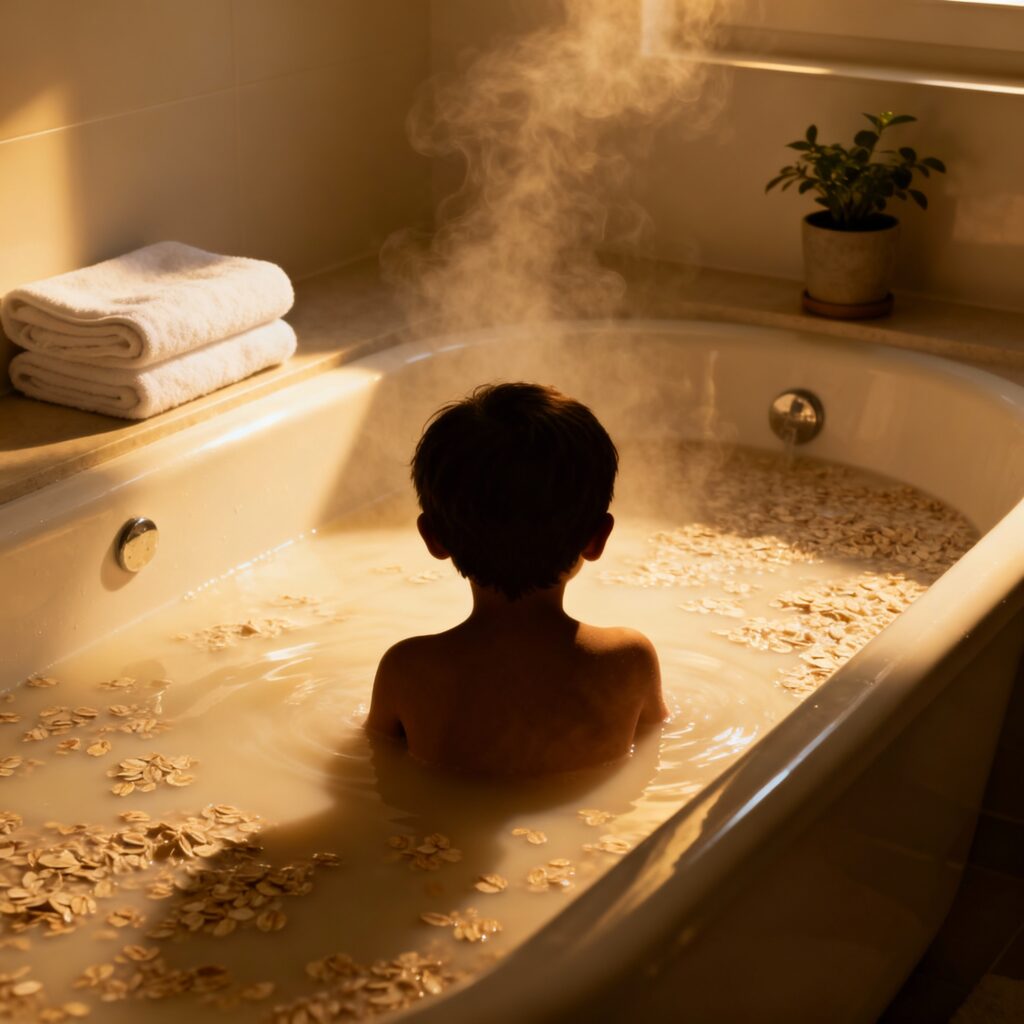
Colloidal oatmeal baths are one of the oldest home approaches for itchy, dry, or irritated skin, and they remain a common recommendation from dermatologists today. They are gentle, inexpensive, and low-risk for most people. What they are not is a treatment for skin infections. This guide explains what colloidal oatmeal is, what research suggests it can and cannot do, how to prepare a bath safely, and when itchy or inflamed skin needs medical attention instead of a home remedy.
What Is Colloidal Oatmeal?
Colloidal oatmeal is whole oat grain that has been ground into a very fine powder so it disperses evenly in water instead of sinking to the bottom of the tub. When mixed with warm water, it forms a milky, slightly slippery solution that coats the skin. In the United States, colloidal oatmeal is regulated by the FDA as an over-the-counter skin protectant, which is why you will see it listed as an active ingredient on many bath soaks, lotions, and creams.
Oats contain several compounds that are relevant to skin comfort. A review in the Journal of Drugs in Dermatology describes starches and beta-glucans that help hold water on the skin, lipids that support the skin barrier, and polyphenols called avenanthramides that showed anti-inflammatory and anti-itch activity in laboratory studies (Kurtz and Wallo, 2007).
What the Research Suggests
Most of the evidence for colloidal oatmeal comes from laboratory work, small clinical studies, and long clinical experience rather than large randomized trials. Within those limits, the findings are fairly consistent.
- Moisturizing and barrier support: Oat starches and beta-glucans form a protective film that can reduce water loss from the skin, which matters for dry and eczema-prone skin.
- Itch relief: Avenanthramides reduced markers of inflammation and itch in experimental models, and clinical reports describe less itching after use (Cerio et al., 2010).
- Gentle cleansing: Oats contain saponins, natural compounds that can cleanse without stripping the skin as harshly as some soaps.
- pH buffering: Colloidal oatmeal may help keep skin surface pH closer to its normal, slightly acidic range.
A brief review in the Indian Journal of Dermatology, Venereology and Leprology summarized oatmeal’s traditional and modern uses in atopic dermatitis, contact dermatitis, sunburn, and itch, while noting that better-controlled studies are needed (Pazyar et al., 2012).
Oatmeal Baths and Skin Infections: An Important Caution
Older articles sometimes describe oatmeal baths as a way to treat skin infections. That claim is not supported by evidence. Oatmeal does not kill bacteria, fungi, or viruses in any clinically meaningful way, and it should not replace medical treatment for infected skin.
What oatmeal can reasonably do is make the skin more comfortable while the underlying problem is treated. For example, people with chickenpox, mild insect bites, poison ivy, or eczema flares often find that an oatmeal soak eases the urge to scratch. That matters, because scratching breaks the skin and can open the door to bacterial infection. In that sense, soothing itch may help reduce the chance of a secondary infection, but it does not treat one that is already present.
See a healthcare professional promptly if you notice any signs of a possible skin infection:
- Redness, warmth, or swelling that spreads or gets worse
- Pus, honey-colored crusts, or oozing
- Red streaks leading away from a wound
- Fever, chills, or feeling unwell
- Pain that is out of proportion to what you see
Bacterial skin infections such as cellulitis or impetigo often need prescription treatment. The CDC notes that antibiotics are helpful only for certain bacterial infections and should be taken exactly as prescribed (CDC: Antibiotic Do’s and Don’ts).
Conditions Where an Oatmeal Bath May Help
Based on available evidence and clinical practice, colloidal oatmeal is most often used for:
- Atopic dermatitis (eczema): as an add-on to regular moisturizing and any prescribed treatment.
- Dry, rough, or winter-chapped skin.
- Itch from chickenpox, hives, or insect bites.
- Mild sunburn, once the skin is cool and not blistering.
- Contact dermatitis, such as reactions to poison ivy, after the irritant has been washed off.
A 2021 systematic review of complementary treatments for common skin diseases found some supportive data for selected natural products, including oat-based preparations, but also noted that trial quality varied (Goyal et al., 2021). In other words, oatmeal is a reasonable comfort measure, not a stand-alone therapy.
How to Take an Oatmeal Bath
You can buy pre-measured colloidal oatmeal packets or make your own by grinding plain, unflavored rolled oats in a blender until they are a very fine powder. A simple test: stir a spoonful into a glass of warm water. If the water turns milky and the powder stays suspended, it is fine enough.
- Fill the tub with lukewarm water. Hot water can dry and irritate the skin further.
- Sprinkle about one cup of colloidal oatmeal (or one packet) under running water and stir to disperse it.
- Soak for 10 to 15 minutes. Longer soaks can dry the skin.
- Pat the skin gently with a towel rather than rubbing. The tub may be slippery, so take care getting out.
- Apply a fragrance-free moisturizer within a few minutes to lock in hydration.
For small areas, you can make a compress by placing colloidal oatmeal in a clean cloth or sock, soaking it in lukewarm water, and pressing it gently against the itchy skin.
Oatmeal Baths for Babies and Children
Oatmeal baths are commonly used for children with eczema or chickenpox. Keep the water lukewarm, keep soaks short, and supervise closely, since the tub becomes slippery. Talk to your child’s pediatrician before using any bath product on a young infant, and seek care quickly if a child with a rash develops fever, seems very unwell, or has rash that is spreading rapidly.
Safety and Side Effects
Colloidal oatmeal is considered safe for most people, but a few precautions apply:
- Oat allergy: Rarely, people react to oats. Test a small patch of skin first if you have food or contact allergies.
- Celiac disease: Oats are often contaminated with wheat during processing. Topical use is generally low risk, but people with celiac disease may prefer products labeled gluten-free.
- Open wounds: Do not soak deep cuts, burns, or wounds that may be infected without medical advice.
- Additives: Avoid flavored or instant oats, which may contain sugar or other ingredients, and choose fragrance-free bath products.
Building a Broader Skin Care Routine
An oatmeal bath works best as part of a consistent routine. For dry or eczema-prone skin, that usually means short lukewarm baths or showers, gentle fragrance-free cleansers, liberal use of moisturizer at least once or twice a day, soft breathable fabrics, and identifying triggers such as harsh detergents, heat, or stress. If home care is not controlling symptoms, a clinician can discuss prescription options and check whether something other than dryness is causing the itch.
The Bottom Line
Colloidal oatmeal baths are a safe, affordable way to soothe itchy, dry, or irritated skin, and lab and clinical research supports their moisturizing and anti-itch effects. They do not treat skin infections. Use them for comfort, keep soaks short and lukewarm, moisturize afterward, and see a healthcare professional for signs of infection or for skin problems that do not improve.
Key takeaways:
- Colloidal oatmeal is an FDA-recognized skin protectant that can ease itch and dryness.
- Evidence comes mostly from lab work and small studies; it is a supportive measure.
- Oatmeal does not kill germs and is not a treatment for infected skin.
- Seek medical care for spreading redness, pus, fever, or worsening pain.
This article is for general information and is not a substitute for advice from a qualified healthcare professional.