
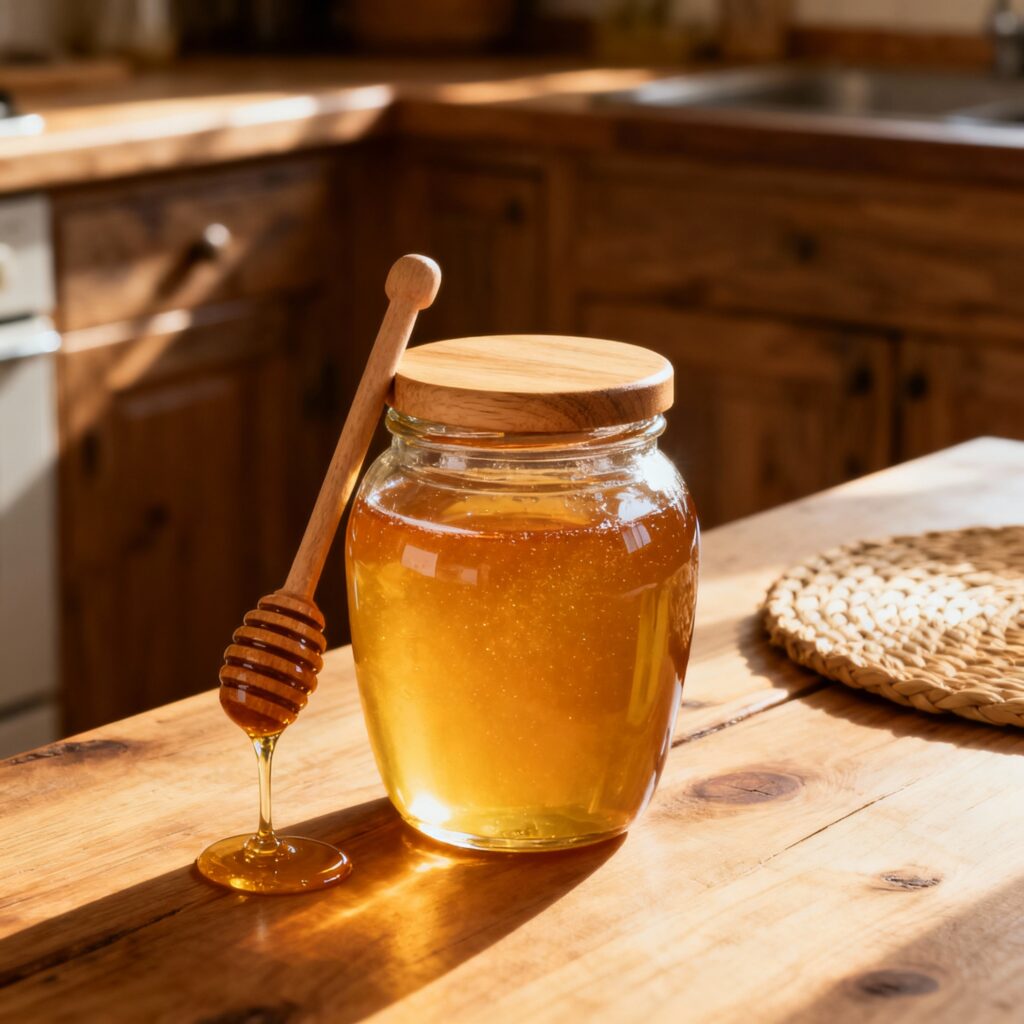
Honey has been used as a home remedy for thousands of years, and modern research has started to sort out where it genuinely helps and where its reputation runs ahead of the evidence. The two areas with the most data are cough relief from colds and the use of medical-grade honey on certain wounds. This article walks through what studies show, how honey may work, who should avoid it, and when a cough or wound needs professional care.
Why Honey Gets Called a Natural Remedy
Honey is mostly sugar, but it also contains small amounts of enzymes, acids, and plant compounds such as polyphenols. Several of its properties are relevant to health. It is thick and coats the throat. Its high sugar content and low water activity make it hard for many microbes to grow in it. Some honeys produce low levels of hydrogen peroxide, and manuka honey contains methylglyoxal, a compound with antibacterial activity in laboratory tests.
Laboratory activity, however, does not automatically translate into a treatment for infections in people. Honey is sometimes described online as a “natural antibiotic,” but that phrase overstates the evidence. Honey does not replace antibiotics for bacterial infections, and antibiotics themselves do not help viral illnesses such as colds (CDC: Antibiotic Do’s and Don’ts).
Honey for Coughs: What the Evidence Shows
Cough relief is honey’s best-studied use. A Cochrane review of trials in children with acute cough found that honey probably relieves cough symptoms better than no treatment, a placebo, or diphenhydramine, and may be similar to dextromethorphan, a common over-the-counter cough suppressant. The trials were small and short, so the certainty of evidence was rated moderate to low (Oduwole et al., Cochrane 2018).
A 2021 systematic review and meta-analysis that included adults and children with upper respiratory tract infections reached a similar conclusion: honey improved combined symptom scores, cough frequency, and cough severity compared with usual care (Abuelgasim et al., 2021). The authors suggested honey as a reasonable alternative to antibiotics, which are often prescribed unnecessarily for these viral infections.
Practical points for coughs:
- A typical dose in studies was about one to two teaspoons, often taken before bed.
- Honey can be taken straight or stirred into warm water or tea.
- It may help nighttime cough and sleep for both children and parents.
- It eases symptoms; it does not shorten the infection itself.
Never Give Honey to Babies Under 12 Months
This is the most important safety rule. Honey can contain spores of Clostridium botulinum. An infant’s immature gut cannot keep these spores from growing and producing toxin, which can cause infant botulism, a serious illness that can lead to muscle weakness and breathing problems. Do not give honey in any form, including in foods or on pacifiers, to children younger than one year.
Honey for Wounds and Burns
Medical-grade honey, which is filtered and sterilized, is used in some wound dressings. A Cochrane review of honey as a topical wound treatment found that honey dressings may heal partial-thickness burns faster than some conventional dressings and may help infected surgical wounds heal sooner than antiseptics with gauze. For many other wound types, the evidence was of low quality or showed no clear benefit (Jull et al., Cochrane 2015).
That nuance matters. The positive findings involved medical-grade products used under clinical supervision, not kitchen honey applied at home. Supermarket honey is not sterile and is not designed for open wounds.
- For minor cuts and scrapes, clean the area with water, apply a simple dressing, and watch for signs of infection.
- For burns larger than a small patch, deep wounds, or wounds that will not stop bleeding, seek medical care.
- If you are interested in honey dressings, ask a nurse, doctor, or pharmacist about licensed medical-grade products.
How Honey May Work
Researchers have proposed several mechanisms:
- Soothing effect: The thick texture coats the throat and may calm the cough reflex.
- Osmotic effect: High sugar concentration draws water out of microbes, limiting their growth on wound surfaces.
- Acidity and hydrogen peroxide: Both can inhibit bacteria in lab conditions.
- Moist wound environment: Honey dressings keep wounds moist, which supports healing.
Most of this comes from laboratory and early clinical research. These mechanisms help explain observed effects but should not be read as proof that honey treats infections inside the body.
Is Manuka Honey Better?
Manuka honey, produced from the manuka tree in New Zealand and Australia, has stronger antibacterial activity in laboratory tests than many other honeys, largely because of its methylglyoxal content. Many medical wound dressings use manuka honey. For cough relief, however, there is no strong evidence that manuka works better than ordinary honey, and it costs considerably more.
Who Should Be Careful With Honey
- Infants under 12 months: Never give honey.
- People with diabetes: Honey raises blood sugar like other sugars. Small amounts for a cough may be fine, but count it in your carbohydrate intake.
- People with pollen or bee allergies: Allergic reactions to honey are uncommon but possible.
- Dental health: Honey is sticky and sugary. Brush teeth after a bedtime dose when practical.
When a Cough Needs Medical Attention
Most coughs from colds improve within one to three weeks. Contact a healthcare professional if a cough comes with any of the following:
- Difficulty breathing, wheezing, or fast breathing
- High or persistent fever
- Coughing up blood
- A cough that lasts longer than three weeks
- Chest pain, or a cough in a baby younger than three months
- Signs of dehydration or unusual drowsiness in a child
Supporting Recovery From a Cold
Alongside honey, simple measures can help you feel better while a cold runs its course: rest, fluids, a humidifier or steamy shower, saline nasal rinses, and appropriate doses of over-the-counter pain or fever relievers when suitable. Washing hands often and staying home when sick helps protect others. Vaccines, including the annual flu vaccine, reduce the risk of some respiratory infections in the first place.
The Bottom Line
Honey is a sensible, low-cost option for easing cough from colds in adults and children over one year old, and good-quality evidence supports this use. Medical-grade honey dressings have a role in some burns and wounds under professional care. Honey is not a substitute for antibiotics or medical treatment of infections, and it must never be given to babies under 12 months.
Key takeaways:
- Honey can modestly reduce cough frequency and severity from colds.
- Medical-grade honey may help some burns and wounds; kitchen honey is not for open wounds.
- Calling honey a “natural antibiotic” overstates the evidence.
- No honey for infants under one year because of botulism risk.
This article is for general information and is not a substitute for advice from a qualified healthcare professional.