
For decades, immunology taught that acute inflammation simply burns itself out as chemicals dilute. Over the past twenty years, biomedical research has overturned that assumption. Groundbreaking work led by Dr. Charles N. Serhan at Harvard Medical School and Brigham and Women’s Hospital revealed that the resolution of inflammation is an active, biochemically programmed sequence directed by signaling molecules called specialized pro-resolving mediators (SPMs).
When this resolution program runs smoothly, swelling subsides, cellular debris is cleared, and tissue regeneration begins. When resolution falters, acute inflammation does not disappear—it smolders into chronic, low-grade tissue destruction. Understanding how the body builds and deploys these natural “stop switches,” especially lipid compounds known as resolvins, provides critical insight into tissue recovery, musculoskeletal health, and chronic inflammatory disease.
The Paradigm Shift: Active Resolution vs. Passive Decay
In the early 2000s, researchers investigating inflammatory exudates discovered a process termed the “lipid mediator class switch.” During the initial hours of tissue injury, immune cells produce pro-inflammatory eicosanoids, such as prostaglandins and leukotrienes, to recruit neutrophils. As neutrophils accumulate, tissue enzymes—including 15-lipoxygenase (15-LOX), 5-lipoxygenase (5-LOX), and cyclooxygenase-2 (COX-2)—reprogram their pathways. Instead of generating further inflammatory signals, they convert polyunsaturated fatty acids into bioactive resolution agonists that actively signal immune cells to begin cellular repair.
This metabolic shift demonstrates that tissue healing is an active cellular achievement rather than the passive absence of inflammatory stimulation.
The Four SPM Families: How Resolvins Are Formed
Specialized pro-resolving mediators encompass four primary structural families:
- E-Series Resolvins (RvE1–RvE4): Enzymatically synthesized from eicosapentaenoic acid (EPA), an essential marine omega-3 fatty acid, via the pathway intermediate 18-HEPE. They regulate leukocyte trafficking and suppress endothelial adhesion.
- D-Series Resolvins (RvD1–RvD6): Derived from docosahexaenoic acid (DHA) via 17-HDHA. D-series resolvins act broadly across tissues to limit excessive cytokines and coordinate cellular cleanup.
- Protectins (PD1/NPD1): Also generated from DHA, protectins exhibit potent neuroprotective properties, defending neural tissue and retinal cells from oxidative stress.
- Maresins (MaR1–MaR2): Produced primarily by macrophages from DHA via 14-HDHA, maresins stimulate wound re-epithelialization and tissue regeneration.
- Lipoxins (LXA4, LXB4): Derived from arachidonic acid (an omega-6 fatty acid), lipoxins serve as an endogenous brake on vascular permeability.
Cellular Mechanisms: Efferocytosis and Phenotypic Switching
Unlike traditional immunosuppressive drugs that broadly disable host defenses and increase infection susceptibility, resolvins are immunoresolvent: they regulate cellular behavior without paralyzing host immunity.
SPMs bind to high-affinity G-protein coupled receptors, including ALX/FPR2, ChemR23/ERV1, and GPR18/DRV2, directing two critical recovery events:
Halting Neutrophil Infiltration
Activated neutrophils release cytotoxic enzymes to eliminate pathogens, but unchecked influx damages healthy bystander tissue. Resolvins actively arrest neutrophil rolling, adhesion, and transendothelial migration into tissue, preventing collateral injury.
Stimulating Non-Phlogistic Efferocytosis
As neutrophils reach the end of their lifespan, they undergo apoptosis. If uncollected, their membranes rupture—termed secondary necrosis—releasing toxic intracellular contents. Specialized pro-resolving mediators instruct macrophages to engulf apoptotic neutrophils through a restorative process called efferocytosis. Crucially, this uptake is non-phlogistic, occurring without releasing inflammatory cytokines like TNF-α or IL-1β.
Simultaneously, resolvins prompt macrophages to shift from an M1 pro-inflammatory phenotype (geared for destruction) to an M2 reparative phenotype (geared for extracellular matrix synthesis, angiogenesis, and tissue rebuilding).
Comparative Overview of Major Pro-Resolving Mediators
The table below summarizes the primary SPM families, their dietary lipid precursors, key metabolic intermediates, receptors, and established recovery actions.
| Mediator Family | Precursor Fatty Acid | Key Intermediate | Primary Receptors | Dominant Biological Actions |
|---|---|---|---|---|
| E-Series Resolvins (RvE1–RvE4) | Eicosapentaenoic acid (EPA) | 18-HEPE | ChemR23/ERV1, BLT1 | Inhibits neutrophil extravasation; downregulates NF-κB; promotes mucosal recovery. |
| D-Series Resolvins (RvD1–RvD6) | Docosahexaenoic acid (DHA) | 17-HDHA | GPR32/DRV1, ALX/FPR2 | Stimulates non-phlogistic efferocytosis; clears cellular debris; blunts inflammatory pain. |
| Protectins (PD1 / NPD1) | Docosahexaenoic acid (DHA) | 17-HDHA | GPR37 | Suppresses pro-inflammatory cytokines; provides neuroprotection and retinal preservation. |
| Maresins (MaR1–MaR2) | Docosahexaenoic acid (DHA) | 14-HDHA | LGR6 | Accelerates wound re-epithelialization; stimulates tissue regeneration and healing. |
| Lipoxins (LXA4, LXB4) | Arachidonic acid (AA) | 15-HETE | ALX/FPR2 | Acts as early vascular brake; reduces microvascular permeability; aids lymphatic drainage. |
Source: Adapted from Fredman & Serhan, Nature Reviews Cardiology (2024) and Serhan, Nature (2014).
What Clinical Trials and Human Studies Reveal
Impaired resolution underpins numerous chronic conditions; individuals with vascular disease, osteoarthritis, and metabolic syndrome frequently exhibit blunted circulating SPM levels relative to pro-inflammatory eicosanoids.
In the randomized, double-blind, placebo-controlled GAUDI trial published in the Journal of Translational Medicine (2023), researchers evaluated an SPM-enriched marine oil standardized to 17-HDHA, 18-HEPE, and 14-HDHA in adults with knee osteoarthritis. Participants receiving the active oil experienced significant pain reductions and functional mobility improvements compared to placebo, correlating with favorable shifts in systemic lipid profiles.
Similarly, a review in Nature Reviews Cardiology (Fredman & Serhan, 2024) highlighted that vulnerable atherosclerotic plaques exhibit defective resolution. In healthy arteries, resolvins stimulate macrophages to clear lipid-filled necrotic cores and stabilize fibrous caps. When local SPM biosynthesis is exhausted, necrotic debris accumulates, destabilizing arterial walls.
The Resolution Dilemma: Why Traditional NSAIDs Can Complicate Recovery
These findings have prompted researchers to re-examine conventional treatments for pain and swelling, such as non-steroidal anti-inflammatory drugs (NSAIDs) and COX-2 inhibitors.
NSAIDs inhibit cyclooxygenase enzymes, blocking prostaglandins that generate pain and swelling. While effective for acute symptom relief, this introduces a biological dilemma: early COX-2 activity is also an enzymatic requirement for initiating the lipid mediator class switch. By completely suppressing early prostaglandin signals, NSAIDs can inadvertently blunt the production of downstream resolvins and lipoxins, potentially prolonging tissue recovery intervals.
While NSAIDs remain valuable tools for acute symptom management, masking inflammation is biologically distinct from achieving complete tissue resolution.
Supporting Endogenous Resolution: Nutrition and Lifestyle Factors
Because SPMs are derived from dietary fatty acids, lifestyle factors directly influence resolution pathways:
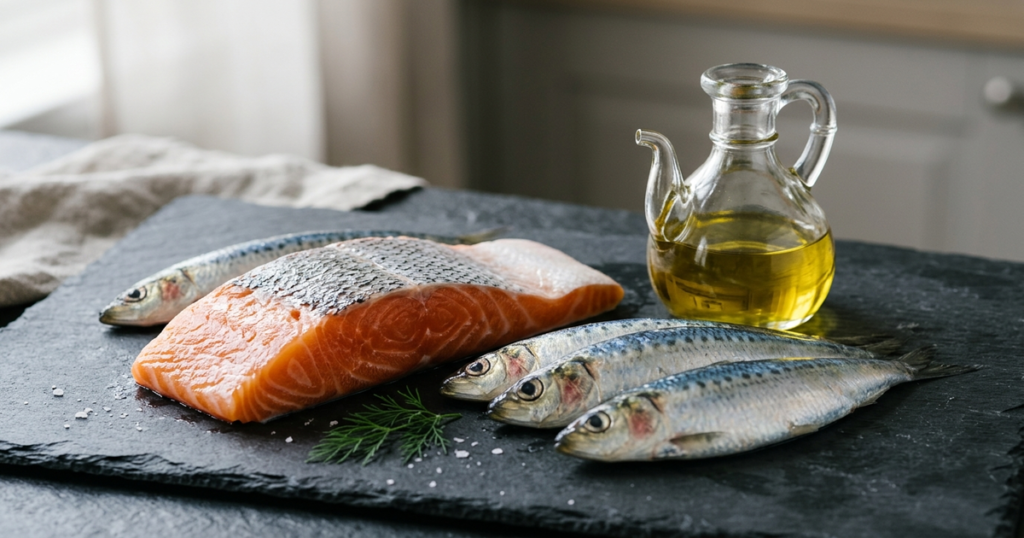
- Dietary EPA and DHA: Oily fish—such as wild salmon, mackerel, and sardines—or algae oils provide fatty acids required for resolvin synthesis. Human trials confirm that regular omega-3 intake elevates circulating 18-HEPE and 17-HDHA.
- Aspirin-Triggered Resolvins: Low-dose aspirin acetylates COX-2, directing it to produce 15R-HETE and 17R-HDHA. This yields “aspirin-triggered” resolvins that resist rapid metabolic degradation. Any aspirin regimen requires guidance from a healthcare provider due to bleeding risks.
- Physical Movement: Clinical exercise studies demonstrate that moderate aerobic activity prompts transient increases in circulating SPMs, assisting skeletal muscle repair.
- Sleep Integrity: Efferocytosis follows circadian rhythms; chronic sleep deprivation elevates pro-inflammatory cytokines while impairing tissue clearance.
Scientific Limitations and Research Frontiers
Despite promising biology, key limitations remain. Natural resolvins are chemically labile with short half-lives in vivo, as enzymes rapidly degrade them. Developing stable pharmaceutical mimetics remains an ongoing challenge. Additionally, commercial SPM supplements provide precursor fractions (such as 17-HDHA and 18-HEPE) rather than regulated medications. While trials report clinical improvements, supplements are nutritional adjuncts, not replacements for prescribed medical care.
Sources and Further Reading
- Fredman G, Serhan CN. Specialized pro-resolving mediators in vascular inflammation and atherosclerotic cardiovascular disease. Nature Reviews Cardiology. 2024;21(11):808-823.
- Journal of Translational Medicine. Efficacy of specialized pro-resolving mediators in symptomatic knee osteoarthritis: A randomized, double-blind, placebo-controlled pilot study (GAUDI). 2023;21:429.
- Serhan CN. Pro-resolving lipid mediators are leads for resolution physiology. Nature. 2014;510(7503):92-101.
- Calder PC. Eicosanoids and specialized pro-resolving mediators in nutrition and health. Nutrients / PubMed Central. 2020;12(1):34.
Related Reading
- GlycA: What 488,000 People Reveal About Heart Inflammation
- Omega-3 Fatty Acids: Benefits for Brain, Heart & Inflammation
- Intermittent Fasting and Inflammation: What the Research Shows
Disclosure: This content is for informational purposes only and is not medical advice. Always consult a qualified healthcare provider before making changes to your health regimen.