
For decades, the message from mainstream nutrition has been simple: eat more protein. Athletes want it for muscle, dieters want it for satiety, and older adults are told to load up on it to fight age-related muscle loss. But a growing body of research suggests the picture is more nuanced — and that for adults past midlife, moderate protein restriction may actually support a longer, healthier life.
The idea is not that protein is bad. It is that the pathways that respond to protein — particularly mTOR and IGF-1 — also drive many of the biological processes underlying aging. Studies in animals, and now increasingly in humans, suggest that dialing protein intake down from very high levels may activate cellular repair and slow age-related decline.
The Science: How Protein Talks to Your Cells
When you eat protein, your body breaks it down into amino acids. These amino acids do far more than build muscle. They act as signaling molecules that switch on a cellular pathway called mTOR (mechanistic target of rapamycin). mTOR tells cells to grow, divide, and store nutrients. It is essential for development — but chronic mTOR activation is one of the most consistent biological signatures of aging.
Protein also raises circulating IGF-1 (insulin-like growth factor 1), a hormone that promotes tissue growth. In laboratory studies, animals with lower lifetime IGF-1 signaling tend to live longer. Research by Valter Longo and colleagues at the University of Southern California, published in Cell Metabolism, found that middle-aged adults with high protein intake had a substantially higher risk of overall mortality and cancer death than those with low intake — a signal that tracked closely with IGF-1 levels.
The opposing pathway is autophagy, the cellular “self-eating” process by which cells clear out damaged proteins and organelles. Autophagy is stimulated by lower protein intake and by fasting. When mTOR is dialed down, autophagy is dialed up. Research suggests this housekeeping process is one of the most important levers for healthy aging.
The Newest Evidence: It Is Not Just Protein, It Is Isoleucine
A 2024 study published in Nature Aging by Yeh and colleagues at the University of Wisconsin-Madison delivered one of the most striking findings in the field. Working with aged mice, the researchers showed that restricting either total protein or a single branched-chain amino acid — isoleucine — improved multiple markers of healthy aging, including body composition, glucose regulation, and frailty scores. Remarkably, these benefits appeared even when the restriction was started late in life.
A related paper in Cell Metabolism from 2023 by Green and colleagues found that isoleucine restriction extended lifespan in genetically diverse mice by roughly 33 percent in males and 7 percent in females — and produced these effects without requiring overall calorie reduction.
Isoleucine is one of three branched-chain amino acids (BCAAs), along with leucine and valine. It is particularly abundant in beef, chicken, eggs, and dairy. Plant proteins like beans and lentils contain BCAAs too, but generally at lower concentrations and alongside a very different overall amino acid profile.
What This Means for Humans
Human studies are, by necessity, more limited than animal work — no one can randomize humans to a decades-long diet. But the population evidence is consistent with the mechanism. Long-lived populations in the so-called Blue Zones — Okinawa, Sardinia, Ikaria, Nicoya, and Loma Linda — all consume diets that are moderate to low in animal protein and rich in plant foods. The traditional Okinawan diet, for example, historically derived only around 9 percent of calories from protein, and most of that from plants.
A 2014 Cell Metabolism paper following more than 6,000 U.S. adults found that people aged 50 to 65 who reported high protein intake (20 percent or more of daily calories from protein) had a 74 percent higher risk of all-cause mortality over the follow-up period compared with those in the low-protein group. Cancer mortality risk was several-fold higher. Importantly, the association reversed after age 65, where higher protein appeared protective — suggesting that the right amount of protein depends heavily on life stage.
Why the Reversal After 65?
Older adults face a distinct challenge called anabolic resistance: their muscles respond less efficiently to dietary protein, and sarcopenia (age-related muscle loss) becomes a serious risk. Frailty and falls, not cancer, become the dominant threats to survival. Current guidance from many geriatric research groups suggests older adults may need somewhat more protein per kilogram of body weight than the standard RDA to preserve muscle and function.
Practical Takeaways
The research points toward a nuanced approach rather than blanket rules:
For adults in midlife (roughly 45 to 65)
- Consider moderate rather than high protein intake — closer to the RDA of about 0.8 grams per kilogram of body weight, unless a physician advises otherwise.
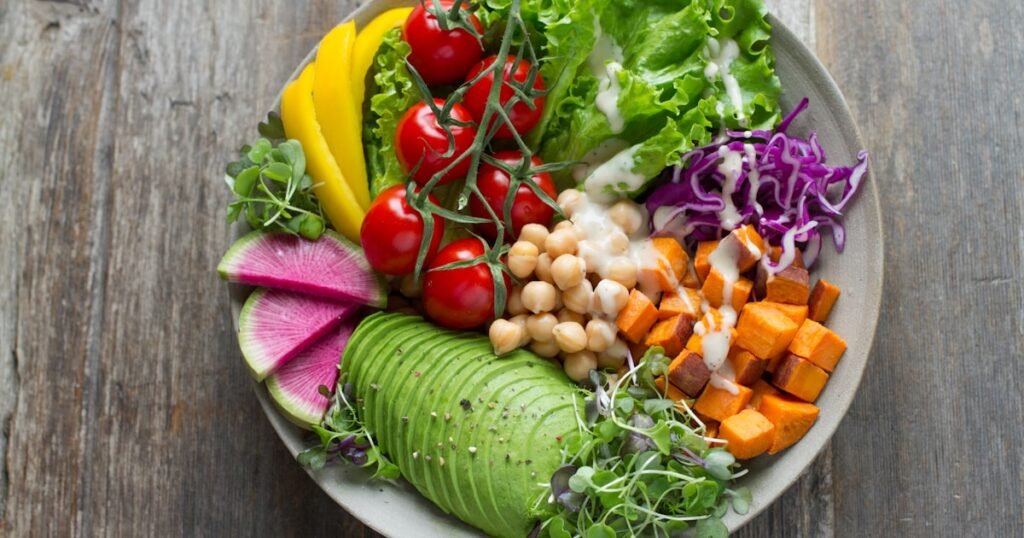
- Emphasize plant proteins (legumes, nuts, whole grains) which contain lower levels of branched-chain amino acids and come packaged with fiber and phytonutrients.
- Limit consistently very high animal-protein intakes, which correlate most strongly with elevated IGF-1.
For older adults (65+)
- Protein needs likely increase to preserve muscle mass and function.
- Adequate protein at each meal, combined with resistance exercise, appears more important than restriction.
- Discuss individualized targets with a physician or registered dietitian.
For everyone
- Periods of lower protein intake — for example, a few days of a plant-based, lower-protein diet as studied in fasting-mimicking protocols — may support autophagy and metabolic reset. Research on this is still emerging.
- Total dietary pattern matters far more than any single nutrient. A Mediterranean or plant-forward diet consistently outperforms high-animal-protein patterns in long-term health outcomes.
Important Caveats
Much of the strongest mechanistic evidence still comes from animal studies. Humans are not mice, and the exact translation of amino acid restriction findings remains an active area of research. In addition, protein needs vary based on activity level, health conditions, pregnancy, illness, and medications. People with kidney disease, cancer, or those recovering from surgery may have very different protein requirements than the general population.
The takeaway is not to fear protein. It is to think of it less as “more is better” and more as a signal your cells respond to — one that likely benefits from being modulated across the lifespan rather than maximized at every meal.
Disclosure: This content is for informational purposes only and is not medical advice. Always consult a qualified healthcare provider before making changes to your health regimen.