
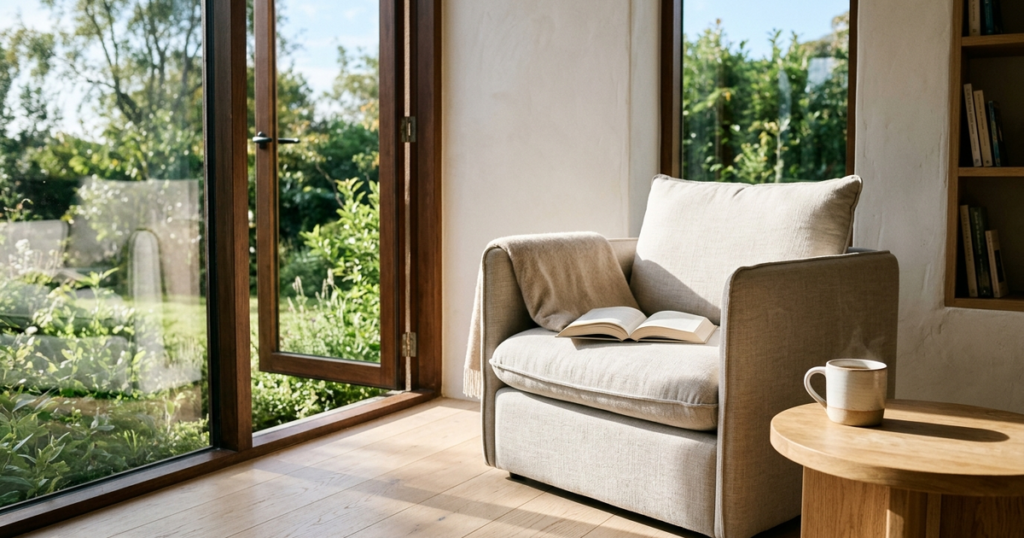
Most modern adults spend up to 90% of their waking hours indoors under lighting that rarely exceeds a few hundred lux. While health messaging often emphasizes limiting nighttime screens, new epidemiological research suggests daytime light may matter even more for brain health. According to a landmark study of over 87,000 adults, consistent exposure to bright daytime light is associated with a 16% lower risk of developing dementia, with highest vulnerability among those receiving under 42 minutes of outdoor-level light daily.
The findings, published in General Psychiatry by an international team of researchers, provide the largest objective look at how ambient light environments correlate with neurodegenerative disease. With dementia affecting over 55 million people worldwide, identifying accessible lifestyle factors is an urgent priority for preventive medicine.
Inside the 87,000-Person Sensor Study
Prior investigations into sunlight and cognitive health relied on self-reported questionnaires or regional weather estimates, introducing recall bias. To overcome these limitations, researchers analyzed data from 87,577 dementia-free adults (mean age 62.4 years; 57.0% female) in the UK Biobank cohort.
Participants wore calibrated wrist actigraphy devices with photometric sensors for seven continuous days, recording minute-by-minute light intensity alongside activity. Researchers tracked the cohort over a median follow-up of 8.1 years, during which 741 participants were diagnosed with incident dementia via hospital admissions, primary care records, and death registries.
After adjusting for age, sex, socioeconomic status, physical activity, sleep duration, cardiovascular risk factors, and season, multivariable analysis demonstrated a clear relationship between daytime lux exposure and cognitive preservation:
- Moderate brightness threshold: Exposure to average daytime light above 1,000 lux was associated with a 16% lower risk of incident dementia (hazard ratio [HR] 0.84, 95% confidence interval [CI] 0.71–0.99, p = 0.039) compared to dimly lit environments.
- High-intensity outdoor light benefit: Spending at least 0.70 hours (42 minutes) daily in illumination exceeding 5,000 lux achieved a 17% reduction in dementia risk (HR 0.83, 95% CI 0.70–0.98, p = 0.036).
- The deficit penalty: Receiving less than 42 minutes of bright daytime light emerged as an independent predictor of dementia risk that outperformed six established clinical factors, including obesity and high alcohol intake.
- Nighttime light nuance: After full adjustment, nighttime light exposure alone showed no statistically significant independent association with dementia, indicating daytime brightness was the primary driver in this cohort.
How Common Light Environments Compare
To understand what these photometric thresholds mean in daily life, it helps to compare indoor and outdoor lighting. Lux measures illuminance perceived by the human eye. The table below outlines how common settings compare against the study’s analytical thresholds.
| Environment / Setting | Typical Illuminance | Study Categorization | Observed Cognitive Association |
|---|---|---|---|
| Dim living room / evening lighting | 50 – 150 lux | Very low daytime light | Highest baseline dementia risk category |
| Standard commercial office lighting | 300 – 500 lux | Sub-threshold illuminance | Falls below the 1,000 lux protective cutoff |
| Indoor area beside a sunlit window | 1,000 – 2,500 lux | Moderate daylight threshold | 16% lower dementia hazard (HR 0.84) |
| Overcast or cloudy outdoor sky | 5,000 – 15,000 lux | Bright daytime light | 17% lower risk with ≥42 min daily (HR 0.83) |
| Direct midday sunshine | 25,000 – 100,000+ lux | High-intensity natural light | Optimal retinal stimulation and clock alignment |
The Biological Bridge: Retinal Receptors, Circadian Clocks, and Glymphatic Clearance
Why would daytime photons influence neurodegenerative vulnerability? The mechanism involves specialized retinal photobiology and neural projections into the central nervous system.
In addition to visual rods and cones, the retina contains intrinsically photosensitive retinal ganglion cells (ipRGCs) expressing melanopsin, which responds preferentially to bright, blue-wavelength natural light. When activated, ipRGCs transmit signals via the retinohypothalamic tract to the suprachiasmatic nucleus (SCN)—the master circadian clock in the hypothalamus.
Mediation analyses in the General Psychiatry study demonstrated that circadian rest-activity rhythms (CRARs) and structural brain volumes mediated up to 33% of the protective association. Strong daytime photonic cues support two critical pathways:
1. Melatonin Rhythmicity and Sleep Architecture
Daytime bright light suppresses melatonin during wakefulness, preventing drowsiness and priming the pineal gland for robust nocturnal melatonin production. This contrast promotes consolidated slow-wave sleep, during which neural restoration occurs.
2. Glymphatic Waste Clearance
As documented in research reviewed by the National Institute on Aging, slow-wave sleep activates the glymphatic network. Cerebrospinal fluid circulates through brain tissue to clear metabolic byproducts, including amyloid-beta and tau proteins. Without consistent daytime circadian synchronization, slow-wave sleep fragments, reducing clearance efficiency and accelerating toxic protein accumulation.
Gene Interactions: Who Benefits Most?
The observational analysis revealed notable subgroup variations, with benefits amplified in individuals with higher baseline vulnerability:
- APOE ε4 Carriers: Participants carrying the apolipoprotein E (APOE) ε4 allele—the primary genetic risk factor for late-onset Alzheimer’s—showed an amplified protective association, with risk reductions reaching up to 41% among those maintaining high daytime light exposure.
- Evening Chronotypes: Individuals identifying as “night owls” frequently experience circadian misalignment. In this group, consistent daytime light appeared to counter circadian deficits, yielding greater relative risk improvements than in morning chronotypes.
Study Limitations and Evidence Quality
While the scale of this 87,000-person study provides valuable insights, several methodological limitations must be considered:
- Observational design: The study demonstrates a statistical correlation between daytime light and lower dementia risk; it does not prove direct biological causation.
- Measurement window: Wrist sensor metrics were recorded over a single seven-day baseline window, assuming a week reflects years of habitual environmental exposure.
- Residual confounding: Participants spending more time outdoors may differ in overall mobility, physical fitness, social engagement, or pre-clinical health status.
- Demographic scope: The UK Biobank cohort is predominantly composed of middle-aged and older adults of White European descent, requiring replication in diverse populations.
Practical Steps to Support Daily Light Exposure
Because daylight exposure carries no financial cost and supports circadian health, researchers suggest simple lifestyle habits to optimize illuminance:
- Seek outdoor morning light: Spending 15 to 30 minutes outside within an hour of waking delivers 5,000 to 50,000+ lux—far exceeding indoor lighting—helping establish a clear circadian anchor.
- Incorporate outdoor breaks: A daily lunchtime walk or outdoor break can readily meet the study’s 42-minute threshold of ≥5,000 lux. Even overcast skies provide ample lux levels.
- Maximize window proximity: When working indoors, sitting near large exterior windows provides 1,000 to 2,500 lux, achieving the study’s moderate protection baseline.
- Maintain eye and skin safety: Never look directly at the sun, and follow standard dermatological guidance for sun protection during extended outdoor activities.
Related Reading
- How Your Daily Activity Rhythm Affects Brain Volume
- Sleep Duration and Dementia Risk: What the Research Shows
- Sync Your Workout to Your Body Clock for Better Heart Health
Sources and Further Reading
- Zheng N, Wang W, Li B, et al. Associations between wearable‐device‐measured daytime and nighttime light exposures and dementia risk: A prospective cohort study. General Psychiatry. 2026;39(3):e101439. doi:10.1002/gps3.70039
- National Institute on Aging. Sleep and Cognitive Health: Understanding the Circadian-Glymphatic Link. Available from: https://www.nia.nih.gov/health/brain-health/sleep-and-cognitive-health
- Blume C, Garbazza C, Spitschan M. Effects of light on human circadian rhythms, sleep and mood. Somnologie. 2019;23(3):147-156. PMC:PMC8905364
- World Health Organization. Dementia Fact Sheet: Global Burden, Risk Factors, and Prevention Strategies. Available from: https://www.who.int/news-room/fact-sheets/detail/dementia
Disclosure: This content is for informational purposes only and is not medical advice. Always consult a qualified healthcare provider before making changes to your health regimen.