
Healthy Foods for Kids
Kid-friendly healthy foods that may support growing bodies, from American, Indian, Mexican, Japanese, Chinese, Mediterranean, Korean, Thai, Italian, Middle Eastern, Vietnamese, Latin American, Filipino, Caribbean and other cuisines, with notes for toddlers, school-age kids and teens. Every guide covers choking-safe prep for children under 4, early peanut and egg introduction, no honey before age 1 and no added sugar under 2. Each guide also suggests limiting salty condiments such as soy sauce, ketchup and dressings, and seasoning with herbs, spices and citrus instead. (Mayo Clinic) Varied, whole-food meals may support healthy growth; your pediatrician can help tailor them to your child. (HealthyChildren.org (AAP))
Guides

American
Oatmeal, eggs, beans, berries and salmon, with choking-safe prep and sugar and salt swaps.
Read the guide →

Mexican
Beans, corn tortillas, avocado and fruit, with safe prep for chips, corn and cheese.
Read the guide →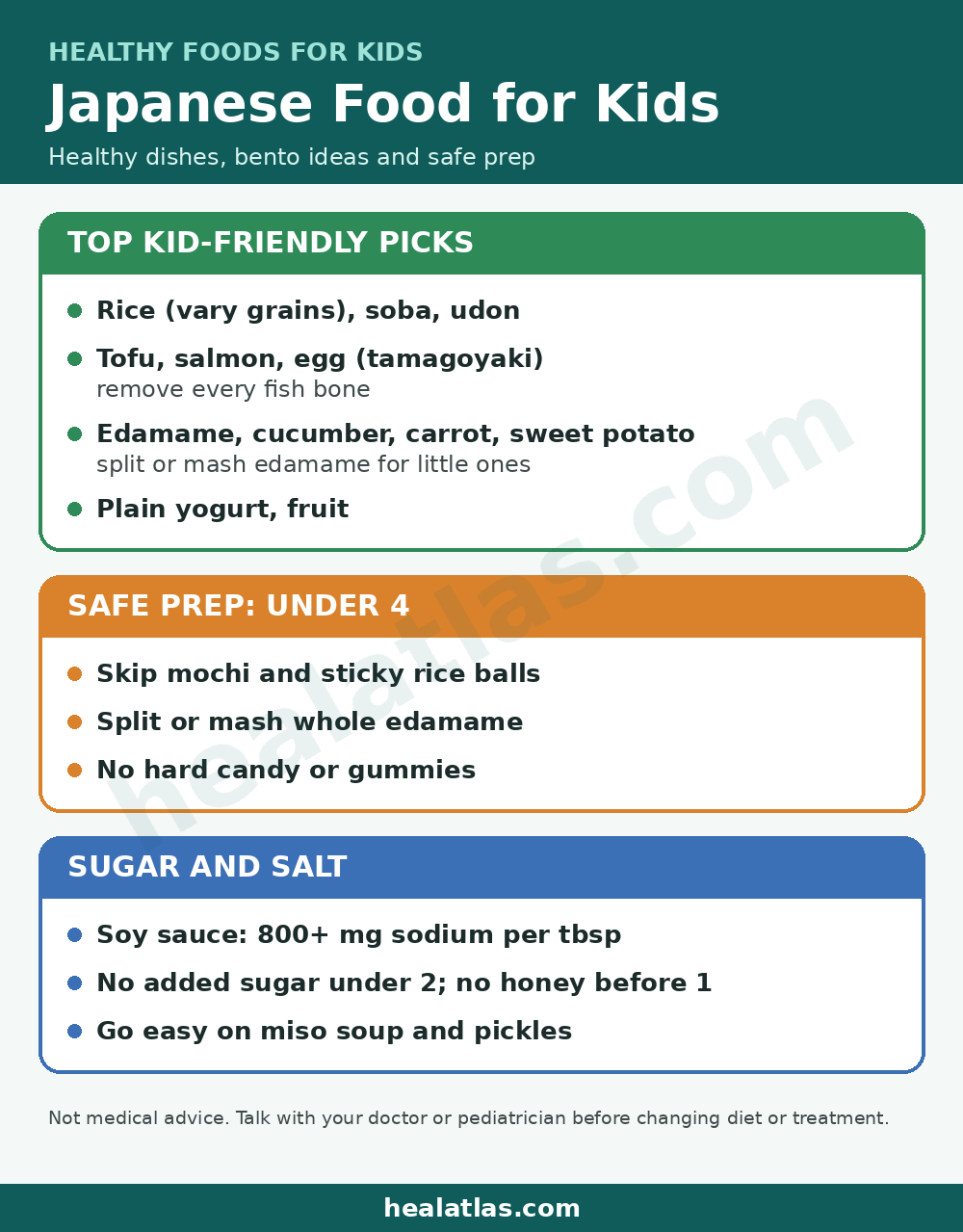
Japanese
Rice, tofu, salmon, edamame and bento lunch ideas, with mochi and soy sauce safety notes.
Read the guide →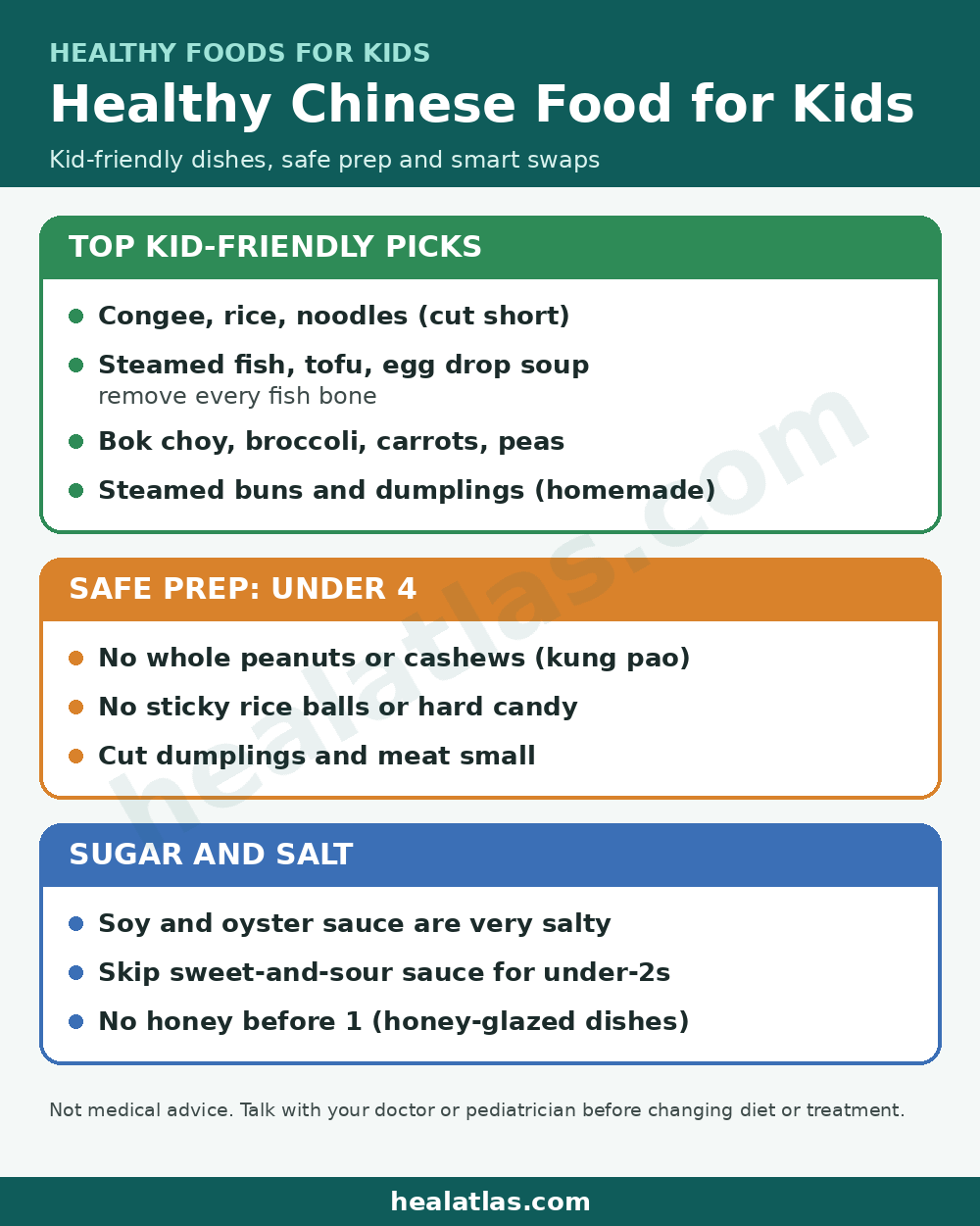
Chinese
Congee, steamed fish, tofu and bok choy, plus how to choose healthier takeout.
Read the guide →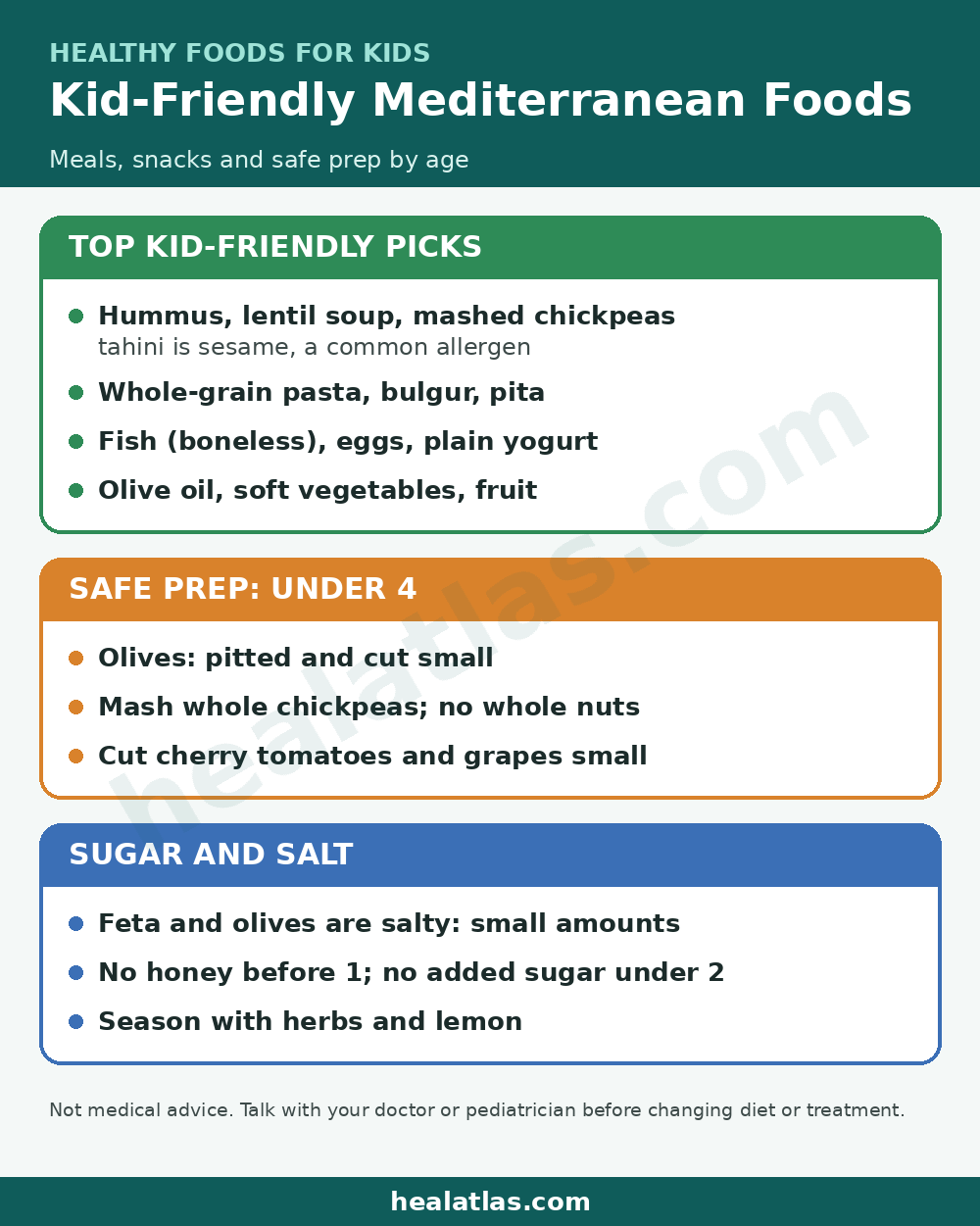
Mediterranean
Hummus, lentil soup, fish, yogurt and whole grains, with olive and chickpea safety tips.
Read the guide →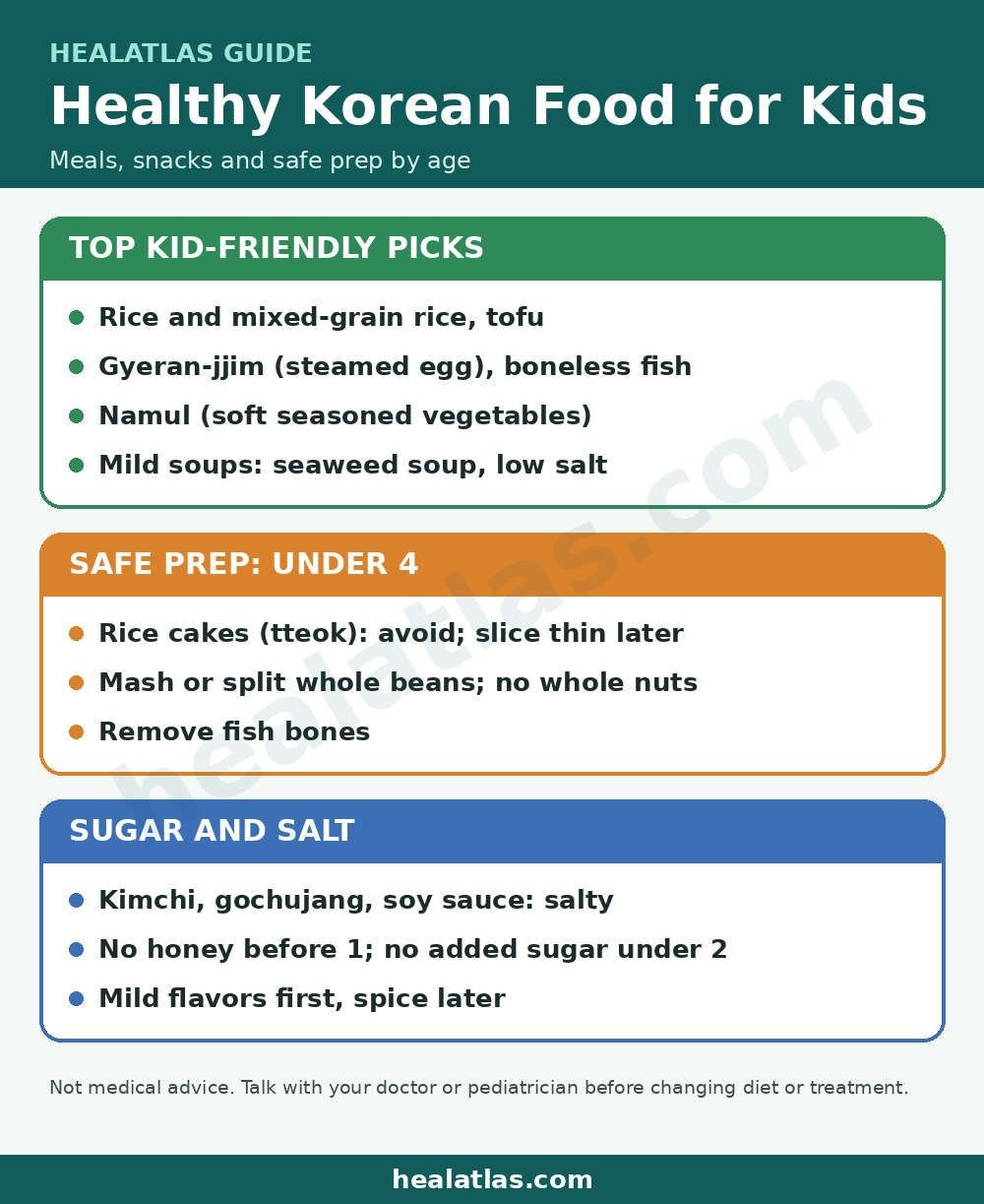
Korean
Rice, tofu, steamed egg, fish and namul, with rice cake safety and kimchi salt tips.
Read the guide →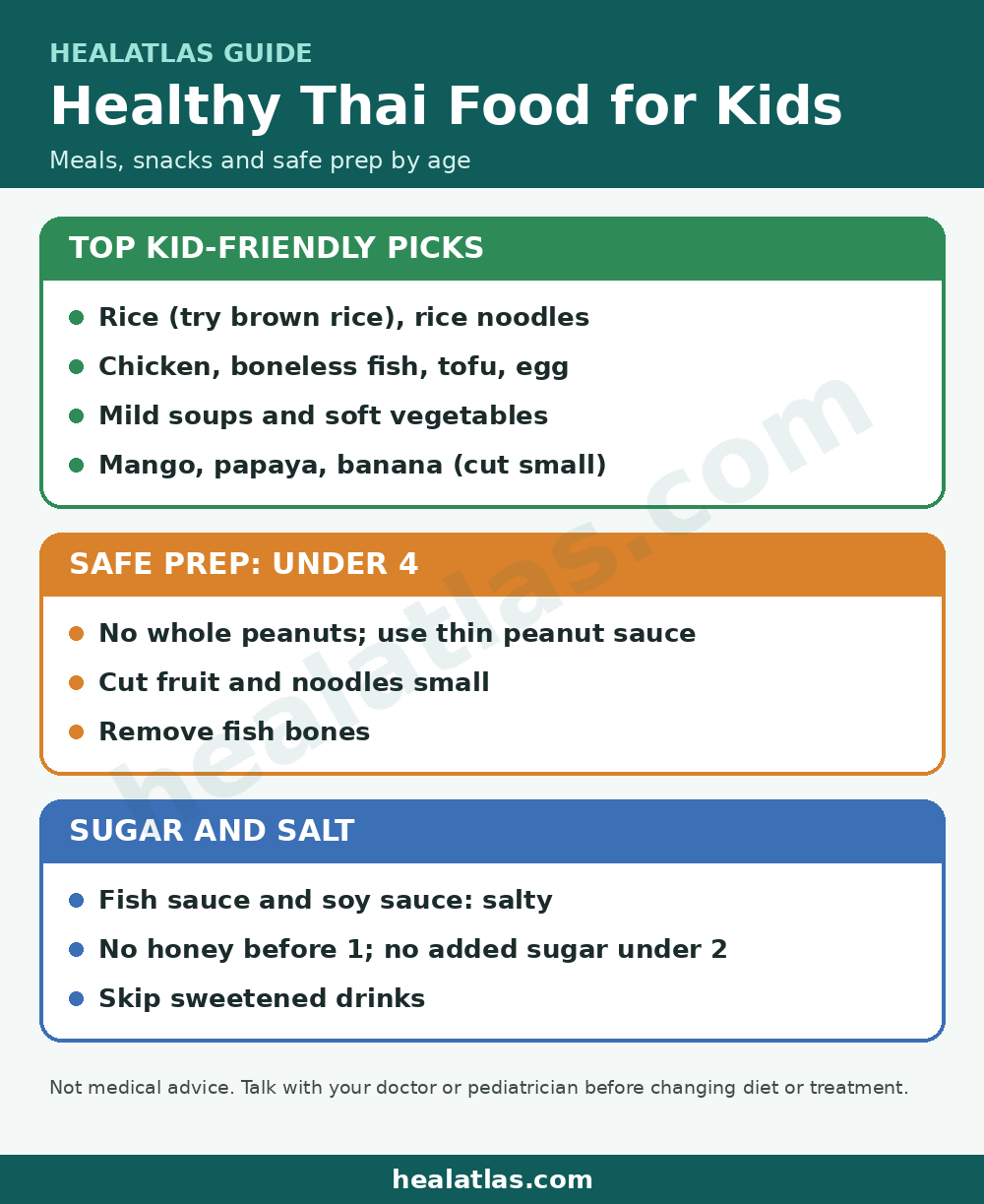

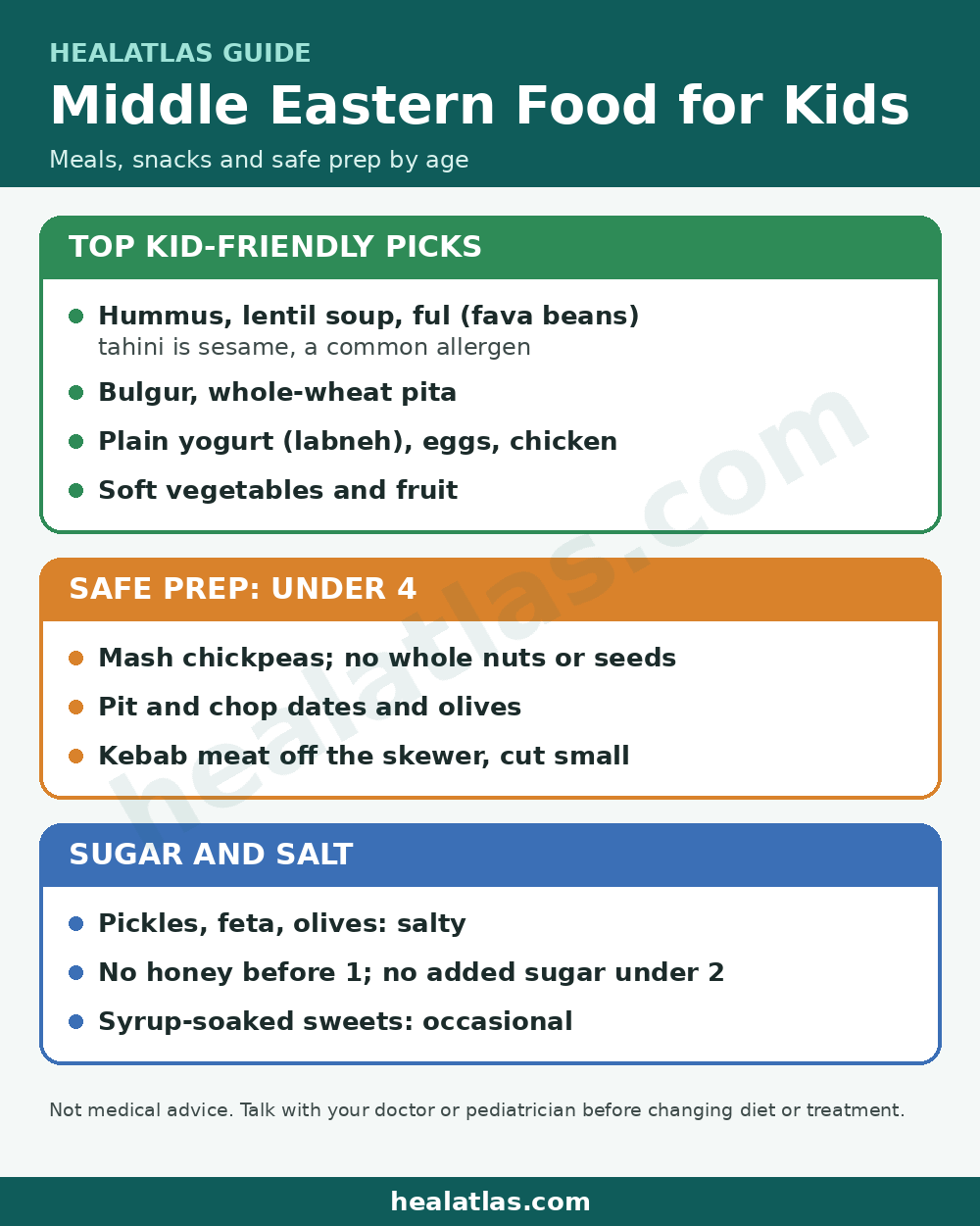
Middle Eastern
Hummus, lentil soup, bulgur and yogurt, with sesame introduction and date safety tips.
Read the guide →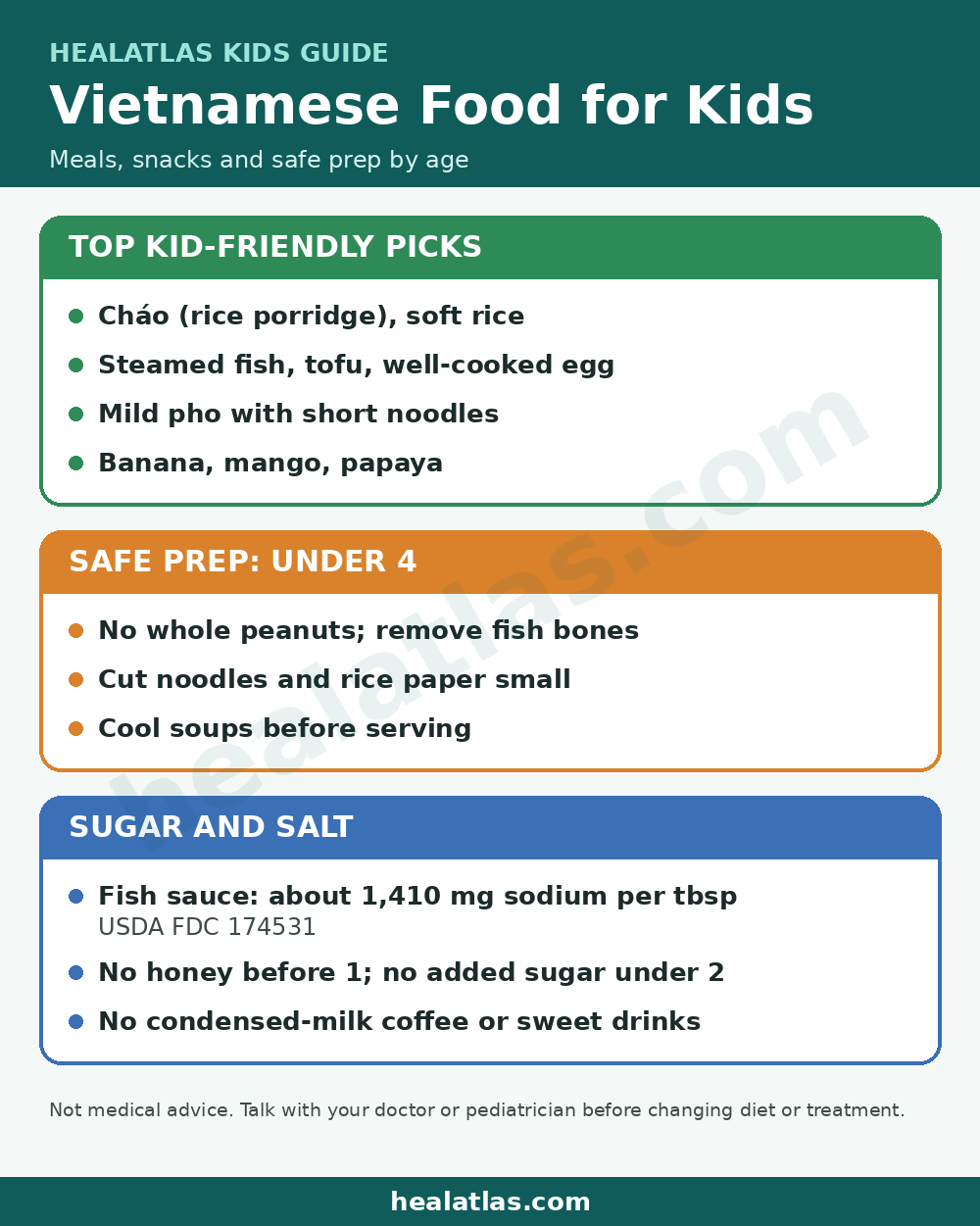
Vietnamese
Rice porridge, mild pho, fish, tofu and fruit, with peanut topping safety and fish sauce limits.
Read the guide →
Latin American
Beans, rice, arepas, plantain, avocado and quinoa, with queso fresco safety tips.
Read the guide →
Filipino
Lugaw, tinola, monggo, fish and fruit, with hot dog and rice cake safety and patis limits.
Read the guide →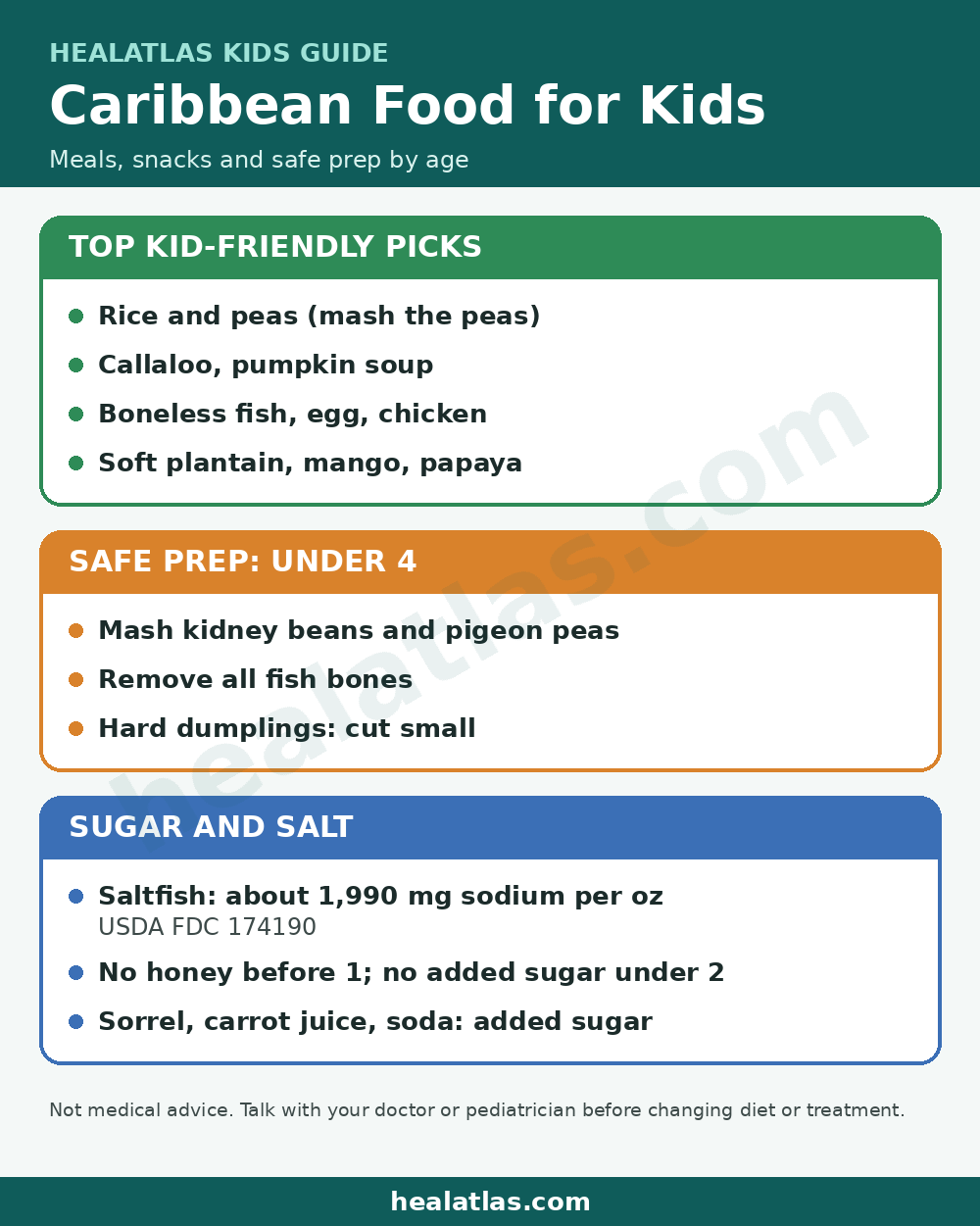
Caribbean
Rice and peas, callaloo, pumpkin soup, fish and soft plantain, with saltfish limits.
Read the guide →Safety basics for every cuisine
- Choking: keep high-risk foods such as whole grapes, nuts, popcorn and hot dog rounds from children until age 4 or older, and cut food into pieces no larger than one-half inch. (AAP / HealthyChildren.org) (CDC)
- Allergens: for babies who tolerate first foods and are not at increased risk, peanut foods can ideally be introduced as early as 4 to 6 months, along with egg and other common allergens in infant-safe forms. Ask your pediatrician first if your baby has severe eczema or an egg allergy. (AAP / HealthyChildren.org) (CDC) (NIH / NIAID)
- Honey and sugar: no honey before 12 months (infant botulism risk) and no added sugars before age 2. (CDC)
- Salt: avoid high-salt foods for young children, and limit salty condiments such as soy sauce, ketchup and dressings; one tablespoon of soy sauce can have more than 800 mg of sodium. (CDC) (Mayo Clinic)
Explore more
FAQ
What are healthy foods for kids?
Mayo Clinic recommends nutrient-dense foods: seafood, lean meat and poultry, eggs, beans, peas, soy products, unsalted nuts and seeds, a variety of fruits and vegetables, whole grains and low-fat dairy, while limiting added sugar, saturated fat and salt. (Mayo Clinic)
When can babies start solid foods?
At about 6 months; introducing foods before 4 months is not recommended. (CDC)
Which foods are choking hazards for toddlers?
Examples include whole grapes, whole nuts and seeds, spoonfuls of nut butter, popcorn, hot dogs, chunks of meat or cheese, hard raw vegetables and fruit, and hard or gummy candy. (CDC) (AAP / HealthyChildren.org)
Is honey safe for children?
Not before 12 months, because it can cause infant botulism. It is safe from age 1. (CDC) (AAP / HealthyChildren.org)
Sources
- CDC. Choking Hazards (Infant and Toddler Nutrition). https://www.cdc.gov/infant-toddler-nutrition/foods-and-drinks/choking-hazards.html (accessed Oct 25, 2026)
- HealthyChildren.org (AAP). Choking Prevention for Babies & Children. https://www.healthychildren.org/English/health-issues/injuries-emergencies/Pages/Choking-Prevention.aspx (accessed Oct 25, 2026)
- CDC. Foods and Drinks to Avoid or Limit (Infant and Toddler Nutrition). https://www.cdc.gov/infant-toddler-nutrition/foods-and-drinks/foods-and-drinks-to-avoid-or-limit.html (accessed Oct 25, 2026)
- CDC. When, What, and How to Introduce Solid Foods. https://www.cdc.gov/infant-toddler-nutrition/foods-and-drinks/when-what-and-how-to-introduce-solid-foods.html (accessed Oct 25, 2026)
- HealthyChildren.org (AAP). When to Introduce Egg, Peanut Butter & Other Common Food Allergens to a Baby. https://www.healthychildren.org/English/healthy-living/nutrition/Pages/when-to-introduce-egg-peanut-butter-and-other-common-food-allergens-to-your-baby-food-allergy-prevention-tips.aspx (accessed Oct 25, 2026)
- NIAID (NIH). Food Allergy Causes and Prevention. https://www.niaid.nih.gov/diseases-conditions/food-allergy-causes-prevention (accessed Oct 25, 2026)
- HealthyChildren.org (AAP). Botulism. https://www.healthychildren.org/English/health-issues/conditions/infections/Pages/Botulism.aspx (accessed Oct 25, 2026)
- Mayo Clinic. Nutrition for kids: Guidelines for a healthy diet. https://www.mayoclinic.org/healthy-lifestyle/childrens-health/in-depth/nutrition-for-kids/art-20049335 (accessed Oct 25, 2026)
- Mayo Clinic. Sodium: How to tame your salt habit. https://www.mayoclinic.org/healthy-lifestyle/nutrition-and-healthy-eating/in-depth/sodium/art-20045479 (accessed Oct 25, 2026)
- American Academy of Pediatrics, HealthyChildren.org. Making Healthy Food Choices. https://www.healthychildren.org/English/ages-stages/gradeschool/nutrition/Pages/Making-Healthy-Food-Choices.aspx (accessed Oct 25, 2026)