
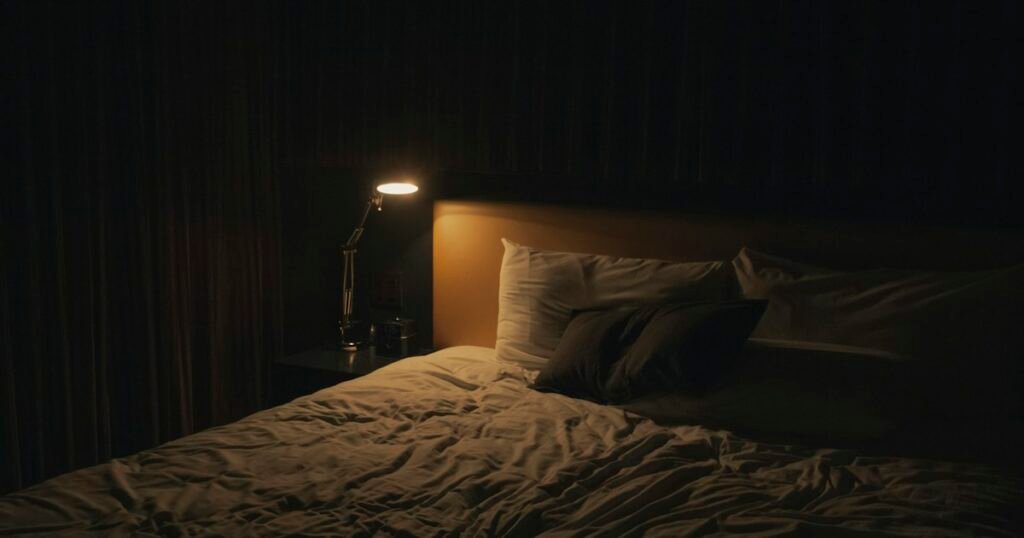
For decades, cardiovascular research has focused on diet, exercise, blood pressure, and cholesterol. A newer line of investigation is drawing attention to something more subtle: the light we are exposed to after dark. A growing body of research suggests that bright light at night — from bedside lamps, screens, and even streetlights filtering through a window — may quietly raise the risk of heart disease, stroke, and metabolic disorders.
What the Research Shows
One of the largest studies on this topic, published in JAMA Network Open in 2024, analyzed nearly 89,000 UK Biobank participants who wore wrist-mounted light sensors for a week. Participants with the highest nighttime light exposure had a substantially greater risk of developing coronary artery disease, heart attack, heart failure, and stroke over roughly nine years of follow-up, even after adjusting for sleep duration, physical activity, diet, and genetics.
The findings echo earlier work from the National Institutes of Health (NIH), which has repeatedly linked circadian rhythm disruption to metabolic and cardiovascular problems. A 2022 Proceedings of the National Academy of Sciences study led by Northwestern Medicine researchers found that a single night of exposure to moderate ambient light during sleep raised heart rate and impaired next-morning glucose regulation in healthy young adults — biological signals traditionally associated with cardiovascular strain.
The World Health Organization’s International Agency for Research on Cancer has long classified overnight shift work involving circadian disruption as a “probable” human carcinogen. Newer cardiovascular data suggest the same underlying mechanism — misaligned biological rhythms — may also help drive heart disease risk in the general population, not just night-shift workers.
Why Light After Dark Affects the Heart
The human cardiovascular system is deeply tied to the roughly 24-hour circadian clock. Blood pressure, heart rate, hormone release, and vascular tone all follow daily rhythms coordinated by a master clock in the brain’s suprachiasmatic nucleus. Light is the strongest signal that keeps this clock aligned.
Melatonin and Blood Pressure
At night, the pineal gland releases melatonin, a hormone that not only promotes sleep but also relaxes blood vessels and helps produce the natural nighttime dip in blood pressure. Research published in Hypertension and other peer-reviewed journals has shown that suppressing melatonin with even modest light exposure can blunt this dip. Over time, a flattened nocturnal blood-pressure pattern — sometimes called “non-dipping” — is a recognized risk factor for stroke and heart failure.
Inflammation, Metabolism, and Autonomic Balance
Circadian misalignment also nudges the autonomic nervous system toward sympathetic (“fight or flight”) dominance during hours when the body should be recovering. Studies indicate this shift is associated with higher resting heart rate, elevated inflammatory markers, and impaired insulin sensitivity — a cluster that accelerates atherosclerosis. Research from Harvard’s chronobiology group has documented similar metabolic disturbances in laboratory protocols that mimic shift work or evening light exposure.
Who Is Most Affected
Not everyone experiences the same degree of risk. Populations that may be particularly vulnerable include:
- Night-shift workers, whose sleep and light exposure are chronically inverted.
- People with existing cardiovascular risk factors such as hypertension, obesity, or type 2 diabetes, whose vascular systems are already under strain.
- Older adults, whose circadian signaling weakens with age.
- Urban residents exposed to significant outdoor light pollution that penetrates bedroom windows.
Children and adolescents also warrant attention. Emerging pediatric research suggests that evening screen use and light exposure can delay melatonin release, shorten sleep, and shift metabolic patterns during years when cardiovascular habits are being established.
Evidence-Based Ways to Reduce Nighttime Light
The good news: unlike many cardiovascular risk factors, nighttime light exposure is highly modifiable. Sleep and circadian researchers commonly point to several practical strategies supported by peer-reviewed evidence.
Optimize the Bedroom
- Aim for a dark sleeping environment. Blackout curtains, sleep masks, and covering small LED indicators can meaningfully reduce measured bedroom lux levels.
- Avoid overhead lights during the night. If a nightlight is needed, dim, warm-toned (amber or red) light appears less disruptive to melatonin than bright, blue-enriched white light.
- Keep electronics out of the bed. Even brief screen exposure during awakenings can suppress melatonin.
Wind Down With Circadian Signals in Mind
- Dim household lighting in the hour or two before bed. A gradual “sunset” mimics the natural signal the circadian clock evolved to expect.
- Use night-shift or warm-color modes on devices. While not a complete solution, reducing blue light in the evening lowers the biological impact of screen exposure.
- Get bright light exposure during the day. Ample morning and midday light strengthens the circadian rhythm and may make the system more resilient to occasional evening light.
Support Overall Sleep Health
Because the cardiovascular benefits of darkness at night are closely tied to sleep quality, general sleep hygiene amplifies the effect: a consistent schedule, cool bedroom temperature, limited late-day caffeine, and time to wind down. Guidance from the American Heart Association’s “Life’s Essential 8” now explicitly includes healthy sleep as one of the core pillars of cardiovascular well-being.
The Bottom Line
Cardiovascular disease remains the leading cause of death worldwide, and no single behavior change eliminates the risk. Still, the accumulating evidence on nighttime light exposure suggests that a dark bedroom is more than a comfort preference — it may be a small, low-cost lever with real biological consequences for the heart. Research is ongoing, and larger randomized trials will help clarify how much modifying evening light can reduce cardiovascular events at the population level.
Anyone with existing heart disease, hypertension, sleep disorders, or shift-work schedules should discuss circadian and sleep strategies with a qualified healthcare provider, who can tailor recommendations to individual medical history and medications.
Disclosure: This content is for informational purposes only and is not medical advice. Always consult a qualified healthcare provider before making changes to your health regimen.