
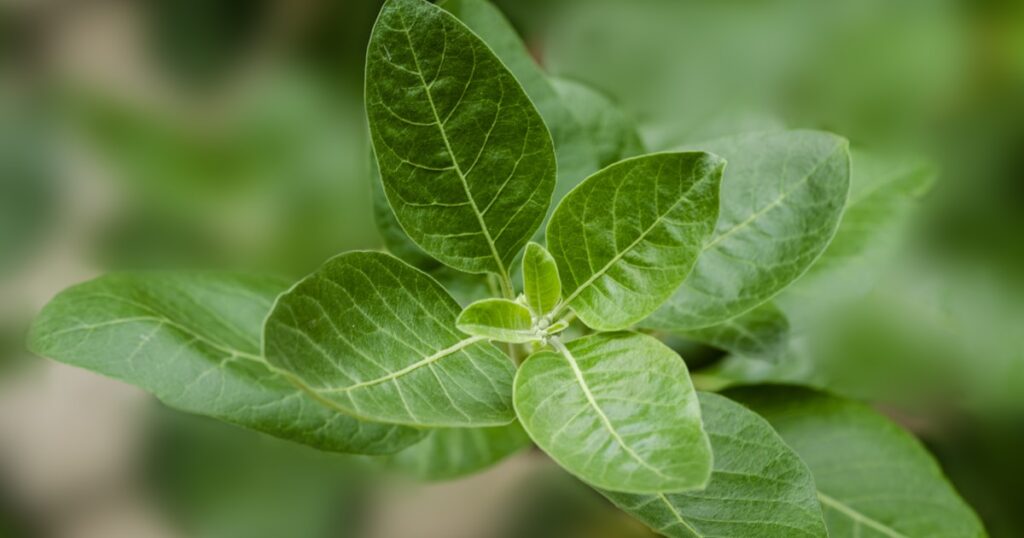
Ashwagandha (Withania somnifera) has been used in Ayurvedic medicine for more than 3,000 years, traditionally prescribed to restore energy, calm the mind, and support resilience to stress. In the last decade, it has become one of the most-studied adaptogenic herbs in modern clinical research, with randomized trials examining its effects on stress hormones, sleep, anxiety, and athletic performance.
Here is what the current evidence shows about how ashwagandha works, who is studying it, and what to consider before adding it to a daily routine.
What is an adaptogen?
Adaptogens are a class of plant compounds proposed to help the body resist physical, chemical, and biological stressors by modulating the hypothalamic-pituitary-adrenal (HPA) axis — the network that controls cortisol release. According to a review published in Pharmaceuticals (2010), to qualify as an adaptogen a substance must be non-toxic at normal doses, produce a non-specific stress-protective effect, and help normalize body function regardless of the direction of the imbalance.
Ashwagandha’s active constituents include withanolides — naturally occurring steroidal lactones that researchers believe drive most of its biological effects on the nervous and endocrine systems.
Stress and cortisol
The strongest body of evidence supports ashwagandha’s role in stress management. A double-blind, placebo-controlled trial published in Medicine (2019) gave 60 adults with elevated stress 240 mg of a standardized ashwagandha extract daily for 60 days. Participants showed significant reductions in Hamilton Anxiety Rating Scale scores and in morning cortisol levels compared with placebo.
A separate 2019 trial in the Indian Journal of Psychological Medicine tested doses of 250 mg and 600 mg per day in 60 chronically stressed adults. Both doses lowered self-reported stress on the Perceived Stress Scale and reduced serum cortisol, with the larger dose producing the strongest effect.
A 2022 meta-analysis in the Journal of Ethnopharmacology pooled data from 12 randomized trials and concluded that ashwagandha supplementation produced statistically significant reductions in anxiety and stress markers across a range of populations and dosing protocols.
Sleep quality
Research suggests ashwagandha may also benefit sleep, particularly in people whose insomnia is tied to stress. A 2020 study in Cureus followed 80 participants — half healthy, half with insomnia — taking 600 mg of ashwagandha root extract daily for eight weeks. Both groups reported improvements in sleep onset latency, total sleep time, and sleep efficiency measured by actigraphy.
A 2021 systematic review and meta-analysis published in PLOS ONE evaluated five randomized controlled trials covering 400 participants. The authors reported a small but significant improvement in overall sleep quality with ashwagandha, with the largest effects seen at doses of 600 mg daily or higher and in adults diagnosed with insomnia.
Athletic performance and recovery
A 2021 systematic review in the Journal of the International Society of Sports Nutrition analyzed 12 trials and found that ashwagandha supplementation — typically 300 to 500 mg taken twice daily — was associated with modest improvements in maximal oxygen consumption (VO₂ max), muscular strength, and recovery markers in both recreational and trained athletes. The authors noted that effect sizes were small to moderate and study quality varied.
Cognitive and neuroprotective effects
Preclinical and early human research has explored ashwagandha’s effects on memory and cognition. A 2017 pilot study in the Journal of Dietary Supplements reported improvements in immediate and general memory in adults with mild cognitive impairment after eight weeks of 300 mg twice-daily dosing. A 2020 review in Biomolecules summarized animal and laboratory evidence suggesting withanolides may protect neurons from oxidative stress, but the authors emphasized that large human trials are still needed before drawing clinical conclusions about neurodegenerative disease.
Standardized extracts and dosing in research
Most rigorous trials use standardized root extracts — commonly KSM-66 or Sensoril — rather than raw ashwagandha powder. Standardization specifies the percentage of withanolides, which allows researchers to deliver consistent doses across studies.
Effective doses in the published trials generally fall between 240 mg and 600 mg per day, taken once daily or split into two doses. Most studies ran for 8 to 12 weeks, and benefits typically emerged after two to four weeks of continuous use rather than immediately.
Safety and who should be cautious
The National Center for Complementary and Integrative Health (NCCIH) reports that ashwagandha is generally well tolerated in short-term studies of up to three months. Reported side effects are usually mild and include drowsiness, gastrointestinal upset, and headache.
However, important cautions apply. Rare cases of liver injury have been documented and reviewed in the American Journal of Gastroenterology and the NIH’s LiverTox database, leading regulatory agencies in Denmark to restrict its sale. Ashwagandha may also:
- Increase thyroid hormone levels — potentially problematic for people with hyperthyroidism or on thyroid medication
- Interact with sedatives, immunosuppressants, and blood pressure or diabetes medications
- Stimulate the immune system, which may not be appropriate for people with autoimmune conditions such as lupus or rheumatoid arthritis
The NCCIH and most clinical reviews advise against use during pregnancy and breastfeeding, and long-term safety data beyond a few months remains limited.
What the evidence actually supports
Across the clinical literature, the most consistent signal is for stress and anxiety reduction at doses of 240 to 600 mg daily of a standardized extract over at least eight weeks. Evidence for sleep is moderate and most relevant for people with stress-related insomnia. Evidence for athletic performance is suggestive but smaller in magnitude, and evidence for cognitive protection in humans is still preliminary.
As with any supplement, quality varies widely between brands. Look for products that disclose the specific extract used and the percentage of withanolides, and consult a healthcare provider before starting — especially when other medications, thyroid conditions, autoimmune disease, or pregnancy are involved.
Disclosure: This content is for informational purposes only and is not medical advice. Always consult a qualified healthcare provider before making changes to your health regimen.