
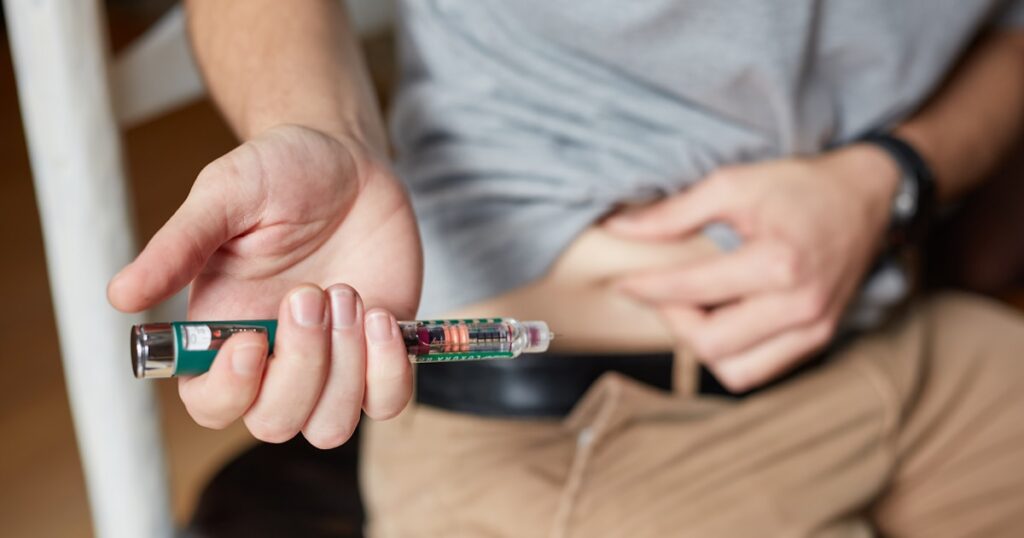
A new injectable weight-loss medication is generating significant attention from researchers and clinicians — not because it produces dramatic weight loss alone, but because of where that weight comes off the body. Phase 3 results for survodutide, presented at the 2026 American Diabetes Association Scientific Sessions and published in The New England Journal of Medicine and Nature Medicine, suggest the drug can reduce harmful visceral and liver fat while largely preserving lean muscle mass — a long-standing limitation of current obesity medications.
What Is Survodutide?
Survodutide is an experimental once-weekly injectable developed by Boehringer Ingelheim in partnership with Zealand Pharma. Unlike currently approved obesity drugs such as semaglutide (Wegovy) and tirzepatide (Zepbound), survodutide is a dual agonist that activates two distinct hormone receptors: the GLP-1 receptor (involved in appetite, blood sugar, and stomach emptying) and the glucagon receptor (which can boost energy expenditure and influence fat metabolism in the liver).
That dual mechanism is significant. Glucagon receptor activation, in particular, is thought to shift the body toward burning fat for fuel rather than breaking down muscle, according to research summarized by the National Institutes of Health.
What the Phase 3 Trials Found
Two large Phase 3 studies — SYNCHRONIZE-1 and SYNCHRONIZE-MASLD — anchor the new evidence.
SYNCHRONIZE-1: Weight Loss in Adults With Obesity
This 76-week trial enrolled 725 adults with overweight or obesity, none of whom had type 2 diabetes. Participants received weekly injections of survodutide at 3.6 mg or 6 mg, or a matching placebo. Reported results include:
- Average weight loss of up to 16.6% with survodutide, compared with 3.2% on placebo.
- Visceral fat reduction of up to 34% — the metabolically harmful fat that wraps around abdominal organs and is linked to heart disease and type 2 diabetes.
- Liver fat reduction of up to 63.1%.
- Lean mass loss limited to roughly 10.8% of total tissue change, meaning the bulk of the weight lost came from fat rather than muscle.
SYNCHRONIZE-MASLD: Liver Disease Outcomes
The second trial enrolled 216 adults with obesity and metabolic dysfunction-associated steatotic liver disease (MASLD), formerly called non-alcoholic fatty liver disease. Over 48 weeks:
- 84.2% of participants achieved at least a 30% reduction in liver fat.
- Roughly 60% normalized liver fat levels entirely.
- Body weight decreased about 12% on survodutide versus 1% on placebo.
MASLD now affects an estimated one in three American adults, according to the American Association for the Study of Liver Diseases, and progressive forms can lead to cirrhosis and liver cancer. Effective non-invasive treatments have been limited.
Why the Muscle-Sparing Effect Matters
One of the most discussed downsides of current GLP-1 medications is that some of the weight people lose comes from lean tissue — including skeletal muscle. Research published in The Lancet Diabetes & Endocrinology has estimated that lean mass can account for 25% to 39% of total weight lost on semaglutide, depending on the population studied.
That trade-off carries real consequences. Muscle is a key driver of resting metabolism, glucose disposal, balance, and long-term independence in older adults. Losing too much can paradoxically make weight regain easier once the medication is stopped and may raise the risk of falls and frailty later in life, according to a 2024 review in the Journal of Cachexia, Sarcopenia and Muscle.
“The most important finding was the evidence of targeted weight loss, with substantial reductions in metabolically harmful visceral and liver fat alongside preservation of lean mass,” Carel le Roux, a clinical researcher involved in the trials, told Medical News Today.
How Survodutide Compares to Existing Drugs
Direct head-to-head trials against semaglutide or tirzepatide have not yet been published, so cross-trial comparisons should be interpreted cautiously. Roughly speaking, however:
- Semaglutide 2.4 mg produced about 15% weight loss in its pivotal STEP trial.
- Tirzepatide 15 mg produced roughly 20–22% weight loss in the SURMOUNT-1 trial.
- Survodutide 6 mg produced about 16.6% weight loss in SYNCHRONIZE-1.
Where survodutide appears to differentiate itself is the quality of the weight lost — more visceral and hepatic fat, less lean tissue — rather than the raw amount on the scale.
Side Effects and Tolerability
The safety profile so far looks consistent with the GLP-1 drug class. Gastrointestinal symptoms — nausea, vomiting, and diarrhea — were the most common adverse events, generally mild to moderate and concentrated during the dose-escalation period. In SYNCHRONIZE-1, about 20% of participants discontinued the trial because of side effects, a rate broadly comparable to other incretin-based therapies.
Longer-term effects on the gallbladder, pancreas, and bone mineral density continue to be monitored across the GLP-1 drug class, according to the U.S. Food and Drug Administration’s ongoing post-marketing surveillance.
When Could It Be Available?
Survodutide remains investigational and is not yet approved by the FDA or European regulators. Boehringer Ingelheim has indicated it plans to submit regulatory filings based on the SYNCHRONIZE program, but timelines depend on full data review and agency feedback. Several additional Phase 3 trials — including studies in heart failure, sleep apnea, and people with type 2 diabetes — are ongoing.
What This Means for Patients
Survodutide is not a shortcut, and it will not be appropriate for everyone. Obesity is a complex chronic condition shaped by genetics, environment, sleep, stress, and food access, and medications work best alongside sustained changes in diet, physical activity, and resistance training — particularly to protect muscle, which all current weight-loss drugs benefit from.
If you are considering a GLP-1 or dual-agonist medication, research from the American College of Cardiology suggests pairing treatment with regular strength training and adequate dietary protein to further reduce muscle loss. The decision to start, switch, or stop any of these drugs should be made with a qualified clinician who can weigh your full medical history and goals.
Disclosure: This content is for informational purposes only and is not medical advice. Always consult a qualified healthcare provider before making changes to your health regimen.