
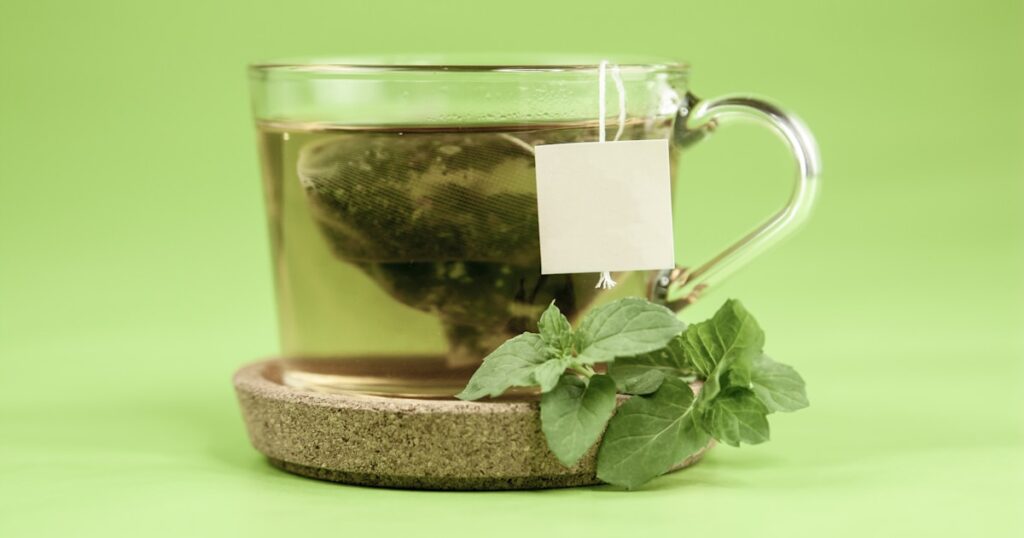
L-theanine is an amino acid found almost exclusively in tea leaves (Camellia sinensis) and in a few species of mushrooms. It is the compound that gives green tea its distinctive savory, umami taste — and the molecule that researchers credit for the calm, alert state many tea drinkers report.
Over the past two decades, L-theanine has moved from a curiosity in nutrition science into one of the more rigorously studied natural compounds for stress, attention, and sleep. Here is what current evidence shows about how it works, what it may help, and what to consider before taking it as a supplement.
What is L-theanine?
Chemically, L-theanine is a structural analog of the neurotransmitters glutamate and gamma-aminobutyric acid (GABA), the brain’s primary excitatory and inhibitory signals. A 2019 review in the Journal of Medicinal Food notes that L-theanine readily crosses the blood-brain barrier and reaches peak plasma concentrations within about 30 to 50 minutes of ingestion.
An average cup of brewed green tea contains roughly 8 to 30 mg of L-theanine, depending on cultivar, shading practices, and brew time, according to data summarized by the U.S. Department of Agriculture and the Food Chemistry journal. Most clinical trials use isolated L-theanine supplements at doses of 100 to 400 mg per day — substantially more than what comes from a single cup of tea.
How L-theanine works in the brain
Researchers have proposed several mechanisms. L-theanine appears to modulate glutamate receptors, raise levels of GABA, serotonin, and dopamine in animal models, and increase the brain’s production of alpha brain waves — the 8 to 13 Hz electrical activity associated with a state of relaxed alertness.
A frequently cited 2008 study in Asia Pacific Journal of Clinical Nutrition measured electroencephalography (EEG) in 35 adults given 50 mg of L-theanine. The team reported a significant rise in alpha-wave activity within 40 minutes, more pronounced in participants with higher baseline anxiety. A 2019 review in Plant Foods for Human Nutrition concluded that the alpha-wave effect is one of the most reproducible neural signatures of the compound.
Stress and anxiety
The most studied use of L-theanine is acute stress reduction. A 2019 randomized, placebo-controlled trial published in Nutrients followed 30 adults with stress-related symptoms taking 200 mg of L-theanine daily for four weeks. Compared with placebo, the L-theanine group showed lower scores on the Self-Rating Depression Scale and the State-Trait Anxiety Inventory, along with improvements in sleep latency and sleep disturbance.
A separate 2017 trial in the Acta Neuropsychiatrica tested 250 mg per day in patients with major depressive disorder and reported reductions in anxiety symptoms and self-reported sleep problems after eight weeks. A 2020 systematic review in Plant Foods for Human Nutrition pooled nine randomized trials and concluded that L-theanine doses between 200 and 400 mg per day produced small but consistent reductions in stress and anxiety in adults exposed to acute stressors, including public speaking and arithmetic tasks.
Effect sizes are modest compared with prescription anti-anxiety medications, and most evidence covers short-term use rather than months or years of supplementation.
Attention and “calm focus”
L-theanine is often taken together with caffeine. The pairing has become popular in nootropic products because the combination appears to deliver caffeine’s alertness without as much of the jitter, racing heart, or anxiety that can accompany higher doses of caffeine alone.
A 2008 trial in Biological Psychology gave participants 50 mg of caffeine, 100 mg of L-theanine, or both, then measured attention task performance. The combination produced faster reaction times and fewer errors than either compound alone. A 2013 study in Nutritional Neuroscience reported that 97 mg of L-theanine with 40 mg of caffeine — roughly the equivalent of two cups of green tea — improved accuracy on switching attention tasks and reduced self-reported tiredness in healthy young adults.
A 2020 review in Nutrients concluded that the most consistent cognitive effects of L-theanine appear when it is paired with caffeine in roughly a 2:1 ratio of L-theanine to caffeine, with the strongest benefits seen for sustained attention rather than memory or learning.
Sleep
Despite its calming reputation, L-theanine is not classically sedating. Studies suggest it works less by inducing sleep than by quieting pre-sleep arousal so people fall asleep more easily and wake feeling more rested.
A 2019 randomized trial in Nutrients reported that 200 mg of L-theanine daily for four weeks reduced sleep latency and improved sleep quality on the Pittsburgh Sleep Quality Index compared with placebo. An older 2011 trial in Alternative Medicine Review in boys with attention-deficit/hyperactivity disorder found that 400 mg per day improved actigraphy-measured sleep efficiency, with the largest gains seen in restless sleepers.
Researchers note the sleep benefits appear modest and most apparent in people with stress- or anxiety-related sleep complaints rather than chronic insomnia.
Blood pressure, immunity, and other emerging areas
Smaller studies have explored L-theanine for blood pressure response to acute stress, immune function, and cognition in older adults. A 2012 trial in the Journal of Physiological Anthropology found that 200 mg taken before a mental arithmetic stressor blunted the rise in blood pressure in high-stress responders. A 2016 study in Beverages reported that participants drinking L-theanine-enriched beverages experienced fewer self-reported cold and flu symptoms during a five-month follow-up, though the effect could not be cleanly separated from other tea catechins.
Researchers consistently note these are early-stage findings that need larger trials before drawing clinical conclusions.
Dosing, sources, and safety
Most randomized trials use 100 to 400 mg of L-theanine per day, often divided into one or two doses. To match a 200 mg supplement dose from green tea alone would typically require 8 to 10 cups, which also delivers a substantial amount of caffeine.
The U.S. Food and Drug Administration considers L-theanine generally recognized as safe (GRAS) at typical dietary supplement doses. Reported side effects are uncommon and mild — headache, dizziness, or gastrointestinal upset at higher doses. Because L-theanine may modestly lower blood pressure and influence neurotransmitter activity, anyone taking antihypertensive medication, sedatives, stimulants, or psychiatric drugs should consult a healthcare provider before adding it.
Pregnant and breastfeeding individuals are generally advised to stick to dietary intake from tea rather than supplements, given limited safety data.
The takeaway
L-theanine has accumulated more high-quality research than most natural calming compounds, with the strongest evidence for short-term stress reduction, calmer attention when paired with caffeine, and small improvements in sleep quality for people whose poor sleep is driven by stress. It is not a substitute for evidence-based treatment of anxiety, depression, or insomnia, but it is one of the better-supported options in the supplement aisle for people seeking a gentle, daytime-friendly aid to relaxation and focus.
As with any supplement, talk with a qualified healthcare provider before starting — especially if you take prescription medications or manage a chronic condition.
Disclosure: This content is for informational purposes only and is not medical advice. Always consult a qualified healthcare provider before making changes to your health regimen.