
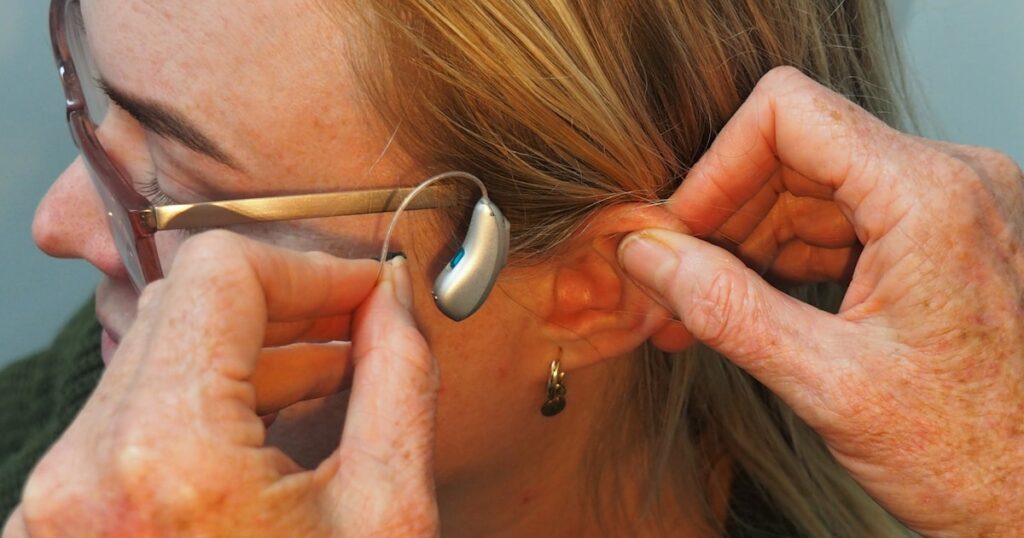
For years, dementia prevention focused on diet, exercise, and cognitive activity. Hearing loss barely registered. That changed when the influential Lancet Commission on dementia prevention identified untreated hearing loss as the single largest modifiable risk factor for dementia — outranking smoking, depression, and physical inactivity.
New trial data has reinforced the link, and clinicians are starting to treat audiology as a brain-health intervention. Here’s what the science suggests — and where the picture is still being refined.
What the Lancet Commission concluded
The Lancet Commission on Dementia Prevention, Intervention and Care first highlighted hearing loss as a modifiable risk factor in its landmark 2017 report and elevated it to the top of the list in the 2020 update. The 2024 update reaffirmed that ranking, estimating that addressing hearing loss in midlife could theoretically prevent or delay a meaningful share of dementia cases at the population level.
The commission’s population-attributable fraction estimate for hearing loss has hovered around 7 to 8 percent — the largest single contribution among the 14 modifiable risk factors the panel reviewed. That figure is theoretical, derived from observational risk associations, but it puts hearing loss in the same conversation as well-established targets such as hypertension and smoking.
The ACHIEVE trial
Observational data alone cannot prove that treating hearing loss prevents cognitive decline. The ACHIEVE trial, published in The Lancet in 2023, was designed to test the question directly.
Led by researchers at Johns Hopkins and a multi-site collaboration, ACHIEVE randomized nearly 1,000 adults aged 70 to 84 with untreated hearing loss to either a hearing intervention (audiologist-fit hearing aids plus counseling) or a health education control. Over three years of follow-up, the overall trial result was modest. But in the subgroup at higher cardiovascular risk — recruited from the long-running ARIC study — cognitive decline was approximately 48 percent slower in the hearing-aid group.
The result was not a population-wide effect, and researchers caution against over-reading the subgroup finding. But it remains the strongest randomized evidence to date that addressing hearing loss may slow cognitive decline in at-risk older adults.
Why hearing loss might affect the brain
Several mechanisms have been proposed, and they are not mutually exclusive.
Cognitive load. Straining to interpret degraded sound diverts neural resources that would otherwise support memory and executive function. Over years, this added “effortful listening” may accelerate cognitive fatigue.
Social isolation. People with untreated hearing loss often withdraw from conversation, group meals, and social activity. Loneliness and depression are themselves recognized risk factors for cognitive decline, and hearing loss appears to amplify both.
Brain structure changes. Imaging studies, including work from Johns Hopkins published in NeuroImage, have found accelerated atrophy in the temporal lobes — regions that process sound and overlap with memory networks — in older adults with hearing loss.
Shared underlying biology. Vascular health, inflammation, and oxidative stress affect both the cochlea and the brain. Some of the association may reflect shared upstream causes rather than a one-way path from hearing loss to dementia.
How common is it — and how often is it treated?
The World Health Organization estimates that more than 1.5 billion people worldwide have some degree of hearing loss, and the figure is projected to rise as populations age. In the United States, the National Institute on Deafness and Other Communication Disorders reports that roughly one in three adults aged 65 to 74 has hearing loss, climbing to nearly half of those over 75.
Adoption of hearing aids has lagged the prevalence. Survey data suggests that fewer than one in three U.S. adults with measurable hearing loss uses hearing aids, often citing cost, stigma, or the perception that hearing loss is a minor inconvenience. The Food and Drug Administration’s 2022 approval of over-the-counter hearing aids was designed in part to lower those barriers.
Protecting hearing — and brain health
Audiology and public health groups, including the American Academy of Audiology and the WHO, recommend several preventive measures.
Periodic hearing screening from middle age onward, particularly for people exposed to occupational or recreational noise.
Noise protection. Sustained exposure above 85 decibels — common at concerts, in construction work, and through high-volume headphone use — can cause cumulative hair-cell damage. Earplugs and reasonable headphone volumes reduce that exposure.
Early intervention. Research suggests that waiting years to address measurable hearing loss may allow auditory processing networks to deteriorate. Fitting hearing aids earlier may help preserve those networks, although direct trial evidence is still emerging.
Cardiovascular care. Because vascular health affects both the cochlea and the brain, managing blood pressure, diabetes, and lipid levels supports hearing alongside cognition.
What this does — and doesn’t — mean
The current evidence does not show that hearing aids prevent dementia. ACHIEVE found a benefit in a subgroup, not the whole trial. Observational studies show association, not causation. And dementia is multifactorial — no single intervention will eliminate risk.
What the evidence does suggest is that hearing loss has been undertreated as a brain-health issue. Addressing it is low-risk and offers immediate benefits for communication, mood, and quality of life. Whether it also delays cognitive decline appears most plausible for older adults at elevated cardiovascular or social-isolation risk — precisely the group most likely to benefit from many other brain-health interventions.
The bottom line
Hearing loss has moved from a peripheral concern to a central one in dementia-prevention research. The 2024 Lancet Commission still ranks it as the largest modifiable risk factor at the population level, and randomized trial data suggests addressing it may slow cognitive decline in vulnerable older adults. The case for treating hearing as part of brain health — not separate from it — is stronger than it has ever been.
Disclosure: This content is for informational purposes only and is not medical advice. Always consult a qualified healthcare provider before making changes to your health regimen.