
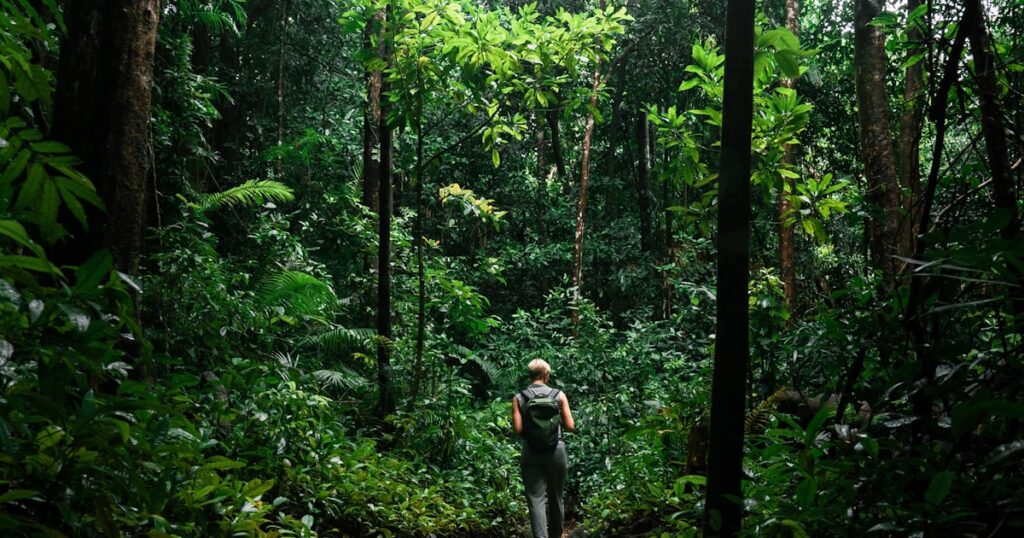
In 1982, Japan’s Ministry of Agriculture, Forestry, and Fisheries introduced a concept that would transform how scientists think about nature and human health: shinrin-yoku, or “forest bathing.” The practice isn’t about hiking or exercise — it’s the simple act of immersing yourself in a forest environment, engaging all five senses deliberately and without distraction. Decades of research have since confirmed what many people intuitively feel: spending time among trees is genuinely, measurably good for you.
What Is Forest Bathing?
Unlike conventional outdoor recreation, forest bathing asks you to slow down. There are no fitness targets, no trails to complete. Practitioners walk slowly through natural settings, pausing to notice the smell of the bark, the sound of leaves in wind, the interplay of light through the canopy. The practice is rooted in the Japanese concept of nature as medicine — a tradition reinforced over the past forty years by a growing body of peer-reviewed science.
Qing Li, MD, PhD, an immunologist at Nippon Medical School in Tokyo and author of Forest Bathing: How Trees Can Help You Find Health and Happiness, has spent over two decades studying the physiological effects of time spent in forests. His work, along with research from institutions across Japan, South Korea, and Europe, has positioned shinrin-yoku as one of the most evidence-supported nature-based therapies available.
The Science Behind the Healing
Stress Hormones Drop Measurably
One of the most consistently documented effects of forest bathing is a reduction in cortisol, the body’s primary stress hormone. A landmark study published in the journal Environmental Health and Preventive Medicine found that participants who spent time walking in forest settings had significantly lower salivary cortisol levels compared to those who walked in urban environments for the same duration. Blood pressure and pulse rate also showed meaningful decreases after forest immersion.
A separate meta-analysis examining 64 studies concluded that forest therapy was associated with significant reductions in cortisol, blood pressure, heart rate, and sympathetic nervous system activity — the biological markers of the body’s “fight or flight” stress response.
The Immune System Gets a Boost
Perhaps the most surprising finding from forest bathing research involves the immune system. Dr. Li’s studies demonstrated that a two-hour walk in a forested area significantly increased the activity of natural killer (NK) cells — white blood cells that play a central role in defending the body against viruses and cancer. In one study, this immune boost lasted for more than a week after a three-day forest excursion.
Researchers attribute part of this effect to phytoncides — antimicrobial volatile organic compounds released naturally by trees, particularly conifers. Trees produce phytoncides like alpha-pinene and beta-pinene as a form of chemical defense. When humans inhale these compounds during forest walks, studies suggest they may stimulate NK cell production and activity. A 2010 study in the Journal of Biological Regulators and Homeostatic Agents found that inhaling phytoncide vapor in a hotel room increased NK cell activity, supporting the biological mechanism behind forest bathing’s immune effects.
Mood, Anxiety, and Depression
Research consistently shows that forest environments reduce self-reported feelings of anxiety, depression, and hostility while increasing vigor and positive affect. A 2019 systematic review published in International Journal of Environmental Research and Public Health examined 28 controlled trials and found that forest therapy led to significant improvements in depressive symptoms compared to control conditions.
Attention Restoration Theory, developed by environmental psychologists Rachel and Stephen Kaplan, helps explain why. Urban environments demand constant directed attention — navigating traffic, processing information, managing social interactions. Natural settings, by contrast, allow effortless, involuntary attention. This “soft fascination” gives the prefrontal cortex a chance to rest, restoring cognitive capacity and reducing mental fatigue.
How to Practice Forest Bathing
Forest bathing doesn’t require wilderness access. Urban parks, botanical gardens, and tree-lined greenways can offer similar benefits, particularly when entered with intention. Research suggests that even 20 minutes in a natural setting begins to lower stress hormones, though longer sessions of two hours or more show the strongest measurable effects.
Practitioners and researchers recommend the following approach:
- Leave your phone in your pocket. Notifications and screen time undermine the restorative effect of natural immersion.
- Slow your pace deliberately. The goal is presence, not distance covered.
- Engage your senses one at a time. Notice individual sounds, specific textures, distinct smells. This activates the parasympathetic nervous system — the body’s “rest and digest” mode.
- Sit as much as you walk. Many practitioners spend long periods simply sitting against a tree or near water, observing.
- No destination required. Aimless wandering is encouraged over goal-oriented hiking.
How Much Time in Nature Is Enough?
A landmark 2019 study published in Scientific Reports analyzed data from nearly 20,000 people in England and found that spending at least 120 minutes per week in natural environments was associated with significantly better health and well-being. The effect plateaued above 300 minutes per week, and benefits were observed regardless of whether the time was spent in one long session or multiple shorter ones.
For those living in cities, research suggests that even brief exposures to green space — sitting in a park during lunch, a short walk through a tree-lined street — can shift stress response markers toward lower activation.
Forest Bathing in Clinical Practice
Japan incorporated shinrin-yoku into its national health program, designating 62 certified forest therapy trails across the country. South Korea has established a national network of forest healing centers that attract over 13 million visitors annually. These are publicly funded health interventions, not wellness trends.
In the United States and Europe, forest bathing is increasingly being integrated into mental health care, cardiac rehabilitation, and preventive medicine programs. Certified forest therapy guides — trained through organizations like the Association of Nature & Forest Therapy — lead structured immersion sessions for individuals, clinical groups, and corporate wellness programs.
Studies indicate the practice may be particularly beneficial for people dealing with high-stress occupations, hypertension, early-stage depression and anxiety, and immune dysregulation. Research suggests that regular forest bathing may complement conventional treatments, though it is not a substitute for professional medical care.
The Evidence Is Growing
As of 2025, hundreds of peer-reviewed studies have examined the health effects of forest environments, making shinrin-yoku one of the most studied nature-based health interventions in the world. The evidence base spans immunology, endocrinology, cardiology, and psychiatry. Few wellness practices enjoy this breadth of scientific scrutiny across multiple organ systems.
What began as a government forestry initiative has become a legitimate area of preventive medicine research — and a compelling case that access to trees is not merely aesthetic but genuinely therapeutic.
For those who have spent an afternoon under a forest canopy and felt inexplicably restored, the science now offers an explanation. It may not be mystical. It may simply be biology, catching up to what the body already knows.
Disclosure: This content is for informational purposes only and is not medical advice. Always consult a qualified healthcare provider before making changes to your health regimen.