
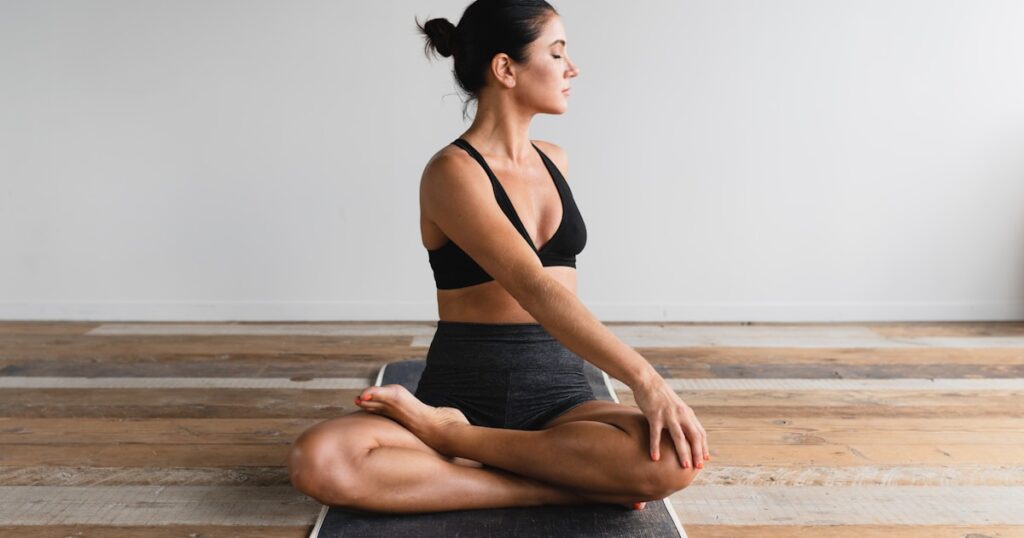
Every year, approximately 14 million older adults in the United States experience a fall — roughly one in four people aged 65 and over. Falls are the leading cause of injury-related death and hospitalization in this age group, costing the U.S. healthcare system an estimated $50 billion annually, according to the Centers for Disease Control and Prevention (CDC).
Yet one of the most effective tools for reducing this risk costs nothing and requires only ten minutes a day. Research increasingly points to floor-based exercise routines as a powerful, low-barrier intervention that improves balance, builds stability, and may help older adults stay safer and more independent well into their later years.
Why Balance Deteriorates with Age
Balance isn’t a single function — it’s the product of several interacting systems. As we age, each of these systems weakens in ways that compound one another:
- Sarcopenia: Muscle mass begins declining around age 30 and accelerates after 60. Weak leg and core muscles directly impair the body’s ability to recover from small stumbles.
- Proprioception: The body’s internal sense of position deteriorates with age, making it harder to detect and correct subtle shifts in weight.
- Vestibular function: The inner ear’s balance-regulating mechanisms become less sensitive over time, reducing spatial awareness.
- Reaction time: Neural processing slows, leaving less time to catch a stumble before it becomes a fall.
The result is a system where the margin for error shrinks — and where targeted training can meaningfully close that gap.
What the Research Shows
The evidence for exercise-based fall prevention is robust. A landmark meta-analysis published in the British Journal of Sports Medicine analyzing over 40 trials found that structured exercise programs reduced fall-related injuries by approximately 26% in older adults. Programs incorporating both balance training and progressive muscle strengthening showed the strongest results.
A separate systematic review in JAMA Network Open found that multicomponent exercise programs — those combining balance, strength, and flexibility work — reduced fall rates by up to 23% compared to controls. Critically, participants who exercised for at least 50 hours over a program’s duration saw the greatest benefit.
Research published in Age and Ageing specifically examined floor-based exercise protocols. Participants who performed supine and quadruped (hands-and-knees) exercises three times weekly showed significant improvements on the Berg Balance Scale — a standardized clinical measure of balance function — after just eight weeks.
The floor offers a unique training environment: it removes the risk of falling during the workout itself, engages deep postural stabilizers that chairs and machines often bypass, and forces the nervous system to recalibrate proprioceptive feedback from multiple body positions.
A 10-Minute Daily Floor Routine
The following sequence is adapted from exercise protocols used in fall-prevention research. It requires only a mat or carpeted floor. As always, consult your healthcare provider before starting a new exercise program, particularly if you have osteoporosis, joint conditions, or a history of falls.
1. Cat-Cow Stretch — 1 Minute
Begin on hands and knees, wrists under shoulders, knees under hips. Inhale as you arch the back and lift your head (cow); exhale as you round the spine and tuck the chin (cat). This mobilizes the spine and activates deep spinal stabilizers — muscles critical for upright balance.
2. Dead Bug — 2 Minutes
Lie on your back with arms extended toward the ceiling, knees bent at 90 degrees. Slowly lower opposite arm and leg toward the floor without letting your lower back lift, then return. Studies show this exercise recruits the transverse abdominis — the deepest core layer — which is strongly associated with postural stability.
3. Glute Bridges — 2 Minutes
From your back with feet flat on the floor, press through your heels to lift your hips until your body forms a straight line from knees to shoulders. Hold two seconds at the top, lower slowly. Research links hip extensor strength directly to fall prevention: stronger glutes help the body absorb and redirect momentum during near-falls.
4. Bird-Dog — 2 Minutes
On hands and knees, extend the opposite arm and leg simultaneously, hold for three seconds, then switch sides. This exercise trains coordination between the brain and limbs — precisely the neural pathway that slows with age — while also building the posterior chain muscles that support upright posture.
5. Side-Lying Hip Abduction — 2 Minutes
Lying on one side with legs stacked, slowly raise the top leg to about 30 degrees, pause, and lower. Hip abductor strength is a key predictor of lateral stability — the kind of balance needed to prevent sideways falls, which are disproportionately associated with hip fractures.
6. Modified Plank — 1 Minute
From knees or toes, hold a straight-line plank position. Even brief isometric core work has been shown to improve spinal endurance and reduce sway during standing — a direct marker of fall risk reduction.
Getting Up Safely Matters Too
One often-overlooked aspect of floor exercise for older adults is practicing the act of getting up and down from the floor itself. Research suggests that the ability to rise from the floor unaided — assessed by the Sitting-Rising Test — is a strong predictor of all-cause mortality risk. Incorporating controlled floor transitions into a daily routine builds the very functional strength needed for independence.
Use a stable chair nearby when transitioning. Roll to one side, push up to hands and knees, then to one knee before standing. Practice this slowly and deliberately.
Building the Habit
Ten minutes each morning before breakfast is enough to produce measurable change over eight to twelve weeks, according to study timelines in the literature. Consistency matters more than intensity at this stage. Research published in Preventive Medicine found that even irregular exercisers (those who exercised on weekends only) showed significantly lower fall rates than sedentary adults — suggesting that some floor work, consistently repeated, delivers meaningful returns.
Pairing the routine with an existing habit — morning coffee, brushing teeth, or a television program — improves adherence. Fall prevention programs that achieve the greatest impact tend to be those participants actually stick with over time.
The Bottom Line
Balance decline is not inevitable, and it is not irreversible. Floor-based exercise, practiced consistently, addresses the root causes of age-related instability: muscle weakness, reduced proprioception, and slowed neural coordination. For older adults especially, ten minutes on the floor each day may be among the highest-return health investments available — no equipment, no gym membership, no special training required.
If you have concerns about fall risk, balance, or any of the exercises above, consult a physical therapist or your primary care provider for a personalized assessment.
Disclosure: This content is for informational purposes only and is not medical advice. Always consult a qualified healthcare provider before making changes to your health regimen.