
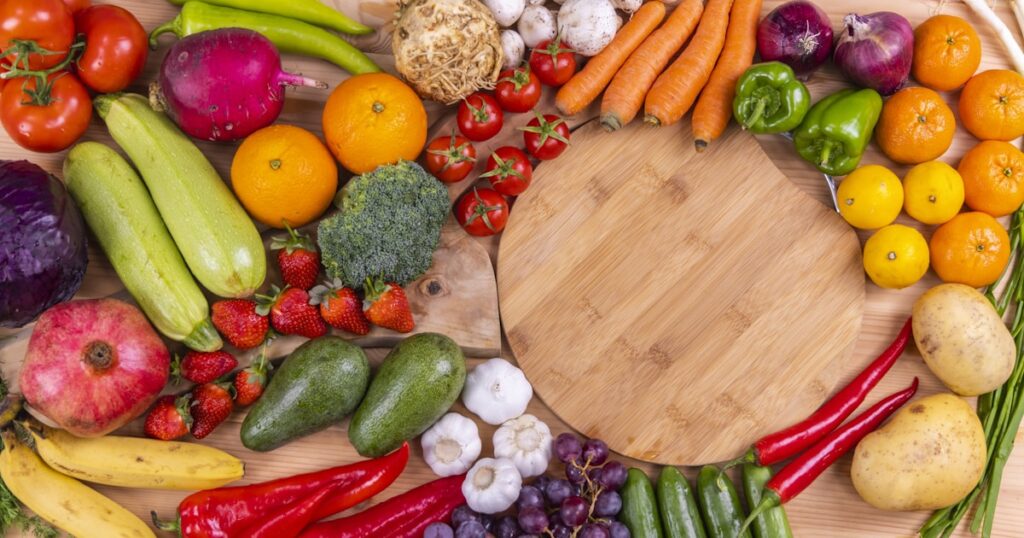
The advice to eat five servings of fruits and vegetables a day has been a public-health mantra for three decades. But a growing body of research suggests that the type of produce on your plate matters just as much as the quantity — and a few specific groups appear to do most of the heavy lifting for cardiovascular protection.
A landmark analysis published in Circulation by Harvard researchers, pooling data from nearly 2 million adults across 26 countries, found that roughly five servings a day — two fruits and three vegetables — was associated with the lowest risk of death from cardiovascular disease. Going higher than that produced diminishing returns. What mattered more than hitting a bigger number was which produce people chose.
Why Fruits and Vegetables Protect the Heart
The cardiovascular benefits of produce trace back to a handful of overlapping mechanisms. Soluble fiber binds cholesterol in the gut and lowers LDL. Plant polyphenols, anthocyanins, and flavonoids reduce oxidative stress and improve endothelial function — the responsiveness of blood-vessel linings that governs blood pressure. Dietary nitrates from leafy greens convert in the body to nitric oxide, a potent vasodilator. And potassium counteracts sodium to ease arterial pressure.
Crucially, these effects compound. A 2017 meta-analysis in the International Journal of Epidemiology found that each additional 200 grams of fruit and vegetables per day was linked to an 8 percent lower risk of coronary heart disease and a 16 percent lower risk of stroke, with benefits plateauing around 800 grams (about 10 servings).
The Strongest Performers
Leafy Greens: The Nitrate Powerhouse
Spinach, kale, arugula, and Swiss chard top almost every cardiovascular ranking. Their high nitrate content fuels nitric-oxide production, which research suggests can lower systolic blood pressure by 4 to 5 mmHg — comparable to some pharmaceutical interventions. A 2021 study from Edith Cowan University following more than 50,000 adults found that those eating about one cup of nitrate-rich leafy greens daily had a 12 to 26 percent lower risk of cardiovascular disease compared with those eating little to none.
Berries: Anthocyanin Density
Blueberries, strawberries, blackberries, and raspberries deliver some of the highest concentrations of anthocyanins — the pigments responsible for their deep colors — of any food. Research from the Harvard School of Public Health, tracking participants over 18 years, has linked three or more servings of berries per week to a 32 percent lower risk of heart attack in middle-aged women. Anthocyanins appear to improve arterial flexibility and reduce LDL oxidation.
Cruciferous Vegetables: The Plaque Fighters
Broccoli, cauliflower, Brussels sprouts, and cabbage contain sulforaphane and other glucosinolates that activate the body’s antioxidant defenses. An Australian cohort study published in the British Journal of Nutrition reported that women who ate more than 45 grams of cruciferous vegetables a day had measurably less calcified plaque in their arteries than those who ate less than 15 grams — a meaningful structural marker of long-term heart disease.
Citrus Fruits: Flavonoid Diversity
Oranges, grapefruit, and lemons supply flavanones like hesperidin and naringenin, which research indicates can lower blood pressure and improve cholesterol profiles. A large Harvard analysis associated higher citrus intake with about a 19 percent reduction in ischemic stroke risk. Whole fruit, not juice, retains the fiber that moderates blood-sugar spikes.
Tomatoes: Lycopene’s Edge
Cooked tomato products — sauces, paste, soup — concentrate lycopene, a carotenoid with strong antioxidant activity. Studies indicate that people with higher blood lycopene levels have lower rates of heart disease and stroke, with some evidence pointing to a 14 percent reduction in heart-disease risk for those at the top of the intake range. Heat actually improves lycopene bioavailability, which is why cooked tomato dishes often outperform raw ones in this regard.
Apples and Pears: Quiet Workhorses
Often overshadowed by flashier “superfoods,” apples and pears were singled out in the Harvard Circulation analysis for an outsized association with lower mortality. They are dense in soluble fiber (pectin), quercetin, and other polyphenols, and they are eaten consistently across cultures — meaning their effect is well documented in large populations.
What Does Not Count
Not every produce-derived food earns the same protection. Fruit juice, even 100 percent juice, removes fiber and concentrates sugar, blunting the cardiovascular benefit. Potatoes — especially in fried or processed forms — were excluded as a “vegetable” in several of these analyses because they behave more like a refined carbohydrate. And starchy vegetables eaten in large amounts can offset gains from other categories.
How Much, Really?
The current evidence converges on a practical target:
- About 400 to 800 grams of produce per day — five to ten servings — captures most of the cardiovascular benefit.
- Variety matters. Aim for at least three different color groups across the day, since each color signals a distinct set of phytochemicals.
- Cooked and raw both count. Steaming, roasting, and lightly sautéing preserve most nutrients; deep-frying does not.
- Frozen is as good as fresh for most cardiovascular markers, often picked at peak ripeness and flash-frozen within hours.
Building the Habit
Nutritionists generally recommend anchoring produce to meals you already eat rather than treating it as a separate task. A handful of berries on morning oatmeal, a leafy salad at lunch, a side of roasted broccoli at dinner, and a piece of fruit as a snack will land most adults in the protective range. Cooks who use tomato-based sauces several times a week tend to hit the lycopene threshold without effort.
The American Heart Association continues to emphasize that no single fruit or vegetable is a cure-all. The strongest evidence supports a diverse, mostly plant-forward eating pattern — embodied by the Mediterranean and DASH diets — over any individual food. But within that pattern, leafy greens, berries, cruciferous vegetables, citrus, tomatoes, and apples consistently emerge as the produce most worth prioritizing.
Bottom Line
“Eat your fruits and vegetables” has always been good advice. The newer wrinkle is that the cardiovascular system responds particularly well to a specific subset — the ones richest in nitrates, anthocyanins, flavonoids, and sulforaphane. Building meals around them does not require an overhaul, just a small shift in what fills the plate. Research suggests that shift, sustained over years, is one of the most reliable dietary moves for heart health.
Disclosure: This content is for informational purposes only and is not medical advice. Always consult a qualified healthcare provider before making changes to your health regimen.