
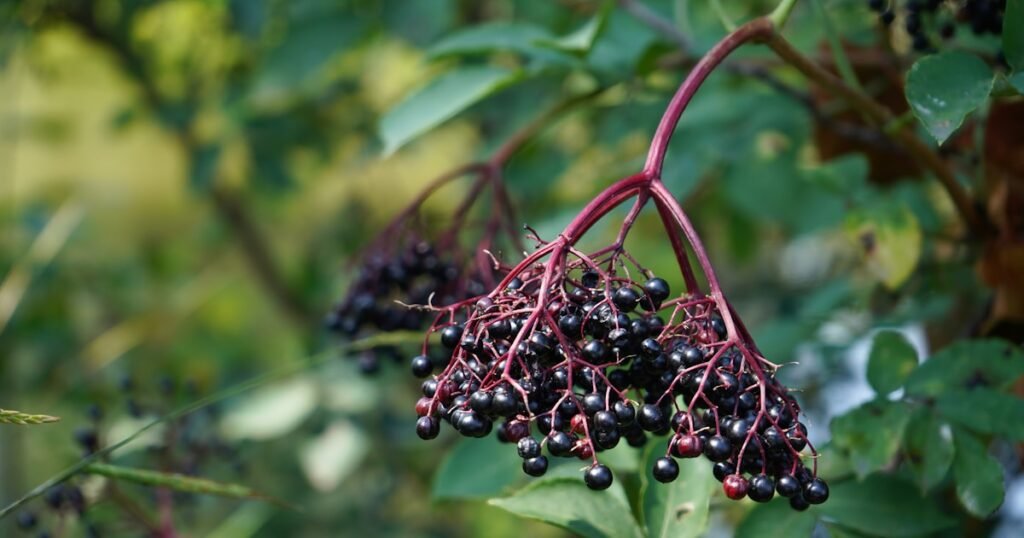
As the 2026 flu season strains clinics and pharmacies across North America, interest in traditional plant-based immune supports has surged again. Few remedies attract as much attention as elderberry — the dark purple fruit of Sambucus nigra, used in European folk medicine for centuries and now the subject of dozens of clinical trials.
What does the evidence actually show about elderberry for colds, flu, and immune health? Here is a look at the research, the biology, and what to watch out for.
What is elderberry?
Elderberry refers to the fruit of several Sambucus species, most commonly the European black elder (Sambucus nigra). Traditionally, elderflowers and berries were prepared as syrups, teas, and tinctures for fevers, coughs, and respiratory infections. Modern commercial products typically use standardized extracts of the ripe berries.
The berries are rich in anthocyanins — the same class of pigments that give blueberries and blackberries their deep color — along with flavonoids, phenolic acids, and vitamins A and C. According to a 2016 review in Nutrients, anthocyanins and related polyphenols appear to be the main drivers of elderberry’s biological activity.
How researchers think it works
Laboratory studies suggest elderberry extracts can inhibit the attachment and replication of certain respiratory viruses, including influenza A and B strains. A 2019 study in the Journal of Functional Foods reported that Sambucus nigra compounds blocked viral entry into human bronchial cells and also inhibited later stages of the influenza replication cycle in test-tube models.
A separate 2011 BMC Complementary and Alternative Medicine paper found that elderberry extract exhibited direct antimicrobial activity against several bacteria that commonly cause upper respiratory tract infections, including Streptococcus pyogenes and Branhamella catarrhalis.
Elderberry also appears to modulate the immune response. A 2001 study in the European Cytokine Network reported that a standardized extract increased production of inflammatory cytokines in healthy human monocytes, suggesting an immunostimulant effect — a mechanism that researchers still debate today.
Clinical trials in humans
Human evidence is smaller than the laboratory literature, but several randomized trials have examined elderberry for influenza-like illness and the common cold.
A frequently cited 2004 trial in the Journal of International Medical Research randomized 60 adults with flu symptoms of less than 48 hours to either 15 mL of a standardized elderberry syrup four times daily or placebo. Symptoms resolved on average four days earlier in the elderberry group, and use of rescue medication was lower.
A 2016 randomized, placebo-controlled trial in Nutrients studied 312 air travelers on long-haul flights — a group at elevated risk of respiratory infection. Participants who took a standardized elderberry extract before and during travel reported shorter cold duration (average two days shorter) and less severe symptoms than those given placebo.
A 2019 meta-analysis in Complementary Therapies in Medicine pooled data from four randomized trials covering 180 participants and concluded that elderberry supplementation was associated with a substantial reduction in the duration and severity of upper respiratory symptoms. The authors noted that most included trials were small and industry-funded, and called for larger independent studies.
Not all research has been positive. A 2020 pragmatic trial in the Journal of General Internal Medicine tested elderberry extract in 87 children and adults presenting to emergency departments with influenza. Contrary to expectations, elderberry did not reduce symptom duration compared with placebo, and rescue medication use was similar between groups. The authors suggested that timing of treatment initiation and background antiviral use may explain the discrepancy with earlier studies.
Elderberry versus vitamin C, zinc, and other options
Cochrane reviews of vitamin C and zinc have found that zinc lozenges, when started within 24 hours of symptom onset, may modestly shorten cold duration, while routine vitamin C supplementation has little effect on cold incidence in the general population. Elderberry’s trials are smaller and shorter than those for zinc, so it is best viewed as one option among several rather than a proven replacement for standard care.
The U.S. Centers for Disease Control and Prevention (CDC) continues to recommend annual influenza vaccination as the most effective way to prevent flu, along with handwashing, respiratory hygiene, and prescription antivirals such as oseltamivir when clinically indicated.
Forms, dosing, and quality
Elderberry is sold as syrups, gummies, lozenges, capsules, and teas. Doses in published trials vary widely, but common protocols include:
- Standardized syrup: 15 mL, up to four times daily for five days, started at symptom onset
- Lozenges: 175 mg standardized extract, up to four times daily
- Capsules: 300 to 600 mg standardized extract per day
Sugar content in commercial syrups can be high, so people with diabetes or those tracking added sugar may prefer capsules or unsweetened preparations.
Safety and important cautions
Ripe, cooked elderberries are generally considered safe for short-term use in adults. However, several safety issues warrant attention:
- Raw berries, leaves, bark, and unripe fruit contain cyanogenic glycosides that can cause nausea, vomiting, and diarrhea. Only properly processed, cooked preparations should be consumed.
- Autoimmune conditions: Because elderberry may stimulate parts of the immune system, people with autoimmune disorders such as lupus, rheumatoid arthritis, or multiple sclerosis should discuss its use with a clinician.
- Medication interactions: Elderberry may theoretically interact with immunosuppressants, diabetes medications, diuretics, and laxatives. The National Center for Complementary and Integrative Health (NCCIH) advises caution when combining supplements with prescription drugs.
- Pregnancy and breastfeeding: Safety data are limited, and most guidance recommends avoiding elderberry supplements during pregnancy and lactation.
- Children: Some products are marketed for children, but pediatric dosing data are limited and product formulations vary.
Product quality is another concern. A 2020 investigation in the Journal of AOAC International tested commercial elderberry products and found that some contained less anthocyanin than labeled or included fillers from cheaper berries. Consumers can look for products that specify the extract used and provide third-party testing.
What the evidence actually supports
Across the current literature, the most consistent signal is that standardized elderberry extract, started early in a cold or flu-like illness, may modestly shorten symptom duration and severity in some people. Evidence for prevention is thinner, and results have not been uniform across trials. Elderberry does not replace vaccination, antiviral medication, or clinical evaluation when symptoms are severe — particularly in older adults, young children, pregnant people, or those with chronic conditions.
As with any supplement, quality varies widely between brands. Anyone considering elderberry — especially alongside prescription medication or with an existing health condition — should consult a qualified healthcare provider before starting.
Disclosure: This content is for informational purposes only and is not medical advice. Always consult a qualified healthcare provider before making changes to your health regimen.