
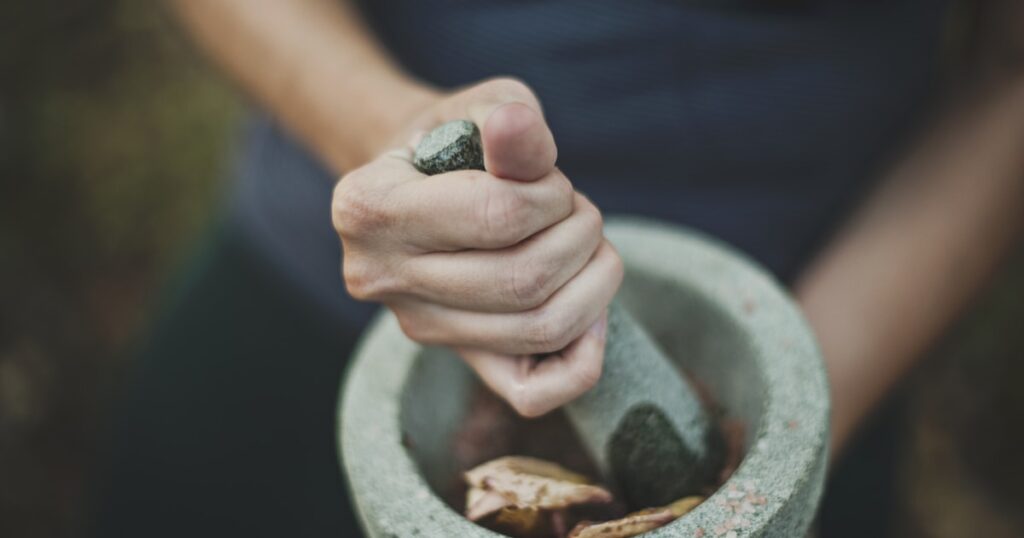
For more than 3,000 years, practitioners of Ayurveda — India’s traditional system of medicine — have prescribed a small, creeping wetland plant called Bacopa monnieri to sharpen memory, calm the mind, and support healthy aging. Known in Sanskrit as Brahmi — a name derived from Brahma, the Hindu creator god associated with intellect — the herb has long been a mainstay of Medhya Rasayana, the Ayurvedic category of plants believed to nourish the brain.
Modern research has caught up with the tradition. Over the past two decades, dozens of controlled human trials have examined Bacopa’s effects on memory, learning, and stress, and the findings have been promising enough to attract attention from neurologists, psychiatrists, and integrative medicine clinicians worldwide.
What Is Bacopa Monnieri?
Bacopa monnieri is a perennial herb that thrives in marshes across India, Southeast Asia, Australia, and parts of the Americas. Its active compounds — a family of triterpenoid saponins called bacosides — are concentrated in the leaves and stems. Bacosides A and B are the most extensively studied and are thought to be responsible for the herb’s cognitive effects.
Standardized extracts used in clinical trials typically contain 20% to 55% bacosides. The most rigorously tested formulation is BacoMind, a patented extract that has been used in multiple peer-reviewed studies.
How Bacopa May Affect the Brain
Research suggests Bacopa works through several overlapping mechanisms. Laboratory studies indicate it may:
- Enhance synaptic communication by promoting dendritic branching — the tree-like extensions of neurons that form the physical basis of memory.
- Modulate neurotransmitters, particularly acetylcholine, serotonin, and dopamine, which influence learning, mood, and attention.
- Reduce oxidative stress in brain tissue by scavenging free radicals and supporting the body’s own antioxidant defenses.
- Lower inflammatory signaling in the central nervous system, a pathway increasingly implicated in cognitive decline.
A 2014 systematic review published in the Journal of Ethnopharmacology concluded that Bacopa demonstrates “potential to improve cognition, particularly speed of attention.” More recent reviews have echoed those findings while calling for larger, longer trials.
What the Clinical Trials Show
Memory and Learning
A widely cited 2008 randomized, double-blind, placebo-controlled trial published in the Journal of Alternative and Complementary Medicine followed 54 adults over the age of 65 for 12 weeks. Those who took 300 mg of standardized Bacopa extract daily showed significant improvements in word recall, attention, and Affect, along with reduced anxiety scores, compared to placebo.
A 2012 review in Evidence-Based Complementary and Alternative Medicine pooled data from nine high-quality trials and found consistent benefits for delayed word recall — one of the most sensitive markers of memory function.
Attention and Processing Speed
Research suggests Bacopa may modestly improve information processing speed and sustained attention. A 2014 meta-analysis in The Journal of Ethnopharmacology found small-to-moderate effect sizes for cognitive performance in healthy adults, with the strongest evidence emerging after at least 12 weeks of use — suggesting benefits build slowly rather than immediately.
Anxiety and Mood
Several trials have reported reductions in self-rated anxiety after eight to twelve weeks of supplementation. A 2013 study in the journal Phytotherapy Research found Bacopa reduced cortisol responses to stress in healthy volunteers, hinting at a calming effect on the hypothalamic-pituitary-adrenal axis.
Children and ADHD
Early research has explored Bacopa for attention difficulties in children. A small 2014 trial published in Advances in Mind-Body Medicine reported improvements in attention, impulse control, and verbal learning in children with ADHD symptoms after 12 weeks. However, the evidence base in pediatric populations remains thin, and parents should consult a pediatrician before considering any herbal supplement for a child.
How It Is Traditionally Used
In classical Ayurvedic preparations, Bacopa is consumed as a fresh juice, a paste, a powder mixed with ghee or honey, or in herbal compounds such as Brahmi Ghrita. Practitioners traditionally administer it in the morning on an empty stomach, sometimes paired with warming spices to aid absorption.
In modern supplement form, Bacopa is sold as capsules, tablets, tinctures, and teas. Doses in clinical research typically range from 300 to 450 mg per day of a standardized extract, taken for at least 8 to 12 weeks before effects are evaluated.
Safety, Side Effects, and Interactions
Most studies report Bacopa to be well tolerated. The most commonly reported side effects are mild gastrointestinal symptoms — nausea, cramping, increased stool frequency — particularly when taken on an empty stomach. Taking it with food generally reduces these effects.
Important considerations:
- Bacopa may interact with thyroid medications, sedatives, calcium channel blockers, and acetylcholinesterase inhibitors prescribed for Alzheimer’s disease.
- Animal studies have raised theoretical concerns about effects on fertility and pregnancy, so it is generally not recommended for those who are pregnant, breastfeeding, or trying to conceive.
- Some commercial Bacopa products have tested positive for heavy metal contamination. Choosing brands that publish third-party testing for purity and standardized bacoside content is prudent.
What Bacopa Is Not
Bacopa is not a quick fix. Unlike caffeine or prescription stimulants, it does not produce same-day cognitive lift, and studies indicate its measurable effects emerge gradually over weeks of consistent use. It also is not a treatment for dementia or Alzheimer’s disease — while preliminary research has explored neuroprotective effects, there is no clinical evidence that Bacopa can reverse or halt neurodegenerative conditions.
Importantly, supplementation cannot replace the cornerstones of cognitive health: regular sleep, aerobic and resistance exercise, a nutrient-dense diet, social engagement, and managed stress. Research suggests these lifestyle factors carry far larger effect sizes for brain health than any single herb.
The Bottom Line
Bacopa monnieri is one of the better-studied traditional herbs for cognition, with consistent — if modest — evidence for improvements in memory, attention, and anxiety after at least 8 to 12 weeks of use. For adults curious about evidence-based botanical support for brain health, standardized Bacopa extract represents a reasonable area of further exploration in conversation with a qualified clinician.
As with any supplement, quality varies considerably between brands, effects build slowly, and benefits should be expected to be modest rather than dramatic. Anyone considering Bacopa — especially those taking prescription medications, managing a chronic condition, or pregnant — should consult a healthcare provider familiar with both pharmaceuticals and botanical medicine before starting.
Disclosure: This content is for informational purposes only and is not medical advice. Always consult a qualified healthcare provider before making changes to your health regimen.