
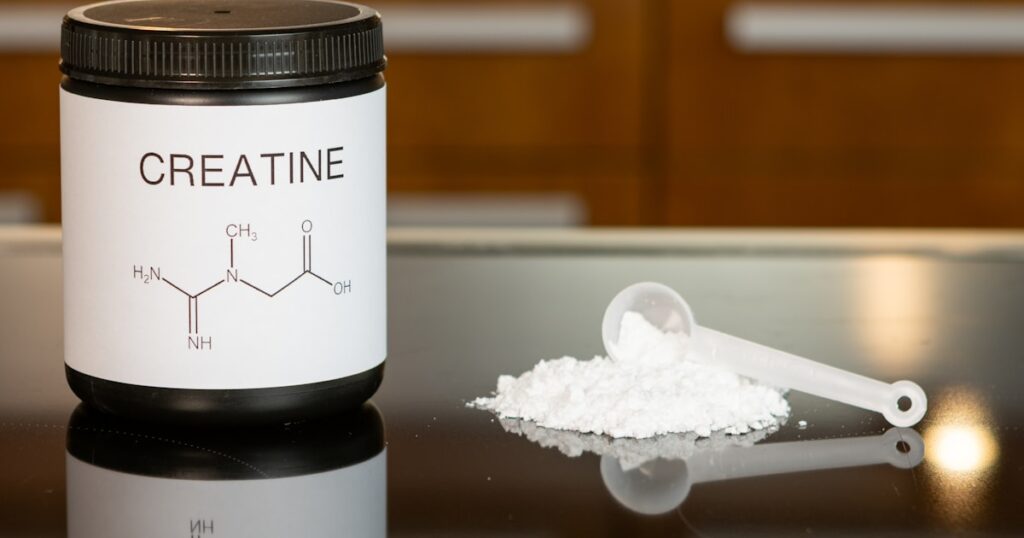
For decades, creatine monohydrate has been the quiet workhorse of the supplement aisle — a cheap, well-studied powder that helps athletes squeeze a few more reps out of a set. But over the past several years, scientists have turned their attention to a different organ that also runs on enormous amounts of energy: the brain. A growing body of research now suggests that creatine’s benefits may extend well beyond the bench press, with implications for memory, mood, mental fatigue, and even neurodegenerative disease risk.
What Creatine Actually Does in the Body
Creatine is a compound made naturally in the liver, kidneys, and pancreas from three amino acids: arginine, glycine, and methionine. The body stores roughly 95% of its creatine in skeletal muscle, where it helps regenerate adenosine triphosphate (ATP) — the molecule cells use for short bursts of energy. The remaining 5% is found in tissues with high energy demand, including the heart and the brain.
According to the National Institutes of Health Office of Dietary Supplements, the average omnivorous adult consumes about one to two grams of creatine daily from meat and fish, and synthesizes a similar amount internally. Vegetarians and vegans typically have lower baseline creatine stores, which has made them a frequent focus of supplementation studies.
The Brain Energy Connection
The brain accounts for roughly 2% of body weight but consumes about 20% of the body’s energy at rest. Neurons depend on a constant supply of ATP to fire signals, maintain ion gradients, and consolidate memory. When mental demand spikes — during sleep deprivation, intense concentration, or stress — local ATP supplies can lag behind demand.
Creatine acts as a rapid-deployment energy buffer. By donating a phosphate group to ADP, it regenerates ATP within milliseconds, faster than mitochondrial respiration. Research reviewed by the National Library of Medicine has consistently shown that creatine supplementation increases brain creatine content measurable on magnetic resonance spectroscopy, with effects more pronounced in tissues that start with lower stores.
What the Studies Show on Cognition
The cognitive effects of creatine are not uniform — they appear strongest in conditions where the brain is under metabolic stress.
Sleep Deprivation and Mental Fatigue
A 2024 study published in Scientific Reports found that a single high dose of creatine partially restored cognitive performance and brain energy metabolism in sleep-deprived adults. Participants showed improvements in processing speed and short-term memory compared with placebo. Researchers attributed the effect to creatine’s ability to support ATP regeneration when the brain’s usual energy pathways are compromised by lack of sleep.
Memory and Reasoning
A 2023 meta-analysis in Nutrients pooled data from multiple randomized controlled trials and reported small but consistent improvements in short-term memory and reasoning, particularly in older adults and individuals with low dietary creatine intake. The effect sizes were modest — not life-changing, but measurable.
Vegetarians and Vegans
Because plant foods contain virtually no creatine, vegetarians often have lower brain and muscle stores. Several trials suggest they may experience larger cognitive gains from supplementation than omnivores, especially on memory-intensive tasks.
Mood and Mental Health
The link between creatine and mood is one of the more intriguing emerging areas. Brain imaging research suggests people with major depressive disorder often show altered phosphocreatine dynamics in the frontal cortex. A handful of small randomized trials have tested creatine as an adjunct to standard antidepressant therapy.
A frequently cited study published in the American Journal of Psychiatry found that women with treatment-resistant depression who added creatine to their selective serotonin reuptake inhibitor (SSRI) experienced faster and greater symptom improvement than those on SSRI alone. The research community considers these findings preliminary but promising, and larger trials are underway.
Neurodegenerative Disease and Healthy Aging
Creatine’s role in slowing or preventing neurodegenerative disease remains an open question. Earlier hopes that high-dose creatine could slow Parkinson’s disease progression were tempered by a large NIH-funded trial that found no clinical benefit. However, researchers have not ruled out a protective role earlier in life — particularly for preserving brain energy reserves as people age.
According to the National Institute on Aging, healthy mitochondrial function is a hallmark of cognitive resilience in older adults. Because creatine supports cellular energetics, it remains a candidate of interest in longevity research, though no current evidence supports it as a treatment for dementia.
Safety and Practical Considerations
Creatine monohydrate is among the most extensively studied supplements on the market. Decades of research, including reviews by the International Society of Sports Nutrition, have found it generally well tolerated in healthy adults at doses of three to five grams per day. Common side effects are mild and may include short-term water retention and minor gastrointestinal discomfort.
People with kidney disease, those who are pregnant or breastfeeding, and anyone taking prescription medications should consult a healthcare provider before starting any supplement. Concerns about creatine harming healthy kidneys have not been borne out in long-term studies, but anyone with existing renal issues should be cautious.
How Much for Brain Effects?
Most cognitive studies have used three to five grams per day, the same dose used for athletic performance. Some sleep-deprivation studies have used much higher single doses, but these are not recommended for daily use without medical supervision. Brain creatine stores rise more slowly than muscle stores, so consistent supplementation over several weeks appears more effective than short loading phases.
Who Might Benefit Most
Based on current evidence, the people most likely to notice cognitive benefits include:
- Vegetarians and vegans with low baseline creatine intake
- Older adults experiencing age-related declines in mental energy
- People under temporary cognitive stress, such as shift workers or those facing exam periods
- Individuals with mood concerns, as an adjunct discussed with a clinician
For young, well-nourished omnivores, the cognitive benefits may be subtle. The strongest case for creatine remains its proven role in muscle performance, with brain support as a likely secondary benefit.
The Bottom Line
Creatine is no longer just a fitness supplement. A maturing body of research suggests it plays a role in brain energy metabolism, with measurable effects on memory, mental fatigue, and possibly mood. The strongest results appear in people whose brains face energy stress — through diet, age, sleep loss, or depression — rather than in already-optimized adults.
As with any supplement, individual results vary, and creatine is not a substitute for sleep, exercise, and a nutrient-dense diet. But for those looking to support cognitive resilience as they age, the case for a daily scoop of monohydrate has grown notably stronger.
Disclosure: This content is for informational purposes only and is not medical advice. Always consult a qualified healthcare provider before making changes to your health regimen.