
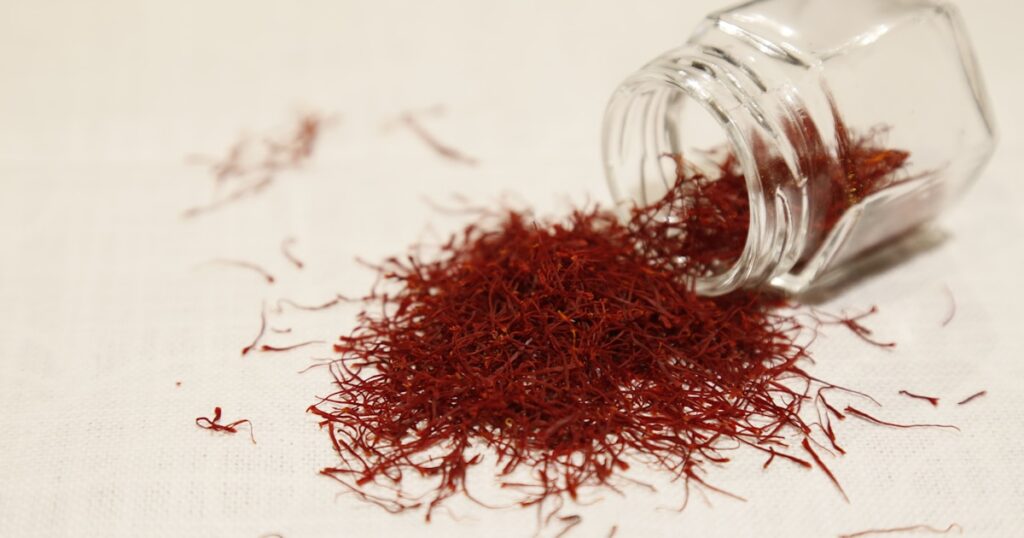
Saffron, the brilliant red stigma harvested from the Crocus sativus flower, is best known as the world’s most expensive spice. But over the past two decades, it has quietly accumulated something far more interesting than culinary cachet: a body of clinical trial evidence suggesting it may help relieve mild-to-moderate depression and anxiety. Several head-to-head studies have even compared it to standard antidepressants — with surprising results.
Here is what the research actually shows, and what it does not.
What is saffron, and why are scientists studying it?
Each saffron crocus produces only three crimson threads, which must be hand-picked at dawn. It takes roughly 150,000 flowers to yield a single kilogram of dried saffron, which is one reason a few grams can cost more than the spice rack it sits on.
The bioactive interest centers on three compounds: crocin and crocetin (the carotenoids that give saffron its color), and safranal (responsible for its distinctive aroma). Laboratory studies indicate these molecules interact with serotonin, dopamine, and norepinephrine pathways — the same systems targeted by conventional antidepressants — and also exert antioxidant and anti-inflammatory effects relevant to mood disorders.
The depression evidence
Saffron’s reputation as a mood remedy is not new — traditional Persian medicine used it for melancholy centuries ago. What is new is the modern clinical evidence.
A 2019 meta-analysis published in the Journal of Integrative Medicine pooled 23 randomized controlled trials and concluded that saffron supplementation produced significant reductions in depressive symptoms compared with placebo, with effects comparable to commonly prescribed selective serotonin reuptake inhibitors (SSRIs) in adults with mild-to-moderate depression.
Several individual trials are notable:
- A 6-week study in the Journal of Affective Disorders randomized adults with major depression to either 30 mg of saffron per day or 40 mg of fluoxetine (Prozac). Symptom improvement was statistically similar in both groups.
- A trial in Phytomedicine compared 30 mg of saffron daily to 100 mg of imipramine and again found comparable reductions in Hamilton Depression Rating Scale scores.
- Smaller studies have explored saffron as an add-on to existing antidepressants in patients with incomplete response, with some signal of additional benefit — though sample sizes have been modest.
It is important to read these results carefully. Most trials have been short (6–12 weeks), conducted in relatively small populations, and many have originated from a single region (Iran, where saffron is plentiful). Independent replication in more diverse populations is still limited, and trials in severe or treatment-resistant depression are largely absent.
Anxiety, premenstrual symptoms, and other findings
Beyond depression, smaller studies have explored saffron for generalized anxiety, premenstrual syndrome (PMS), and menopausal mood symptoms. A 2020 systematic review in Nutrients reported modest reductions in anxiety scores across multiple trials, though the authors flagged inconsistent dosing and methodology.
Research suggests potential benefits for premenstrual mood and irritability at doses around 30 mg per day, and a few small studies have examined saffron for cognitive function in age-related decline. These remain early signals rather than settled science.
How does saffron seem to work?
Mechanistic studies point to several plausible pathways:
- Monoamine modulation. Animal models show that crocin and safranal can inhibit reuptake of serotonin, dopamine, and norepinephrine — broadly mimicking the pharmacology of SSRIs and tricyclics.
- Anti-inflammatory effects. Chronic low-grade inflammation is increasingly implicated in depression. Saffron compounds appear to suppress pro-inflammatory cytokines in laboratory studies.
- Antioxidant activity. Crocin and crocetin scavenge free radicals and may protect neurons from oxidative stress.
- HPA axis regulation. Some research indicates saffron may dampen overactivity of the stress response system.
None of this proves causation in humans, but it offers a coherent story for why a spice might exert measurable psychiatric effects.
Dose, formulation, and what to look for
Most positive trials have used 28–30 mg per day of saffron extract, typically split into two doses, for 6–8 weeks before measuring outcomes. Some standardized extracts (such as affron and Satiereal) specify a minimum concentration of safranal and crocin, which makes dosing more consistent than crude powder.
If you are considering saffron, look for products that:
- State the milligram dose of extract per serving
- List standardization to active compounds
- Are third-party tested (USP, NSF, or similar)
Safety, side effects, and important cautions
At studied doses (up to about 100 mg per day in clinical trials), saffron has generally been well tolerated. Reported side effects are typically mild: nausea, headache, changes in appetite, or dry mouth.
However, several cautions matter:
- Pregnancy. High doses of saffron have historically been associated with uterine stimulation. Pregnant individuals should avoid supplemental saffron.
- Drug interactions. Because saffron may affect serotonin pathways, combining it with SSRIs, SNRIs, MAOIs, or other psychiatric medications without medical supervision could increase the theoretical risk of serotonin syndrome.
- Bleeding risk. Saffron may modestly affect platelet function; people on anticoagulants should consult a clinician.
- Bipolar disorder. Antidepressant-like agents can occasionally trigger manic episodes in vulnerable individuals.
- Quality control. Because real saffron is expensive, adulteration with safflower, turmeric, or dyed corn silk is common. Choose reputable, tested brands.
How to think about saffron in the bigger picture
Saffron is not a replacement for evidence-based treatment of moderate or severe depression. Cognitive behavioral therapy, lifestyle changes, and — when indicated — prescription medication remain the foundation of care. What the research does suggest is that, for some people with mild-to-moderate symptoms, saffron may offer a modest, relatively well-tolerated option that is worth discussing with a healthcare provider, particularly when standard therapies are not tolerated or accessible.
The story of saffron is also a useful reminder that traditional remedies are not automatically inert — and that careful clinical testing can sometimes turn folk knowledge into measurable medicine.
Disclosure: This content is for informational purposes only and is not medical advice. Always consult a qualified healthcare provider before making changes to your health regimen.