
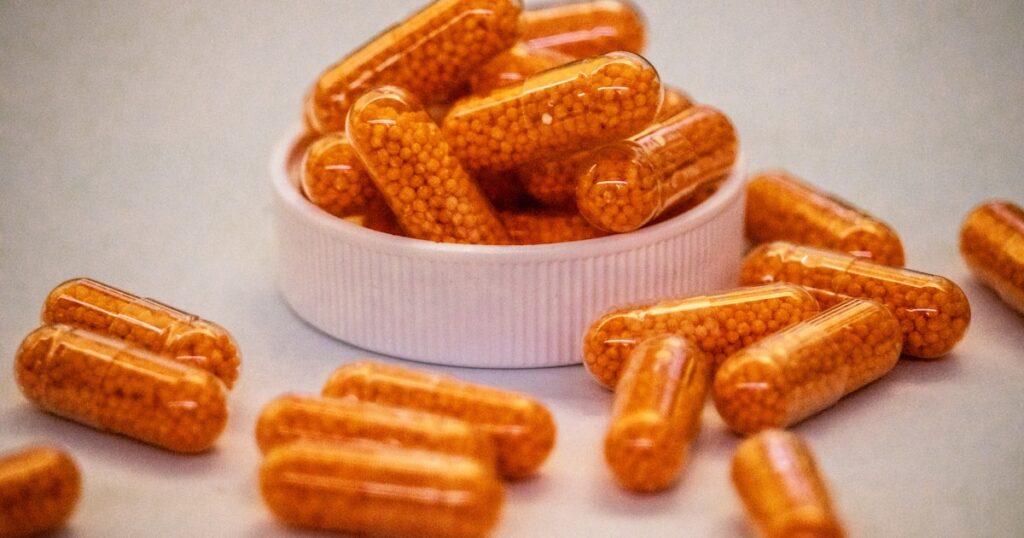
Most people know vitamin K as the nutrient that helps blood clot. But buried within the K family is a lesser-known form — vitamin K2 — that researchers increasingly believe plays a critical role in two of the most pressing health concerns of our time: osteoporosis and cardiovascular disease.
Despite its importance, vitamin K2 is largely absent from the Western diet. Studies suggest that a significant proportion of adults in industrialized nations are functionally deficient, yet K2 rarely appears on nutrition labels or in mainstream dietary guidance.
K1 vs. K2: What’s the Difference?
Vitamin K is not a single nutrient — it is a family of fat-soluble compounds. Vitamin K1 (phylloquinone), found in leafy green vegetables, is well-recognized for its role in blood clotting and is the form most commonly associated with “vitamin K.” Vitamin K2, or menaquinone, is structurally distinct and performs entirely different functions in the body.
K2 itself comes in several subtypes, named by the length of their molecular side chains. The two most studied are:
- MK-4 — found in animal products like egg yolks, butter, and organ meats; has a shorter half-life in the body
- MK-7 — found predominantly in natto (fermented soybeans), certain cheeses, and fermented foods; has a significantly longer half-life and better bioavailability at lower doses
Research suggests that MK-7 reaches higher and more sustained blood levels with smaller doses, making it the form most commonly used in supplements studied for bone and cardiovascular health.
The Calcium Paradox: How K2 Directs Traffic
At the heart of vitamin K2’s role in health is what scientists call the “calcium paradox” — the observation that populations can suffer simultaneously from arterial calcification (calcium depositing in blood vessel walls) and osteoporosis (insufficient calcium in bones). This seems counterintuitive: why would calcium end up in the wrong place?
Vitamin K2 appears to be a key regulator. It activates two critical proteins through a biochemical process called carboxylation:
- Osteocalcin — a protein produced by bone-building cells (osteoblasts) that, when activated by K2, binds calcium and mineralizes bone tissue
- Matrix Gla Protein (MGP) — the most potent known inhibitor of arterial calcification; K2 is required to activate it
Without adequate K2, both proteins remain in their inactive (undercarboxylated) forms. Research shows that high levels of undercarboxylated MGP are strongly associated with increased vascular calcification and cardiovascular risk.
What the Research Says: Bone Health
The evidence for K2 and bone health is particularly strong from Japan, where natto consumption — the richest dietary source of MK-7 — is widespread. Japanese studies have consistently associated higher natto intake with lower rates of hip fracture, independent of calcium and vitamin D intake.
A 2013 meta-analysis published in Osteoporosis International reviewed 19 randomized controlled trials and found that vitamin K2 supplementation significantly reduced fracture incidence, including vertebral fractures, in Japanese postmenopausal women. While some European studies have shown more modest effects, the mechanistic evidence for osteocalcin activation remains robust.
The Japanese Ministry of Health has approved a pharmaceutical-grade MK-4 preparation (menatetrenone) as a treatment for osteoporosis, acknowledging the compound’s clinical relevance for bone preservation.
What the Research Says: Cardiovascular Health
The landmark Rotterdam Study, a large prospective cohort following nearly 5,000 Dutch adults for over seven years, found that participants with the highest dietary intake of vitamin K2 had a 41% lower risk of coronary heart disease mortality compared to those with the lowest intake. Notably, K1 intake showed no significant association with cardiovascular outcomes in the same dataset — underscoring that these two vitamins are functionally distinct.
Subsequent research has reinforced these findings. A 2015 study published in Thrombosis and Haemostasis demonstrated that MK-7 supplementation at 180 mcg daily for three years significantly improved arterial stiffness in postmenopausal women, as measured by pulse wave velocity — a validated marker of cardiovascular risk. The effect was most pronounced in women with initially high cardiovascular risk.
Research indicates that undercarboxylated MGP levels can decrease substantially with K2 supplementation, suggesting that many Western adults have suboptimal K2 status and that supplementation may help restore normal vascular protection.
The Vitamin D3–K2 Synergy
Vitamin D3 has received enormous attention for its role in calcium absorption. However, a growing body of research suggests that D3 and K2 work synergistically — and that high-dose vitamin D3 supplementation without adequate K2 may potentially contribute to soft-tissue calcification by increasing calcium absorption without ensuring its proper deposition.
When vitamin D3 stimulates calcium absorption from the gut and K2 simultaneously activates osteocalcin and MGP, calcium is more efficiently directed toward bone mineralization and away from arterial walls. While researchers are still investigating the optimal D3:K2 ratio, many practitioners and studies now use both in combination when addressing bone or cardiovascular health.
Dietary Sources and Who May Be at Risk of Deficiency
The richest food source of K2 (MK-7) is natto, a traditional Japanese fermented soybean dish, which can contain 800–1,000 mcg per 100g serving. Other sources include:
- Hard and soft cheeses (Gouda and Brie are particularly rich in MK-8 and MK-9)
- Egg yolks from pasture-raised chickens
- Grass-fed butter and ghee
- Chicken and duck liver
- Fermented foods such as sauerkraut and some yogurts
Western diets, which tend to be low in fermented foods and favor grain-fed over pasture-raised animal products, provide substantially less K2 than traditional Japanese or European diets. Population studies estimate that Western adults consume only 10–20% of the K2 found in diets rich in fermented and pasture-raised foods.
Populations who may be at particularly elevated risk of K2 insufficiency include people who eat few fermented foods, those on long-term broad-spectrum antibiotics (gut bacteria also produce some menaquinones), individuals with fat malabsorption conditions such as inflammatory bowel disease or celiac disease, and older adults whose gut microbiome diversity tends to decrease with age.
Supplement Considerations
For those who do not regularly eat natto or significant amounts of K2-rich fermented foods, MK-7 supplements are widely available. Research studies have used doses ranging from 90 to 360 mcg of MK-7 daily, with 90–180 mcg being the most common range for general supplementation. MK-7 supplements derived from natto are generally considered well-tolerated.
One important caveat: vitamin K2, like K1, affects blood coagulation pathways. Individuals taking warfarin (Coumadin) or other vitamin K antagonist anticoagulants should consult their healthcare provider before using K2 supplements, as changes in K intake can alter the medication’s effectiveness. Newer anticoagulants (direct oral anticoagulants) do not share this interaction.
The Bottom Line
Vitamin K2 occupies a unique position at the intersection of bone health, cardiovascular protection, and calcium metabolism. Decades of research — from the Rotterdam cohort to Japanese fracture studies to mechanistic work on MGP activation — point to K2 as a nutrient that the Western world may be systematically under-consuming.
While more large-scale randomized controlled trials in diverse populations are needed, the existing evidence suggests that ensuring adequate K2 intake — whether through dietary sources like natto and fermented foods or via MK-7 supplementation — represents a promising and low-risk strategy for long-term bone and vascular health.
Research in this area continues to evolve, and scientists are investigating K2’s potential roles in insulin sensitivity, cancer prevention, and even cognitive function. For now, the bone–heart connection alone makes a compelling case for giving this underappreciated vitamin more attention.
Disclosure: This content is for informational purposes only and is not medical advice. Always consult a qualified healthcare provider before making changes to your health regimen.