Vitamin A is essential for vision, immune defense, reproduction, and cell growth — but it is also one of the few vitamins where too much can cause serious harm. After a long stretch of relative quiet, U.S. poison control data showed vitamin A overdose reports climbing again, and clinicians are reminding the public that fat-soluble vitamins do not flush out the way the B and C families do. Here is what current research says about safe intake, the warning signs of toxicity, and the situations that raise risk.
How Vitamin A Works in the Body
Vitamin A is the name for a family of fat-soluble compounds that includes retinol, retinal, and retinyl esters. According to the National Institutes of Health Office of Dietary Supplements, it plays a central role in the visual cycle, supports the differentiation of immune cells, and helps maintain the linings of the eyes, lungs, and gut.
Dietary vitamin A comes in two forms:
- Preformed vitamin A (retinol and retinyl esters) — found in animal foods such as liver, fish, eggs, and dairy. It is absorbed at roughly 75–100% efficiency and is the form most associated with toxicity.
- Provitamin A carotenoids (mainly beta-carotene) — found in orange, yellow, and dark leafy plants such as sweet potato, carrots, and spinach. The body converts beta-carotene into retinol on demand, which makes it a much safer source.
Because the body tightly regulates beta-carotene conversion, plant sources rarely cause classical vitamin A toxicity. Excess beta-carotene can tint the skin orange (a harmless condition called carotenoderma) but does not poison the liver.
Safe Daily Limits
Public-health agencies set two reference numbers: a Recommended Dietary Allowance (RDA) and a Tolerable Upper Intake Level (UL). Both are expressed in micrograms of retinol activity equivalents (mcg RAE).
- RDA, men 19+: 900 mcg RAE
- RDA, women 19+: 700 mcg RAE
- RDA, pregnancy: 770 mcg RAE
- RDA, lactation: 1,300 mcg RAE
- UL, adults: 3,000 mcg RAE per day from preformed vitamin A
The UL applies only to preformed vitamin A; there is no UL for beta-carotene from food. A 3-ounce serving of beef liver delivers about 6,582 mcg RAE — more than double the upper limit — which is why nutrition guidelines suggest eating liver only occasionally.
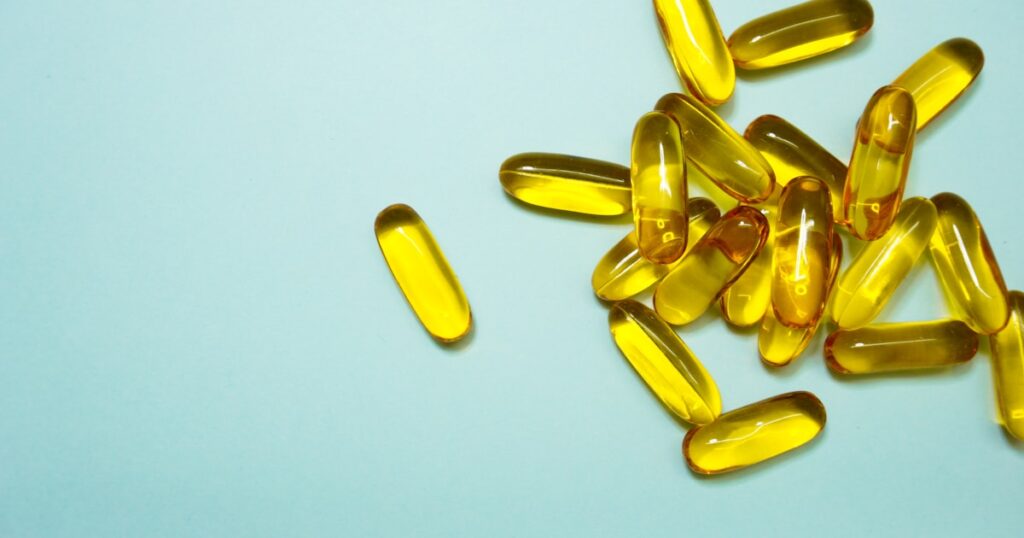
Supplement labels often still list vitamin A in International Units (IU). For preformed retinol, 1 mcg RAE equals 3.33 IU, so the 3,000 mcg UL works out to roughly 10,000 IU. Many over-the-counter multivitamins, cod liver oil capsules, and “high-potency” formulas approach or exceed this number, especially when a person stacks several products.
What Toxicity Looks Like
Vitamin A toxicity, known clinically as hypervitaminosis A, can appear in two patterns.
Acute Toxicity
Acute toxicity follows a single very large dose — typically more than 100 times the RDA. NIH notes that symptoms can include severe headache, blurred vision, nausea, dizziness, muscle aches, coordination problems, and in some cases raised pressure inside the skull. Reports describe rapid resolution once the source is stopped, but emergency evaluation is warranted when neurological symptoms appear.
Chronic Toxicity
Chronic toxicity is more common and more insidious. It develops over months of taking high-dose supplements, eating liver frequently, or combining several vitamin A–containing products. Reported features include dry, cracking skin, hair loss, brittle nails, joint and bone pain, fatigue, low mood, and abnormal liver enzyme tests. A 2022 review in StatPearls notes that long-term intakes above 7,500 mcg RAE per day have been linked to liver injury, while doses above 10,000 mcg RAE per day during early pregnancy raise the risk of birth defects.
Why Cases Are Climbing
Health writers covering 2025 poison-control data point to several converging trends: the popularity of cod liver oil on social media, “mega-dose” wellness protocols, mixing of multivitamins with single-nutrient products, and confusion between IU and mcg on labels. Children are especially vulnerable because their smaller body mass turns adult-strength gummies into accidental overdoses.
The World Health Organization emphasizes that vitamin A deficiency remains a leading cause of preventable childhood blindness in low-income settings, so supplementation programs in those regions are essential. The toxicity story in high-income countries is the opposite problem: well-fed adults adding doses they do not need.
Who Should Be Most Careful
- Pregnant people — high preformed vitamin A intake in the first trimester is linked to teratogenic effects. Prenatal vitamins use the lower 770 mcg RAE benchmark for this reason.
- Older adults — slower hepatic clearance can let vitamin A accumulate.
- People taking isotretinoin or other retinoids — these prescription drugs are vitamin A derivatives and add to the body’s total load.
- Heavy alcohol drinkers and people with liver disease — the liver stores most of the body’s vitamin A and is also the main site of toxicity.
- Children using adult gummy multivitamins — pediatric dosing differs sharply from adult dosing.
Getting Enough Without Overdoing It
Most adults eating a varied diet meet the RDA without supplements. A half cup of cooked spinach, a medium sweet potato, a couple of eggs, or a small serving of dairy already covers a meaningful share of daily needs. For people who choose to supplement, research suggests looking for products that supply most of the vitamin A as beta-carotene rather than retinyl palmitate, and checking the label to ensure the total dose stays well below 3,000 mcg RAE — including what is in any multivitamin already being taken.
The Bottom Line
Vitamin A is a clear example of a “more is not better” nutrient. The body needs it, food provides plenty for most people, and the safety window for preformed retinol is narrower than many supplement labels suggest. Studies indicate that staying within the 700–900 mcg RAE daily range from food, reserving high-dose supplements for documented medical reasons, and reading both IU and mcg on labels are the simplest ways to capture the benefits without the risks. Anyone considering a vitamin A supplement — especially during pregnancy, while taking retinoid medications, or for a child — should consult a qualified healthcare provider before starting.
Disclosure: This content is for informational purposes only and is not medical advice. Always consult a qualified healthcare provider before making changes to your health regimen.