
Few health emergencies provoke as much anxiety as potential exposure to rabies. Transmitted through the saliva of infected mammals, rabies is a viral zoonotic disease targeting the central nervous system. According to the World Health Organization (WHO), once clinical neurological symptoms appear, rabies has a case fatality rate approaching 100%, making it one of the deadliest infections known to medicine.
Yet human rabies is almost completely preventable. Modern medical research demonstrates that prompt post-exposure prophylaxis (PEP) is virtually 100% effective when administered before the virus enters the central nervous system. Understanding what constitutes an exposure, the necessity of immediate first aid, and how clinical prophylaxis functions is critical for public safety.
How Rabies Infection Progresses
The rabies virus belongs to the Lyssavirus genus. Unlike respiratory pathogens that cause broad systemic inflammation, rabies follows a stealthy pathway. When saliva from an infected animal enters broken skin or mucous membranes, the virus typically replicates locally within muscle tissue.
Following this initial phase, the virus enters peripheral motor and sensory nerve endings. It then travels retrogradely along axons toward the spinal cord and brain. Because the virus remains sequestered inside nerve cells during this phase, the human body rarely produces a protective natural antibody response in time on its own.
Once the virus crosses into the brain, it triggers progressive encephalomyelitis. This highlights why supporting systemic immune health defenses must be paired with rapid medical countermeasures when facing neurotropic pathogens.
The Three Categories of Exposure Defined by WHO
The World Health Organization categorizes animal contact into three distinct risk tiers to guide clinical decisions:
- Category I (No Exposure): Touching or feeding animals, or animal licks on intact, healthy skin. These interactions carry zero transmission risk. Standard skin washing with soap and water is advised, and no post-exposure prophylaxis is necessary.
- Category II (Minor Exposure): Nibbling of uncovered skin, minor scratches, or superficial abrasions without bleeding. This represents true exposure. The protocol mandates immediate thorough wound cleansing and an urgent course of rabies vaccination.
- Category III (Severe Exposure): Single or multiple bites or scratches that puncture the skin, animal licks on broken skin, saliva contact with mucous membranes (eyes or mouth), or direct contact with bats. Category III exposures require wound washing, immediate rabies vaccination, and the administration of rabies immunoglobulin (RIG).
Globally, domestic dogs account for up to 99% of human rabies transmissions, mainly in regions where animal vaccination access is limited. In North America and Western Europe, pet vaccination programs have shifted the predominant threat to wildlife reservoirs, including bats, raccoons, skunks, and foxes.
The Bat Exposure Exception: Why Microscopic Bites Matter
A critical public health consideration involves bat encounters. In the United States, bats account for approximately 70% of indigenous human rabies cases, according to the Centers for Disease Control and Prevention (CDC).
Insectivorous bats have microscopic, needle-sharp teeth. A bat bite or scratch can be painless and leave no visible puncture mark or swelling. Consequently, people often do not realize they have been bitten.
Because of this covert risk, public health guidelines classify finding a bat in a room where someone was sleeping, in an unattended child’s room, or near an incapacitated person as a potential Category III exposure. Health officials recommend contacting local public health departments immediately. If the bat can be captured safely without damaging the head, it can be tested. If testing is unavailable, initiating PEP promptly is standard practice.
The Crucial First 15 Minutes: Wound Cleansing Evidence
The most important initial intervention happens before arriving at a clinic: extensive local wound cleansing. Research from the WHO and CDC confirms that immediate mechanical flushing physically removes and chemically disrupts viral particles.
The recommended first aid protocol consists of flushing the wound with clean running water and soap or detergent for at least 15 consecutive minutes. Because rabies is an enveloped virus with a lipid membrane, simple soap disrupts the viral coat, significantly reducing viral load at the inoculation site before neural invasion occurs.
Applying an antiseptic with virucidal activity — such as povidone-iodine solution — provides further protection. Similar to how nutrients like zinc support cellular repair and tissue recovery, keeping the skin barrier protected aids healing, though suturing bite wounds is generally avoided to prevent embedding viral particles deeper.
How Post-Exposure Prophylaxis (PEP) Works
Modern clinical post-exposure prophylaxis combines two biological interventions to neutralize the virus:
1. Rabies Immunoglobulin (RIG)
Human Rabies Immune Globulin provides immediate passive antibodies. Because active vaccines take 7 to 10 days to induce an antibody response, RIG bridges this immunological gap. The full calculated dose of RIG is infiltrated directly into and around the wound margins to neutralize the virus locally. Any remaining volume is injected intramuscularly at an anatomical site away from the vaccine injection.
2. The Modern Inactivated Vaccine Series
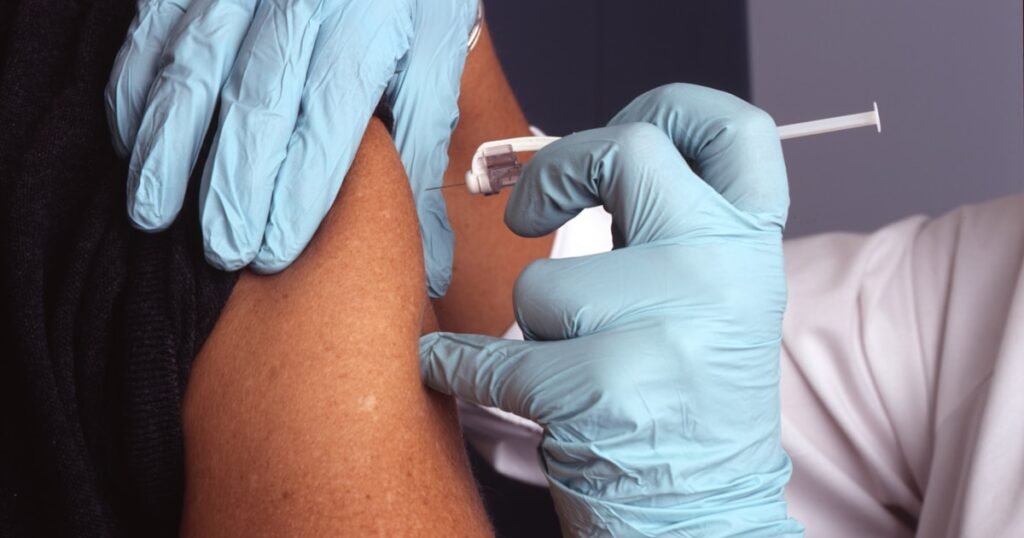
Modern rabies vaccines are cell-culture formulations with strong safety profiles. The standard regimen recommended by the CDC Advisory Committee on Immunization Practices (ACIP) for previously unvaccinated adults involves four doses given on Days 0, 3, 7, and 14. These injections are administered intramuscularly into the deltoid muscle, never into the gluteal muscle where fat tissue can compromise absorption.
The Incubation Timeline: Why Delay Is Dangerous
The rabies incubation period is highly variable. Typically lasting 1 to 3 months, it can range from under a week to more than a year depending on the distance from the bite to the central nervous system and the viral inoculum size.
As long as an individual remains completely asymptomatic, beginning PEP is never considered too late. Immunization can still neutralize the virus during its slow transit through peripheral nerves. However, once clinical neurological symptoms appear, the virus has established itself within the central nervous system, where medical treatment is no longer effective.
Key Preventive Actions
Protecting yourself and your family involves clear, evidence-based practices:
- Keep pets vaccinated: Ensuring dogs, cats, and ferrets receive routine rabies immunizations creates a protective community barrier.
- Avoid wild or unfamiliar animals: Never touch, handle, or feed wildlife or stray animals.
- Bat-proof home spaces: Seal small entry points, attics, and chimneys to prevent bats from entering living quarters.
- Act immediately upon exposure: Wash any bite or scratch with soap and water for 15 minutes and seek emergency medical evaluation without delay.
While rabies remains a serious global threat, timely post-exposure prophylaxis, proper wound care, and animal immunization provide reliable protection.
Disclosure: This content is for informational purposes only and is not medical advice. Always consult a qualified healthcare provider before making changes to your health regimen.