
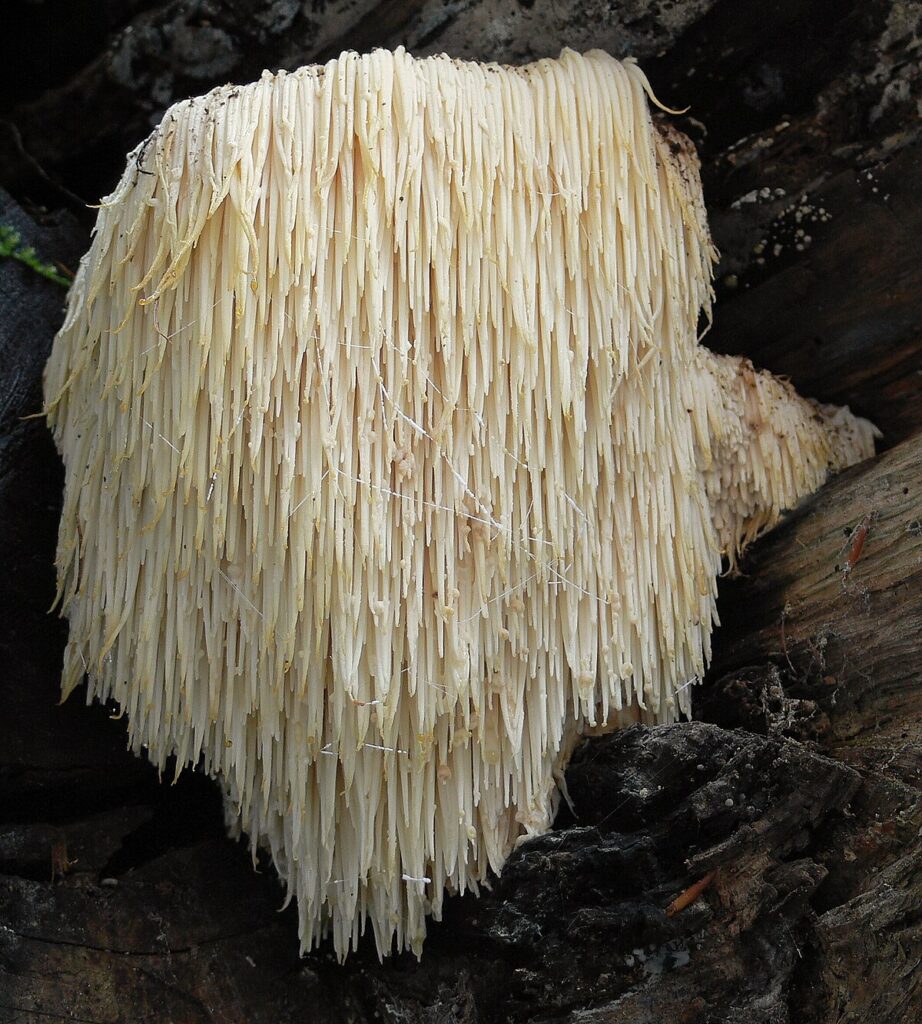
Lion’s mane (Hericium erinaceus) is an unusual-looking white fungus named for its shaggy, cascading spines that resemble a lion’s mane. Native to North America, Europe, and Asia, it has been used for centuries in traditional Chinese and Japanese medicine — both as a culinary ingredient and a therapeutic remedy.
In recent years, this ancient mushroom has attracted serious scientific attention for its potential effects on the brain and nervous system. Researchers are now investigating whether it can genuinely support cognitive function, mood, and long-term neurological health.
The Bioactive Compounds Behind the Science
What distinguishes lion’s mane from most other functional mushrooms is its two unique families of bioactive compounds: hericenones and erinacines.
Hericenones are found in the fruiting body — the visible, edible part of the mushroom. Researchers have identified 11 hericenones, four of which have been shown to promote nerve growth factor (NGF) synthesis in laboratory settings. Erinacines, found in the mycelium (the root-like network beneath the surface), number at least 15, and all demonstrate NGF-enhancing properties. Studies show that erinacine A can induce NGF synthesis of approximately 250 pg/mL in cell cultures (Chiu et al., Biomolecules, 2020).
NGF is a protein critical for the growth, maintenance, and survival of neurons — which is why many researchers believe lion’s mane holds genuine promise as a neuroprotective supplement.
Cognitive Function: What the Human Studies Show
One of the most frequently cited clinical trials on lion’s mane was conducted in Japan with adults aged 50 to 80 diagnosed with mild cognitive impairment. Participants who received lion’s mane supplementation over 16 weeks showed significantly improved scores on cognitive function assessments compared to placebo — with improvements declining after supplementation stopped, suggesting benefits may require continued use.
The mechanisms behind these effects are thought to involve several pathways:
- Increased NGF production — supporting neuron maintenance and growth
- Hippocampal neurogenesis — animal studies show lion’s mane extract can stimulate the growth of new neurons in the hippocampus, the brain region central to memory and learning
- Elevated BDNF (Brain-Derived Neurotrophic Factor) — one small human study found supplementation increased peripheral BDNF levels after just four weeks, a marker associated with improved cognitive resilience
Depression and Anxiety: A Promising but Preliminary Signal
Beyond cognition, a growing body of preclinical research has investigated lion’s mane for mental health benefits. Animal studies published in peer-reviewed journals have found that lion’s mane extracts significantly reduced depressive behaviors and restored depleted levels of serotonin, norepinephrine, and dopamine — key neurotransmitters involved in mood regulation (Chiu et al., Antioxidants, 2021).
On the inflammatory side, research indicates that lion’s mane extracts can reduce TNF-α (a pro-inflammatory cytokine) while increasing IL-10 (an anti-inflammatory marker) — both changes associated with lower depression risk in humans. Four small human trials have reported reductions in depression and anxiety symptoms, though sample sizes ranged from just 8 to 77 participants. Researchers note that larger, well-designed clinical trials are still needed.
Neuroprotective Potential: Early but Compelling
In animal models of serious neurodegenerative conditions, the findings are striking — though still predominantly preclinical:
- Stroke protection: Oral doses of lion’s mane extract reduced infarct volumes (areas of brain cell death) by 22–44% in rodent stroke models, according to a review in Biomolecules (2020).
- Alzheimer’s models: Erinacine-enriched mycelium reduced amyloid plaque burden and increased insulin-degrading enzyme activity by 130–303% — a mechanism linked to amyloid clearance from the brain.
- Parkinson’s and ALS: Preliminary animal studies have demonstrated neuroprotective effects in dopaminergic and motor neurons, though human evidence is currently absent.
Researchers caution that while these animal model results are encouraging, they don’t automatically translate to human outcomes — and clinical trials in neurodegenerative disease remain in early stages.
Traditional Use and Culinary Appeal
Long before modern science took notice, lion’s mane was a prized ingredient in Asian cuisines and traditional medicine systems. Known as “yamabushitake” in Japan and “houtou” in China, it was valued not only as food but as a tonic for supporting the stomach, spleen, and what practitioners described as “spirit” or cognitive clarity.
As a food, fresh lion’s mane has a mild, slightly seafood-like flavor and a satisfying meaty texture when sautéed — making it a popular meat substitute in plant-based cooking.
How to Use Lion’s Mane
Lion’s mane is available in several forms:
- Whole dried or fresh mushroom — sliced and cooked; excellent in stir-fries, soups, and grain bowls
- Powdered extract — added to coffee, tea, or smoothies; often standardized for erinacine or hericenone content
- Capsules and tablets — the most common supplemental form; typical doses in studies ranged from 500 mg to 3 g per day
When choosing a supplement, look for products that specify whether they use the fruiting body, mycelium, or a dual extract — since each contains different active compounds. Third-party tested products from reputable brands offer additional quality assurance. As always, consult your healthcare provider before beginning any new supplement regimen.
Safety Profile
Lion’s mane has a favorable safety record based on available research. Toxicology studies found no adverse effects at oral doses up to 3 g/kg in animal models, with a median lethal dose exceeding 5 g/kg — suggesting a wide safety margin. Reported side effects in humans are rare and typically mild, including occasional gastrointestinal discomfort. A small number of case reports have described allergic reactions, particularly in individuals with sensitivity to other fungi.
People with known mushroom allergies, those on anticoagulant medications, or those who are pregnant or breastfeeding should consult a healthcare provider before use.
The Bottom Line
Lion’s mane stands out among functional mushrooms for the scientific specificity of its neurological research. The pathways — NGF stimulation, hippocampal neurogenesis, BDNF elevation — provide a coherent biological rationale for the cognitive and mood benefits observed in early human trials. While the research is still maturing and larger clinical studies are needed, the existing evidence makes lion’s mane one of the more compelling natural compounds to emerge from the field of integrative health.
For those interested in brain health and neuroprotection, lion’s mane may be a worthwhile addition to a balanced, whole-foods diet. A conversation with your healthcare provider can help determine whether it fits your individual health picture.
Disclosure: This content is for informational purposes only and is not medical advice. Always consult a qualified healthcare provider before making changes to your health regimen.