
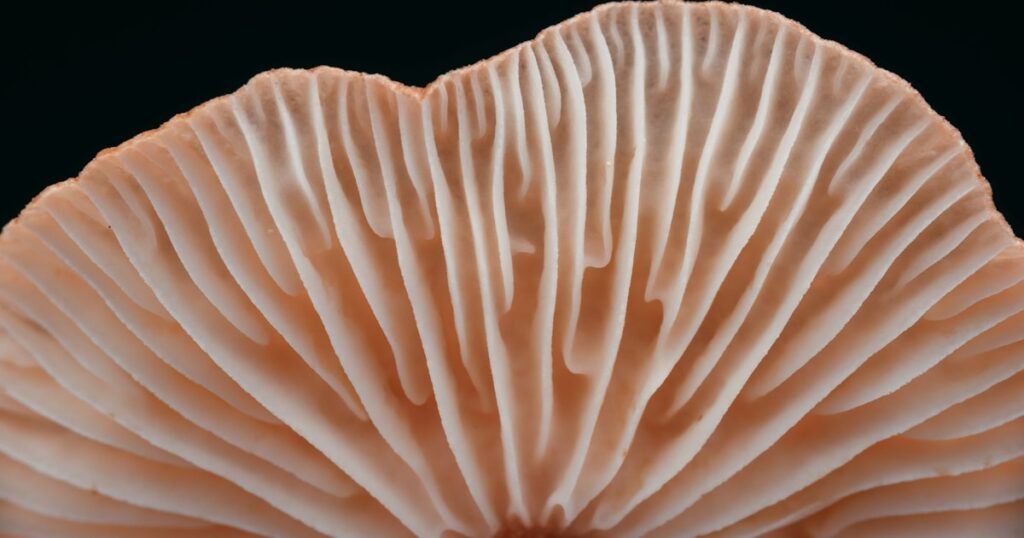
Walk into any wellness shop or scroll through social media and you’ll find lion’s mane mushroom (Hericium erinaceus) marketed as a brain booster, memory enhancer, and even a remedy for anxiety. The shaggy white fungus, which grows on hardwood trees across Asia, Europe, and North America, has been used in traditional Chinese and Japanese medicine for centuries. But what does modern research actually say about its effects on the brain and nervous system?
The Science Behind Lion’s Mane
Lion’s mane contains two families of bioactive compounds that have attracted significant scientific interest: hericenones, found in the fruiting body, and erinacines, found in the mycelium. Laboratory studies have shown that these molecules can cross the blood-brain barrier and stimulate the production of nerve growth factor (NGF) and brain-derived neurotrophic factor (BDNF) — two proteins essential for the growth, survival, and repair of neurons.
NGF was discovered in the 1950s by Nobel laureate Rita Levi-Montalcini and has since become a target of intense research into neurodegenerative diseases. A 2013 review published in the International Journal of Medicinal Mushrooms highlighted lion’s mane as one of the few natural substances shown to stimulate NGF synthesis in cultured cells.
Why neurotrophins matter
Neurotrophic factors like NGF and BDNF help neurons form new connections, a process called synaptic plasticity. Declining levels of these proteins are associated with conditions ranging from mild cognitive impairment to Alzheimer’s disease and major depression. Anything that reliably increases their availability in the brain is, in theory, worth studying.
What Human Studies Show
While animal and cell research is promising, the human evidence is smaller and more cautious. Still, several controlled trials offer interesting signals.
Mild cognitive impairment
The most cited human study, published by Mori and colleagues in Phytotherapy Research in 2009, randomized 30 Japanese adults aged 50–80 with mild cognitive impairment to receive either 3 grams of lion’s mane powder or placebo for 16 weeks. Participants taking the mushroom showed significantly higher scores on a cognitive function scale at weeks 8, 12, and 16 — but the improvements disappeared four weeks after stopping supplementation, suggesting the effect depended on continued use.
Mood and anxiety
A small 2010 trial published in Biomedical Research gave 30 menopausal women lion’s mane cookies or placebo cookies for four weeks. Those eating the mushroom reported lower scores on questionnaires measuring irritation and anxiety. A 2019 pilot study in Evidence-Based Complementary and Alternative Medicine also reported reduced depression and anxiety symptoms in overweight adults after eight weeks, though the sample was again small.
Recovery after mild brain injury
A 2020 trial in Frontiers in Aging Neuroscience followed 41 adults with mild Alzheimer’s disease who took an erinacine-enriched lion’s mane preparation for 49 weeks. The supplemented group showed modest improvements on neuropsychological tests compared with placebo. Researchers cautioned that the trial was small and called for larger, longer studies.
How Lion’s Mane Might Work
Proposed mechanisms based on preclinical research include:
- NGF and BDNF stimulation — supporting neuron survival and synaptic plasticity.
- Reduced neuroinflammation — lion’s mane extracts appear to suppress pro-inflammatory cytokines in microglia, the brain’s immune cells.
- Antioxidant activity — polysaccharides in the mushroom show free-radical scavenging in lab assays.
- Myelin support — animal studies suggest erinacines may promote myelination, the insulation that speeds signals along nerves.
None of these mechanisms have been definitively confirmed in humans, and dose translation from rodents to people is notoriously tricky.
Forms, Doses, and Quality
Lion’s mane is sold as whole dried mushrooms, capsules, powders, tinctures, and as ingredients in coffee blends or gummies. Clinical trials have generally used 1 to 3 grams per day of dried fruiting body extract, taken with food and continued for weeks rather than days. There is no established optimal dose for healthy adults seeking general cognitive support.
Quality varies widely. Some products labeled as lion’s mane contain large amounts of mycelium grown on grain, which dilutes the active compounds. Third-party tested extracts that specify beta-glucan content and avoid significant grain filler are generally considered more reliable. Look for the Latin name Hericium erinaceus on the label and certificates of analysis when available.
Safety and Side Effects
Lion’s mane is generally well tolerated in published studies, with side effects largely limited to mild digestive symptoms. However, important caveats apply:
- People with mushroom or mold allergies may react.
- Because lion’s mane may influence blood clotting and glucose in animal studies, those on anticoagulants or diabetes medication should consult a clinician before adding it.
- Long-term safety beyond about one year of daily use has not been rigorously studied.
- Lion’s mane is not regulated as a drug in the United States, and quality control falls to manufacturers.
What Lion’s Mane Cannot Do
Lion’s mane is not a treatment for Alzheimer’s disease, dementia, depression, anxiety disorders, or any other diagnosed condition. The trials so far are small, short, and concentrated in specific populations. Many were funded or supplied by mushroom companies, which is not disqualifying but warrants attention. The U.S. National Center for Complementary and Integrative Health notes that while culinary mushrooms have known nutritional value, claims about specific medicinal benefits often outpace the evidence.
For brain health, the strongest interventions remain consistent sleep, regular physical activity, social engagement, blood pressure and glucose control, a Mediterranean-style diet rich in vegetables, fish, nuts, and olive oil, and avoidance of smoking and excessive alcohol. A supplement, however interesting, sits at the margin of these foundations rather than replacing them.
The Bottom Line
Lion’s mane mushroom is one of the more biologically plausible candidates in the crowded nootropic market. Laboratory and small clinical studies hint at benefits for cognition, mood, and nerve repair, plausibly mediated by NGF and BDNF stimulation. But the human evidence is still preliminary, dosing is unstandardized, and product quality is uneven.
For curious, healthy adults, a high-quality extract used at studied doses appears low risk. For anyone with a neurological diagnosis, on prescription medication, pregnant, or breastfeeding, the right next step is a conversation with a qualified healthcare provider — not a TikTok testimonial.
Disclosure: This content is for informational purposes only and is not medical advice. Always consult a qualified healthcare provider before making changes to your health regimen.