
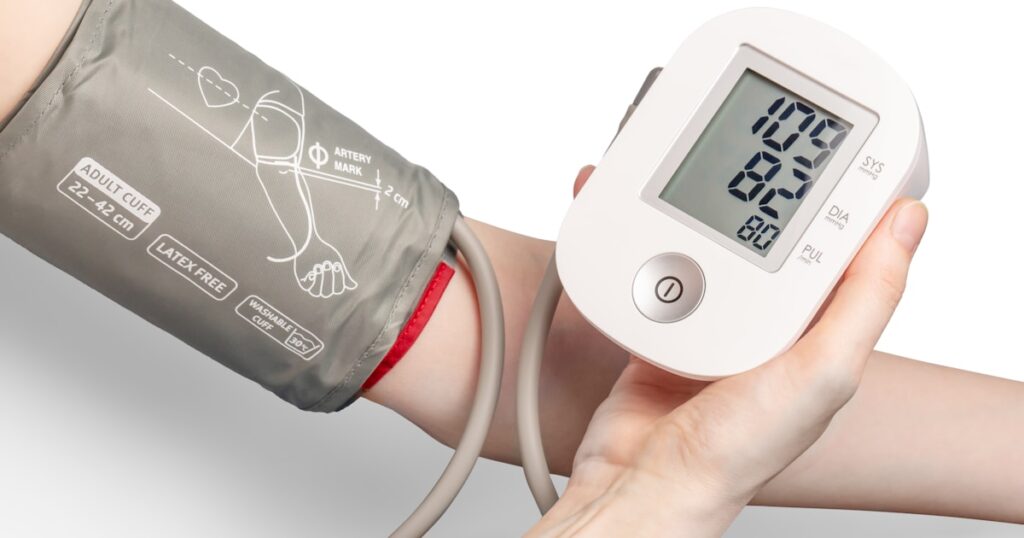
For decades, the blood pressure reading at the doctor’s office has anchored how clinicians diagnose and treat hypertension. But a growing body of research suggests that what happens in those quiet minutes at home — with a properly sized cuff, a seated position, and a steady arm — may matter even more. A wave of recent studies has linked regular home blood pressure monitoring to better control of hypertension and, importantly, to fewer heart attacks and strokes over time.
The American Heart Association, the American College of Cardiology, and the U.S. Preventive Services Task Force now all recommend home blood pressure measurement as part of the standard diagnosis and management of high blood pressure. The shift reflects a simple insight: a single reading taken in a rushed office visit captures only a sliver of what happens to blood pressure across an ordinary week.
Why Home Readings Matter
Blood pressure is not a fixed number. It rises and falls in response to stress, posture, sleep, caffeine, conversation, and even the act of being measured. The phenomenon known as “white coat hypertension” — elevated readings only in clinical settings — affects an estimated 15 to 30 percent of adults, according to the American Heart Association. The mirror image, “masked hypertension,” describes people whose office readings look normal but whose true blood pressure outside the clinic is dangerously elevated. Both conditions are missed by office measurement alone.
Home monitoring catches what the office misses. A 2020 meta-analysis published in JAMA Internal Medicine, which combined data from 28 randomized trials and more than 12,000 participants, found that patients who used home blood pressure monitoring achieved meaningfully lower systolic readings than those who relied on usual office-based care. The improvement was largest when home monitoring was paired with co-interventions such as medication titration, lifestyle counseling, or telehealth follow-up.
A 2021 review in Hypertension, a journal of the American Heart Association, went further. Pooling outcomes from long-term observational studies, the authors reported that home readings were a stronger predictor of cardiovascular events than office readings — and that patients who tracked their own blood pressure had a measurably lower risk of stroke and heart attack over the years that followed.
What the Latest Research Suggests
The most recent evidence has sharpened that picture. A 2024 analysis published in the British Medical Journal evaluated data from primary care networks that had adopted routine home blood pressure monitoring as part of hypertension care. Patients who consistently reported home readings to their clinicians achieved blood pressure control at higher rates than matched patients who did not, and they experienced fewer hospitalizations for cardiovascular events over a five-year follow-up.
The mechanism is straightforward. When patients and clinicians have access to a richer set of readings, treatment decisions improve. Medications can be adjusted sooner. Lifestyle changes — reducing sodium, losing weight, increasing physical activity — can be linked to visible feedback. And the patient becomes an active partner in care, rather than waiting months between office visits for the next data point.
How to Measure Blood Pressure at Home Correctly
Accuracy depends almost entirely on technique. Both the American Heart Association and the European Society of Hypertension publish step-by-step protocols, and they largely agree on the essentials.
Use a Validated Device
Choose an upper-arm cuff monitor that has been independently validated for accuracy. The website validatebp.org, maintained by the American Medical Association and the American Heart Association, lists devices that have passed established testing standards. Wrist and finger monitors are generally less reliable and are not recommended for routine use.
Match the Cuff to the Arm
An ill-fitting cuff is one of the most common sources of inaccurate readings. A cuff that is too small can overestimate blood pressure by 10 to 30 mm Hg, while a cuff that is too large can underestimate it. The bladder inside the cuff should encircle 75 to 100 percent of the upper arm. Measure the arm circumference before buying a device.
Prepare Before Measuring
- Avoid caffeine, exercise, and tobacco for at least 30 minutes before measurement.
- Empty the bladder.
- Sit quietly for five minutes in a chair with back support, feet flat on the floor, and legs uncrossed.
- Rest the arm at heart level on a table — not on the lap and not unsupported.
- Do not talk or look at a phone during the measurement.
Take Multiple Readings
One reading is rarely enough. The American Heart Association recommends taking two readings one minute apart, ideally twice a day — once in the morning before medication and once in the evening — for at least the first week after diagnosis or after a treatment change. The average of these readings is what clinicians use to guide care.
What the Numbers Mean
Current guidelines from the American College of Cardiology and American Heart Association define hypertension as a sustained reading of 130/80 mm Hg or higher. For home readings, the diagnostic threshold is slightly lower, at 130/80 mm Hg, reflecting the typically calmer environment outside the clinic. A reading of 120/80 mm Hg or lower is considered normal.
A single elevated reading does not mean a diagnosis. Blood pressure fluctuates, and clinicians look for patterns over days and weeks. Bring the log of readings — or download them from a connected device — to follow-up visits so the clinician can interpret them in context.
The Bigger Picture: Why This Matters
Hypertension is the world’s leading modifiable risk factor for cardiovascular disease. The World Health Organization estimates that uncontrolled high blood pressure contributes to roughly 10 million deaths each year, primarily through stroke, heart attack, heart failure, and kidney disease. Yet according to the Centers for Disease Control and Prevention, only about 1 in 4 American adults with hypertension have it under control.
Closing that gap does not require new drugs. The medications and lifestyle changes that lower blood pressure are well understood. What has been missing is timely, accurate information about how individual patients are actually responding to treatment between visits. Home monitoring fills that gap.
The cost of an entry-level validated monitor is modest — typically $40 to $80 in the United States, and often covered partially or fully by insurance plans for people with a hypertension diagnosis. Many plans now also reimburse for “remote patient monitoring” programs that integrate home readings into electronic medical records.
Who Should Be Measuring at Home
Home monitoring is most clearly beneficial for several groups:
- Adults with diagnosed hypertension, who need to know whether their treatment is working.
- Adults with borderline readings (between 120/80 and 130/80 mm Hg), where home data can clarify whether full hypertension is developing.
- People taking new or adjusted blood pressure medication, where home readings help titrate the dose safely.
- Pregnant individuals at risk of preeclampsia, where blood pressure trends are a key warning sign and where home monitoring is increasingly recommended by obstetric guidelines.
- Adults over 65, in whom both white coat and masked hypertension are common.
For people with kidney disease, diabetes, or established cardiovascular disease, the case is even stronger, since the cardiovascular risk of uncontrolled hypertension is amplified.
The Bottom Line
Research suggests that consistent home blood pressure monitoring, paired with clinician follow-up, produces better control of hypertension and fewer cardiovascular events than relying on office readings alone. The intervention is inexpensive, low-risk, and supported by major U.S. and international guidelines. The catch is technique: a validated upper-arm device, a properly sized cuff, a quiet seated routine, and multiple readings averaged over time.
For anyone with high or borderline blood pressure, the most useful next step is to discuss home monitoring with a healthcare provider — including which device to buy, how often to measure, and how the readings will be reviewed and acted on.
Disclosure: This content is for informational purposes only and is not medical advice. Always consult a qualified healthcare provider before making changes to your health regimen.