
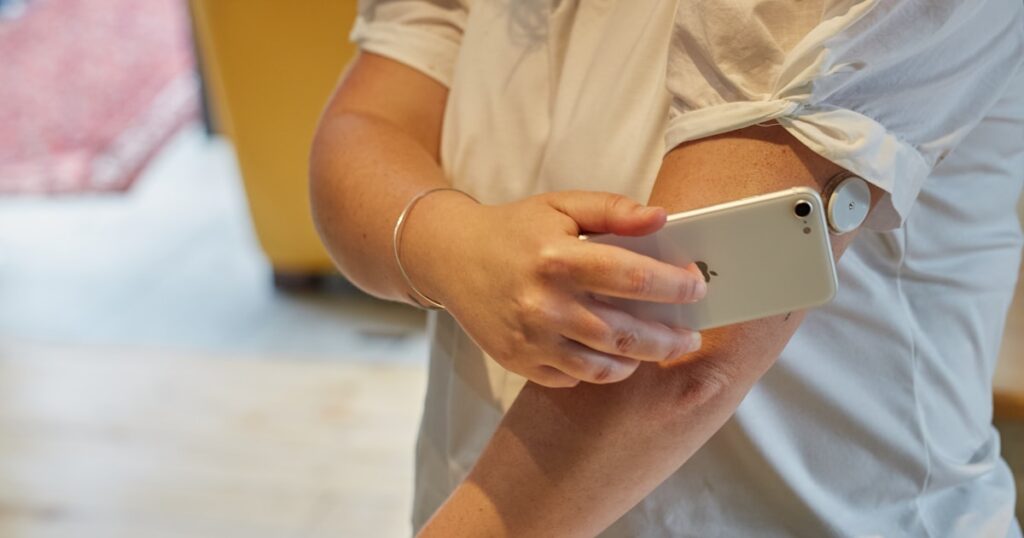
Once tucked away in the diabetes aisle, continuous glucose monitors (CGMs) are now showing up on the arms of marathoners, executives, and biohackers. Since the FDA cleared the first over-the-counter CGM in 2024, products like Dexcom Stelo, Abbott Lingo, and Abbott Libre Rio have made round-the-clock blood sugar tracking available without a prescription — and a multi-billion-dollar wellness industry has rushed in to interpret the data.
The pitch is seductive: see exactly how a bowl of oats, a 5K run, or a stressful meeting changes your glucose, then engineer your day around stable numbers. But does the science support real metabolic benefits for people who don’t have diabetes? Here’s what the evidence — and the experts — actually say.
What a Continuous Glucose Monitor Does
A CGM is a small sensor — usually worn on the upper arm — that measures glucose in the fluid between cells (interstitial fluid) every one to five minutes. Wearable for 10 to 15 days, it streams readings to a smartphone, producing detailed graphs of how your blood sugar rises and falls throughout the day.
For people with type 1 and insulin-treated type 2 diabetes, CGMs are a clinical game-changer. Randomized trials and large reviews have shown they reduce HbA1c, cut severe hypoglycemia, and improve time-in-range compared with finger-prick testing, according to research summarized by the National Institutes of Health and the American Diabetes Association’s Standards of Care.
What’s less clear is whether those benefits translate to people whose pancreases work normally.
Why Non-Diabetics Are Wearing Them
Three claims drive consumer interest:
- Personalized nutrition: Identify which foods trigger your individual glucose spikes.
- Metabolic prevention: Catch insulin resistance and prediabetes before standard blood tests do.
- Performance and energy: Smooth out post-meal crashes that drain focus and stamina.
The personalization angle has real scientific roots. A 2015 Cell study from the Weizmann Institute famously demonstrated that blood sugar responses to identical meals vary widely between individuals, driven partly by gut microbiome composition. A 2022 follow-up in the Nature Medicine PREDICT-1 study reinforced that one-size-fits-all glycemic indexes can be misleading.
What the Evidence Actually Shows for Healthy Adults
Here’s where the wellness narrative gets ahead of the data. A 2023 review in Diabetes Therapy evaluating CGM use in non-diabetic populations concluded that while CGMs reliably describe glucose patterns, evidence that they change behavior or improve long-term health outcomes in healthy adults is limited.
Three caveats are worth knowing:
- “Spikes” in healthy people aren’t dangerous. Endocrinologists at the Harvard Medical School point out that post-meal glucose rises into the 140–180 mg/dL range are a normal physiological response in non-diabetics, not a warning sign.
- Interstitial readings lag. Sensor glucose can trail finger-stick blood glucose by 5–15 minutes, and accuracy is poorest during rapid changes — exactly when wellness users tend to look at the graph.
- Anxiety is a real side effect. Clinicians at Stanford’s metabolic health programs have reported patients developing “glucose anxiety” — restrictive eating patterns driven by minor, biologically meaningless excursions.
A 2024 commentary in JAMA Internal Medicine went further, warning that the marketing of CGMs to healthy consumers risks medicalizing normal metabolism.
Who Might Actually Benefit
That said, “no proven benefit in healthy adults on average” is not the same as “useless for everyone.” Research suggests several groups may get genuine value:
- People with prediabetes or a family history of type 2 diabetes — short-term CGM use has been shown to improve dietary awareness and motivate lifestyle change.
- Adults with metabolic syndrome or PCOS, where insulin resistance is part of the underlying picture.
- Athletes managing fueling strategy, particularly in endurance sports.
- Short-term self-experimentation (1–2 sensors) to learn how specific foods affect your body — a finite educational tool rather than a permanent gadget.
If You’re Thinking About Trying One
If you’re curious, a few evidence-aligned tips can keep the experiment useful:
- Pair readings with context. Log meals, sleep, stress, and exercise — glucose alone tells you very little.
- Don’t chase a flat line. Healthy metabolism includes glucose variability. Targeting unnaturally stable graphs can lead to disordered eating.
- Use it for a defined period. Most experts suggest two to four weeks is enough to learn personal patterns; indefinite wear rarely produces new information.
- Talk to a clinician before drawing conclusions. A CGM is a data-collection tool, not a diagnostic device. If your readings concern you, ask your healthcare provider about an HbA1c, fasting insulin, or oral glucose tolerance test.
The Bottom Line
Continuous glucose monitors are powerful medical devices that have transformed diabetes care, and they can be a useful short-term lens on metabolism for some non-diabetic adults — especially those with risk factors. But for an otherwise healthy person, the science doesn’t yet support the idea that wearing one indefinitely will deliver longevity, weight loss, or peak performance. The most underrated tools for stable metabolic health remain unglamorous: regular movement, a fiber-rich whole-foods diet, sufficient sleep, and managing chronic stress.
A CGM can illustrate that story. It probably can’t replace it.
Disclosure: This content is for informational purposes only and is not medical advice. Always consult a qualified healthcare provider before making changes to your health regimen.