
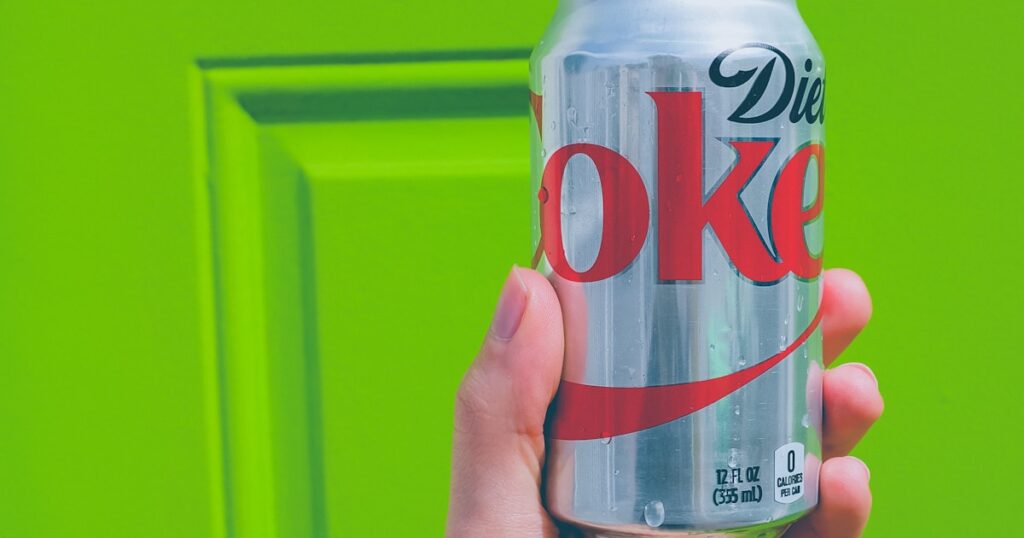
For decades, low-calorie sweeteners have been marketed as a guilt-free swap for sugar — a way to enjoy soda, yogurt, and protein bars without the metabolic baggage. But a growing body of research suggests the trade-off may not be as clean as it sounds. In one of the most striking studies to date, scientists tracking nearly 13,000 adults over eight years found that high consumption of certain artificial sweeteners was associated with a 62% faster rate of cognitive decline — equivalent to roughly 1.6 years of additional brain aging.
The findings, published in Neurology in 2025 by researchers at the University of São Paulo, are pushing scientists, regulators, and consumers to take a closer look at what these compounds may be doing to the brain.
What the research found
The Brazilian Longitudinal Study of Adult Health (ELSA-Brasil) followed 12,772 civil servants with an average age of 52. Participants logged their food and beverage intake at the start, and researchers then measured changes in memory, verbal fluency, and executive function over an eight-year period.
People in the highest third of artificial sweetener intake — averaging around 191 mg per day, roughly the amount in a single can of diet soda — showed cognitive decline that was about 62% faster than those who consumed the least. Decline in verbal fluency, the ability to retrieve words on demand, was 110% faster in heavy consumers. The associations were strongest in adults under 60 and in people with diabetes, a group already at elevated risk for cognitive impairment.
Earlier work points in a similar direction. A 2017 study in Stroke reported that adults who drank one or more artificially sweetened beverages per day had nearly three times the risk of stroke and dementia compared with those who drank less than one per week. And in 2023, the World Health Organization released a conditional guideline advising against the use of non-sugar sweeteners for weight control, citing potential long-term harms.
Which sweeteners are involved
The 2025 study examined seven low- and no-calorie sweeteners commonly found in processed foods, beverages, and tabletop packets:
- Aspartame — diet sodas, sugar-free gum, yogurt
- Saccharin — Sweet’N Low, some beverages
- Acesulfame-K — diet drinks, baked goods, protein powders
- Erythritol — keto products, stevia blends, “natural” sweeteners
- Xylitol — sugar-free gum, mints, dental products
- Sorbitol — sugar-free candy, syrups, some medications
- Tagatose — newer low-calorie sweetener in functional foods
Notably, the study did not find the same association for stevia (steviol glycosides) or monk fruit extract, both of which come from plants rather than synthesis or sugar-alcohol processing. That distinction is preliminary and needs replication, but it may matter for people trying to make practical swaps.
How sweeteners might affect the brain
The mechanisms are still being mapped, but researchers have several working hypotheses.
Gut microbiome disruption
A 2022 trial in Cell showed that saccharin and sucralose altered the composition and function of gut bacteria in healthy adults within just two weeks, with downstream effects on blood sugar regulation. Because the gut–brain axis influences inflammation, mood, and cognition, microbiome shifts are a plausible pathway by which sweeteners could affect long-term neurological health.
Cardiovascular and metabolic stress
Erythritol drew separate attention in a 2023 Nature Medicine study that linked higher blood levels to elevated risk of heart attack and stroke. Vascular damage is one of the most consistent contributors to cognitive decline and dementia, so anything that quietly raises cardiovascular risk also raises brain risk.
Direct neurochemical effects
Animal studies suggest that some sweeteners may cross the blood–brain barrier and interact with neurotransmitter systems involved in appetite, reward, and memory. Whether the doses humans actually consume are enough to produce these effects remains an open question.
Who’s most at risk
The 2025 study found the strongest cognitive effects in two groups: adults under 60 and people living with diabetes. That’s significant, because diabetic patients are precisely the population most likely to use artificial sweeteners as a sugar replacement. It also suggests that midlife may be a particularly sensitive window — a period when small, repeated exposures could accumulate before symptoms appear.
It’s important to be precise about what the data show. These are observational findings, which means they identify associations rather than prove cause and effect. People who consume more diet beverages may also have other habits — higher ultra-processed food intake, lower physical activity, more chronic stress — that independently affect brain health. Researchers adjusted for many of these factors, but residual confounding can’t be ruled out.
Practical steps to reduce intake
For anyone wanting to dial back exposure while the science continues to evolve, a few practical changes go a long way.
- Check the ingredient list, not just the calorie count. “Sugar-free,” “diet,” “light,” and “zero” almost always signal artificial sweeteners. They turn up in unexpected places — flavored waters, salad dressings, chewable vitamins, and protein bars.
- Phase out one diet beverage at a time. Sparkling water with a squeeze of citrus, unsweetened iced tea, or infused water can take the place of diet soda without spiking sugar intake.
- Be cautious with “natural” sugar substitutes too. Erythritol and xylitol are often marketed as wholesome but appear in the same research that flagged the synthetic sweeteners.
- If sweetness is essential, small amounts of real sugar, honey, or maple syrup may carry fewer unknowns than chronic exposure to high-intensity sweeteners — though excess sugar carries its own well-documented risks for metabolic and brain health.
What this doesn’t mean
An occasional diet soda is not going to cause dementia, and panicking over a single ingredient misses the larger pattern that matters for cognitive aging: cardiovascular fitness, sleep quality, blood-sugar control, social engagement, and a diet rich in whole foods. Those factors, supported by decades of evidence from cohorts like the National Institute on Aging, do far more to protect the brain than avoiding any single compound.
Still, when a class of additives consumed daily by hundreds of millions of people shows a consistent signal across multiple large studies, it’s worth paying attention. Future trials will need to disentangle which sweeteners matter most, at which doses, and for whom — but the prudent move for now is to treat them as something to minimize rather than maximize.
Disclosure: This content is for informational purposes only and is not medical advice. Always consult a qualified healthcare provider before making changes to your health regimen.