
When sudden gastrointestinal distress strikes after a meal, most people suspect a 24-hour stomach bug or mild food poisoning. But when watery diarrhea, intense fatigue, and stomach cramps drag on for weeks — often seeming to resolve before returning with renewed force — the culprit may not be a common virus or bacterium. Instead, it may be cyclosporiasis, an intestinal infection caused by the microscopic protozoan parasite Cyclospora cayetanensis.
Every summer and early autumn, North American public health agencies track recurring multi-state outbreaks of cyclosporiasis linked to fresh culinary produce. An analysis published in JAMA in August 2026 underscored how these seasonal surges expose vulnerabilities in foodborne surveillance and clinical diagnosis. Because routine stool tests frequently miss this single-celled parasite, understanding how Cyclospora spreads, its clinical presentation, and evidence-based medical treatments is critical for anyone experiencing persistent digestive symptoms.
What Is Cyclospora and How Does It Infect the Body?
Cyclospora cayetanensis is a protozoan parasite that invades the epithelial cells of the human small intestine. Once ingested, it disrupts the mucosal lining of the jejunum, blunting intestinal villi and impairing fluid absorption. This triggers profuse, watery diarrhea.
A distinctive biological feature of Cyclospora is its environmental lifecycle. Unlike foodborne bacteria such as Salmonella, freshly passed Cyclospora oocysts are unsporulated and non-infectious. According to clinical guidance from the Centers for Disease Control and Prevention (CDC) in the CDC Yellow Book, oocysts require days to weeks in warm, humid environmental conditions outside a host to sporulate and develop infectious potential.
Because of this maturation requirement, direct person-to-person transmission is virtually nonexistent. You cannot contract cyclosporiasis simply by sharing living spaces with an infected person. Instead, transmission occurs via the fecal-oral route through produce or water contaminated at the agricultural source — typically through irrigation water or farm-level runoff.
High-Risk Foods and the Produce Connection
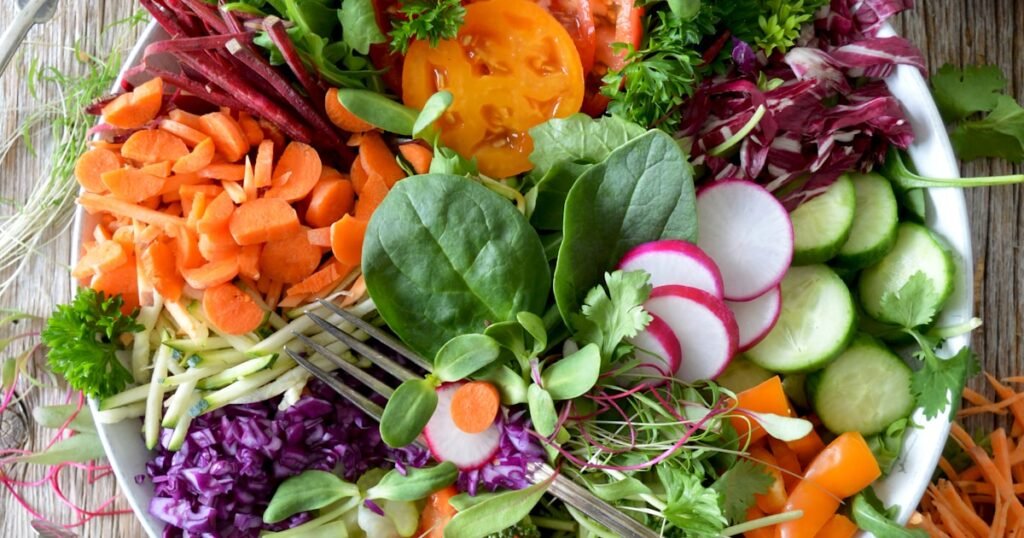
Surveillance reports by the U.S. Food and Drug Administration (FDA) and state health departments consistently identify raw, unpeeled produce as the primary source of outbreaks. Frequently implicated foods include:
- Fresh herbs: Cilantro, fresh basil, and parsley, whose textured leaves easily trap microscopic oocysts.
- Soft berries: Fresh blackberries, raspberries, and strawberries.
- Leafy greens: Mesclun mixes, romaine, and pre-packaged salad blends.
- Edible pod vegetables: Snow peas and sugar snap peas.
Because these items are eaten raw, they bypass the cooking heat that neutralizes parasites. While supporting gut health and the microbiome with whole plant foods is a core wellness principle, seasonal awareness of produce handling remains equally vital.
Recognizing the Symptoms: Why Cyclosporiasis Stands Out
The incubation period averages roughly one week, typically ranging from 2 to 14 days after exposure. This delayed onset often obscures the dietary source, as patients rarely associate current symptoms with a salad eaten over a week earlier.
Once active, symptoms differ markedly from short-lived viral gastroenteritis:
- Profuse watery diarrhea: Often explosive and frequent, persisting far longer than standard food poisoning.
- Severe, persistent fatigue: Disproportionate physical exhaustion is a hallmark complaint.
- Relapsing-remitting course: Symptoms often fluctuate, easing for a few days before returning abruptly.
- Appetite and weight loss: Prolonged malabsorption frequently leads to noticeable weight loss.
- Abdominal bloating and cramps: Marked distension and pain often resemble severe trapped gas and bloating.
- Low-grade nausea: Often accompanied by general malaise and mild fever.
Without treatment, symptoms can persist for several weeks to well over a month. In some individuals, post-infectious bowel sensitivity can linger for months after clearing the parasite.
The Diagnostic Hurdle: Why Routine Stool Tests Fail
A primary challenge with cyclosporiasis is diagnostic delay. When evaluating persistent diarrhea, primary care providers routinely order standard stool bacterial cultures. Because Cyclospora is a protozoan parasite rather than a bacterium, standard cultures come back negative, frequently leading to misdiagnoses of irritable bowel syndrome.
Accurate identification requires specialized testing:
- Targeted Ova and Parasite (O&P) Exam: Clinicians must explicitly request Cyclospora evaluation. Laboratories use modified acid-fast staining or ultraviolet epifluorescence microscopy, which causes oocyst walls to autofluoresce.
- Multiplex GI PCR Panels: Modern gastrointestinal molecular assays detect Cyclospora DNA directly, offering high sensitivity even when oocyst shedding is low.
Evidence-Based Medical Treatment
Broad-spectrum antibiotics frequently used for traveler’s diarrhea — including ciprofloxacin and azithromycin — have proven largely ineffective against Cyclospora. Clinical trials and CDC guidelines designate trimethoprim-sulfamethoxazole (TMP-SMX, commonly Bactrim or Septra) as the established first-line treatment.
A standard 7- to 10-day oral course typically halts diarrhea and clears oocysts rapidly. For individuals with documented sulfa allergies, physicians may consider alternative options such as nitazoxanide, although studies indicate lower eradication rates. Supporting hydration with electrolyte-rich fluids and nourishing foods that bolster immune health defenses is vital during recovery.
Food Safety and Prevention
Many people assume washing produce with tap water or vinegar rinses removes parasites. However, Cyclospora oocysts possess a rugged cell wall resistant to chlorine rinses and routine household washes. While rinsing helps dislodge surface dirt, it cannot guarantee complete parasite removal.
Health agencies advise these protective measures:
- Cook thoroughly: Heating produce to 140°F (60°C) reliably destroys oocysts.
- Freeze when practical: Freezing produce to -4°F (-20°C) for at least 48 hours inactivates the parasite.
- Follow recalls: Monitor FDA notices regarding recalled salad mixes or fresh herb shipments during outbreak seasons.
- Maintain kitchen hygiene: Wash hands thoroughly for 20 seconds, sanitize prep surfaces, and refrigerate cut greens promptly below 40°F (4°C).
If you experience watery diarrhea lasting more than a few days alongside pronounced fatigue, consult a physician promptly. Mentioning recent raw produce consumption and requesting targeted testing can ensure timely recovery.
Disclosure: This content is for informational purposes only and is not medical advice. Always consult a qualified healthcare provider before making changes to your health regimen.