
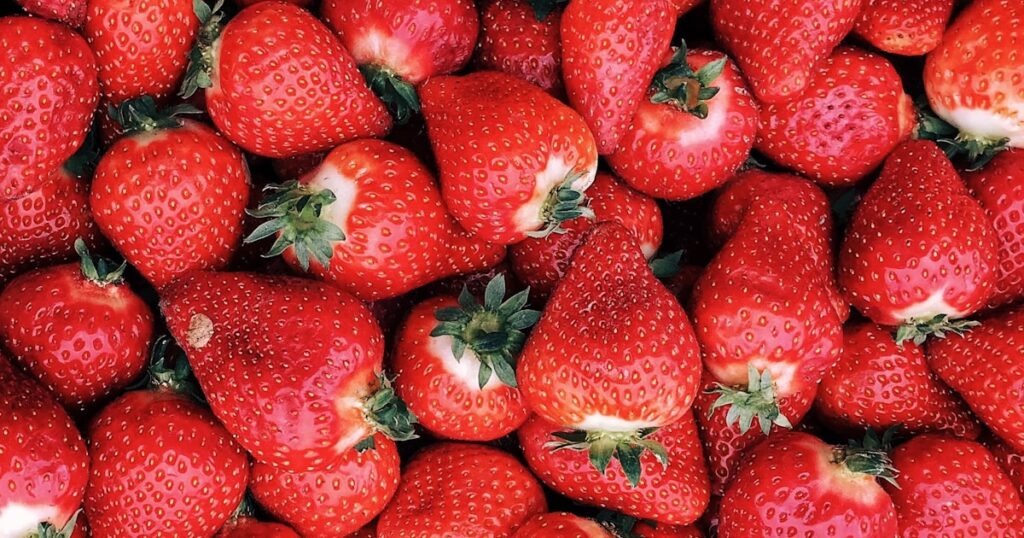
Few natural compounds have generated as much excitement in longevity research as fisetin, a plant flavonoid concentrated in strawberries. Once overshadowed by its better-known cousin quercetin, fisetin is now the subject of human clinical trials at the Mayo Clinic exploring whether it can slow biological aging by clearing out worn-out cells. The early laboratory data is striking, but how much should you read into it?
What Is Fisetin?
Fisetin is a flavonol, a subclass of flavonoid antioxidants. It is found in small amounts in many fruits and vegetables, but strawberries are by far the richest dietary source. According to the U.S. Department of Agriculture flavonoid database, strawberries contain roughly 160 micrograms of fisetin per gram, far more than apples, persimmons, grapes, onions, or cucumbers, which are the next-best sources.
The compound is structurally similar to quercetin and shares several of its bioactive properties — including antioxidant, anti-inflammatory, and neuroprotective effects observed in preclinical studies published in journals such as Antioxidants & Redox Signaling and Biochemical Pharmacology. What pushed fisetin into the spotlight was a 2018 study suggesting it might do something more unusual: selectively kill aged, dysfunctional cells that accumulate in the body over time.
The Senolytic Hypothesis
As we age, some cells stop dividing but refuse to die. These so-called senescent cells linger in tissues and secrete inflammatory signals — a phenomenon known as the senescence-associated secretory phenotype, or SASP. Research from the National Institute on Aging and the Mayo Clinic has linked senescent cell accumulation to chronic inflammation, age-related decline, and conditions including osteoarthritis, Alzheimer’s disease, and frailty.
Drugs that selectively eliminate these cells are called senolytics. In a widely cited 2018 paper published in EBioMedicine, researchers led by James Kirkland at the Mayo Clinic screened 10 flavonoids and reported that fisetin was the most potent at killing senescent cells in culture. When older mice were given fisetin orally, the researchers observed reduced markers of senescence in multiple tissues and an extension of median and maximum lifespan. The findings sparked widespread interest and several follow-up investigations.
What Human Trials Are Underway
Animal results do not always translate, which is why human trials matter. The Mayo Clinic and collaborators have launched several small clinical studies registered on ClinicalTrials.gov to test high-dose fisetin in conditions where senescent cells may play a role, including frailty in older adults, post-COVID symptoms, chronic kidney disease, and bone loss after menopause. Most of these trials use a brief, intermittent dosing schedule — for example, two consecutive days per month — rather than continuous supplementation, mirroring how senolytics are being studied with other compounds.
As of 2026, results from these early-phase studies remain preliminary, and the largest trials have not yet reported peer-reviewed outcomes. The U.S. Food and Drug Administration has not approved fisetin to treat any condition.
Other Effects Researchers Are Studying
Beyond the senolytic question, fisetin has been examined in laboratory and small clinical studies for several other potential effects:
- Brain aging. Studies in mouse models of Alzheimer’s disease, published in The Journal of Nutrition and Aging Cell, have reported that fisetin improved memory performance and reduced markers of neuroinflammation. Whether similar effects occur in humans is not yet established.
- Inflammation. Laboratory work suggests fisetin can inhibit inflammatory signaling pathways such as NF-kB and reduce pro-inflammatory cytokines, according to reviews in Pharmacological Research.
- Metabolic health. Animal studies indicate fisetin may improve insulin sensitivity and reduce oxidative stress in diabetic models. Human evidence here is sparse.
- Cancer biology. Preclinical research has reported that fisetin can interfere with cancer-cell growth pathways in culture. These findings are early and have not been confirmed in clinical cancer trials.
Food Sources and Supplements
The dietary intake of fisetin is small — even people who eat strawberries regularly consume only a few milligrams per day. The doses used in animal and clinical research are dramatically higher, often in the range of 100 to 500 milligrams or more, sometimes given in short bursts.
Fisetin supplements are widely sold, frequently combined with phospholipids or oils to improve absorption, because fisetin on its own has low oral bioavailability. The supplement industry is not subject to the same pre-market safety and efficacy review as prescription drugs, and product quality, dose accuracy, and contamination can vary. Research suggests that whole-food sources of polyphenols may behave differently in the body than isolated high-dose extracts, and the long-term safety of senolytic-dose fisetin in humans has not been established.
Possible Risks and Interactions
At dietary doses, fisetin in foods such as strawberries is considered safe for most people. At supplement doses, less is known. Reported concerns from preclinical and early clinical work include:
- Possible interactions with medications metabolized by the liver’s cytochrome P450 enzymes, including some blood thinners and chemotherapies.
- Theoretical effects on blood-sugar control, which may matter for people taking diabetes medication.
- Limited data on use during pregnancy, breastfeeding, or in children.
Anyone considering a fisetin supplement should consult a healthcare provider, particularly if they take prescription medications, have a chronic illness, or are undergoing cancer treatment.
How to Think About It
Fisetin sits at an interesting moment in longevity science. The mechanism — clearing senescent cells — is biologically plausible and supported by strong preclinical evidence. But the leap from mouse studies to a clinically proven anti-aging therapy is large, and the human trials needed to make that leap are still underway.
For now, the most defensible takeaway is this: eating strawberries and other flavonoid-rich fruits fits within dietary patterns that are well-supported for healthy aging, such as the Mediterranean diet, without relying on any single compound. High-dose fisetin supplementation should be approached as experimental, ideally under medical guidance and with attention to the evolving clinical-trial evidence.
Disclosure: This content is for informational purposes only and is not medical advice. Always consult a qualified healthcare provider before making changes to your health regimen.