
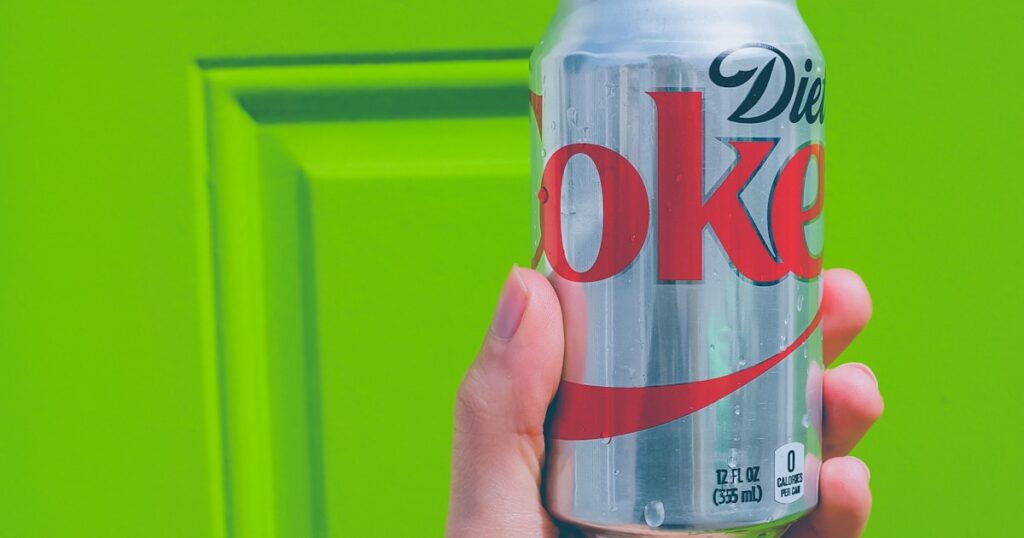
Sugar substitutes promise sweetness without the calories, but mounting evidence suggests the trade-off may not be neutral. A large prospective study published in Neurology in 2024 found that adults with the highest intake of certain low- and no-calorie sweeteners showed significantly faster declines in memory and thinking skills — equivalent, in some measures, to roughly 1.6 extra years of cognitive aging compared with people who consumed the least.
The finding has reignited a long-running debate about whether artificial sweeteners — found in diet sodas, protein bars, flavored yogurts, sugar-free gum, and countless “low-sugar” packaged foods — are truly a healthier alternative to sugar, or whether they carry their own metabolic and neurological costs.
What the new research found
Researchers at the University of São Paulo followed nearly 13,000 adults (average age 52) for an average of eight years as part of the ELSA-Brasil study. Participants completed detailed food-frequency questionnaires at enrollment and underwent repeated standardized cognitive testing covering memory, verbal fluency, and executive function.
After adjusting for age, education, cardiovascular risk factors, and total calorie intake, those in the highest tertile of sweetener consumption showed a 62% faster decline in global cognition than those in the lowest tertile. The association was strongest in adults under 60 and in people with diabetes — two groups often advised to substitute sugar with non-nutritive sweeteners.
The seven sweeteners linked to faster decline
- Aspartame — used in many diet sodas, sugar-free desserts, and tabletop packets
- Saccharin — one of the oldest commercial sweeteners, found in some baked goods and beverages
- Acesulfame-K — frequently blended with other sweeteners in soft drinks and protein products
- Erythritol — a sugar alcohol used in keto-friendly foods and stevia blends
- Xylitol — common in sugar-free gum, mints, and dental products
- Sorbitol — used in sugar-free candies and some pharmaceuticals
- Tagatose — a newer sweetener marketed for diabetic-friendly products
Notably, stevia — a plant-derived sweetener extracted from Stevia rebaudiana leaves — was not associated with cognitive decline in this analysis. The researchers caution this does not establish stevia as protective, only that the natural-origin extract behaved differently in their dataset.
Why might sweeteners affect the brain?
Artificial sweeteners do not raise blood glucose, which has long been considered an advantage. But emerging research points to several mechanisms by which they may still alter brain function and metabolic health.
1. Disruption of the gut microbiome
A landmark 2014 study in Nature showed that non-caloric sweeteners can shift the composition of gut bacteria within days, contributing to glucose intolerance in some people. More recent work, including a 2022 trial in Cell, confirmed that aspartame, saccharin, sucralose, and stevia each produced distinct, person-specific microbiome changes. Because the gut–brain axis influences inflammation, neurotransmitter production, and mood regulation, disturbing microbial balance may have downstream cognitive effects.
2. Cerebrovascular risk
A 2017 study in Stroke reported that daily diet soda consumption was associated with a roughly three-fold higher risk of ischemic stroke and dementia over a 10-year follow-up. While the study could not prove causation, the association persisted after adjusting for diet quality and physical activity.
3. Reward and craving pathways
Imaging studies suggest that intensely sweet, non-caloric tastes activate reward circuits in the brain without delivering the expected energy, which may blunt the brain’s natural satiety signaling over time. Researchers hypothesize this mismatch could promote overeating and metabolic dysregulation — both established risk factors for late-life cognitive decline.
What major health agencies are saying
In 2023, the World Health Organization issued a conditional recommendation against using non-sugar sweeteners for weight control, citing evidence that long-term use does not reduce body fat and may be associated with increased risk of type 2 diabetes and cardiovascular disease. The FDA continues to classify aspartame, sucralose, saccharin, and acesulfame-K as “generally recognized as safe” within established daily intake limits, while the International Agency for Research on Cancer in 2023 reclassified aspartame as “possibly carcinogenic to humans” (Group 2B) based on limited evidence.
These positions are not contradictory so much as reflective of how scientific uncertainty is handled differently by regulators, advisory bodies, and research agencies. For consumers, the takeaway is that “safe” within an acute-toxicity framework does not necessarily mean “neutral” over decades of daily use.
How to interpret the findings for everyday choices
Observational studies cannot prove that sweeteners cause cognitive decline — only that the two are linked. People who drink many diet sodas may also share other habits, such as higher intake of ultra-processed foods, that independently affect brain health. Nonetheless, the consistency of findings across cardiovascular, metabolic, and now neurological outcomes is striking.
Reasonable, evidence-informed approaches discussed in the nutrition literature include:
- Treat sweeteners as occasional, not daily. The strongest associations in the Brazilian study involved heavy users consuming the equivalent of multiple diet beverages per day.
- Prioritize whole-food sweetness. Fruit, dates, and a modest amount of honey or maple syrup deliver sweetness alongside fiber, polyphenols, and micronutrients.
- Read labels beyond “sugar-free.” Many “no added sugar” products rely on blends of sugar alcohols and synthetic sweeteners that add up across a day.
- Pair sweetener reduction with overall diet quality. A Mediterranean-style or MIND diet — emphasizing leafy greens, berries, nuts, fish, and olive oil — has the strongest evidence base for preserving cognition with age.
The bigger picture for brain health
Roughly 40% of dementia cases are estimated to be linked to modifiable risk factors, according to the 2024 Lancet Commission report. Hearing loss, untreated hypertension, physical inactivity, and air pollution top the list, but diet quality threads through nearly all of them. Reducing reliance on heavily processed sweetened products — sugar or sugar-substitute alike — fits squarely within that prevention framework.
Research continues, including randomized trials examining whether switching from diet beverages to unsweetened alternatives improves cognitive trajectories. Until clearer evidence arrives, a cautious, food-first approach remains broadly supported by nutrition science.
Disclosure: This content is for informational purposes only and is not medical advice. Always consult a qualified healthcare provider before making changes to your health regimen.