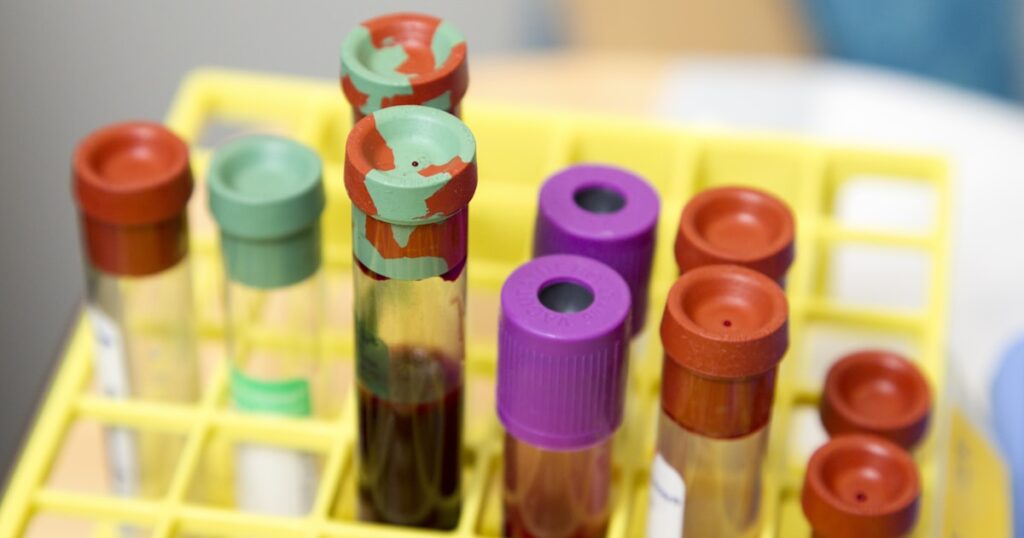
Imagine walking into a clinic, giving a single blood sample, and learning whether you may have cancer in four different organs — all for less than the cost of a restaurant meal. That scenario may be closer to reality than many people realize.
Researchers at UCLA have developed a multi-cancer early detection (MCED) test called MethylScan that can simultaneously screen for liver, lung, ovarian, and stomach cancers from one blood draw, at an estimated cost of under $20 per sample. The findings were published in April 2026 in the Proceedings of the National Academy of Sciences (PNAS) and have drawn significant attention from the oncology community.
Why Multi-Cancer Screening Matters
Cancer remains one of the leading causes of death globally, yet many of the most lethal types — including ovarian and liver cancer — are often detected only at advanced stages when treatment options narrow considerably. Current screening protocols are largely cancer-specific: mammograms for breast cancer, colonoscopies for colorectal cancer, low-dose CT scans for lung cancer in high-risk smokers. There is no single, widely accessible tool that screens across multiple cancer types at once.
This is the gap that MCED tests aim to fill. Research suggests that detecting cancer early — before symptoms appear — dramatically improves survival outcomes. A multi-cancer approach could help catch malignancies in people who would otherwise receive no targeted screening at all.
How MethylScan Works
MethylScan analyzes DNA methylation patterns in cell-free DNA (cfDNA) — fragments of DNA that circulate in the bloodstream after being shed by cells, including tumor cells. When cancer develops, it alters the chemical tags (methyl groups) attached to DNA in characteristic ways. By reading these methylation signatures, the test can infer not just whether cancer-associated DNA is present, but also which tissue it likely originated from.
A key technical innovation in MethylScan is a filtering method that eliminates 80–90% of cfDNA originating from normal blood cells, according to lead researcher Dr. Jasmine Zhou. This dramatically improves the signal-to-noise ratio and reduces the amount of genetic sequencing required — which is a major reason the test can be produced so cheaply.
What the Study Found
The UCLA team tested MethylScan on 1,061 participants, including individuals with confirmed cancer diagnoses and healthy controls. Key results included:
- Overall cancer detection rate: approximately 63%
- Early-stage cancer detection rate: approximately 55%
- Specificity: 98% — meaning the false-positive rate is very low
- Detection in high-risk liver cancer patients: approximately 80%
- Accuracy distinguishing liver disease types: approximately 85%
The 98% specificity figure is particularly meaningful. A test with low specificity generates large numbers of false positives — people told they may have cancer when they do not — which can trigger unnecessary biopsies, anxiety, and healthcare costs. MethylScan’s low false-positive rate addresses a longstanding criticism of early-stage cancer screening tools.
The test also demonstrated the ability to identify the tissue of origin, meaning it can point toward which organ may be involved — a critical feature for guiding follow-up diagnostics.
The Cost Advantage
Cost has been a significant barrier to wider MCED adoption. Some existing multi-cancer detection tests on the market carry price tags in the hundreds to thousands of dollars, making them inaccessible to most patients without specific insurance coverage. At under $20 per sample, MethylScan — if validated in larger trials — could represent a paradigm shift in how population-wide cancer screening is approached.
Studies indicate that affordable, scalable early detection tools could substantially reduce cancer mortality by shifting diagnoses toward earlier, more treatable stages of disease.
What Remains to Be Done
Researchers and clinicians are clear that MethylScan is not yet ready for clinical use. The study, while promising, was conducted in a research setting with a specific participant population. Larger, prospective, real-world trials are required before any regulatory body would consider approval.
A 55% detection rate for early-stage cancers, while notable for a $20 blood test, still means nearly half of early cancers would be missed. Researchers acknowledge this limitation and frame MethylScan as a complement to — not a replacement for — existing screening modalities. The goal is to expand the screening net, not to create a singular diagnostic oracle.
Additionally, the four cancers currently targeted represent an initial validation set. Future iterations of the test may expand to detect a broader range of malignancies.
The Bigger Picture: The Race for Liquid Biopsy
MethylScan is part of a broader wave of liquid biopsy research — blood-based tests that analyze tumor-derived DNA, RNA, proteins, or other biomarkers without requiring tissue sampling. Several companies and academic institutions are racing to develop and validate MCED tests, recognizing both the clinical need and the enormous market potential.
The National Cancer Institute has described MCED tests as one of the most promising frontiers in cancer research. If prospective trials confirm accuracy rates seen in early studies, routine annual blood draws could one day screen for dozens of cancer types simultaneously — transforming oncology from a reactive specialty into a proactive one.
What This Means for You Today
MethylScan is not yet available to patients and should not be expected in clinical settings in the near term. However, the research underscores the importance of staying current with approved cancer screening guidelines for your age group and risk profile.
If you have a family history of liver, lung, ovarian, or stomach cancer, or other elevated risk factors, consult your healthcare provider about the screening options currently available to you. Emerging research suggests that the landscape of cancer detection is changing rapidly — but today, evidence-based screening guidelines remain the standard of care.
As studies like this one accumulate, the vision of a single, low-cost, multi-cancer blood screen inching closer to reality is both scientifically exciting and a reminder of how far cancer detection has already come.
Disclosure: This content is for informational purposes only and is not medical advice. Always consult a qualified healthcare provider before making changes to your health regimen.