
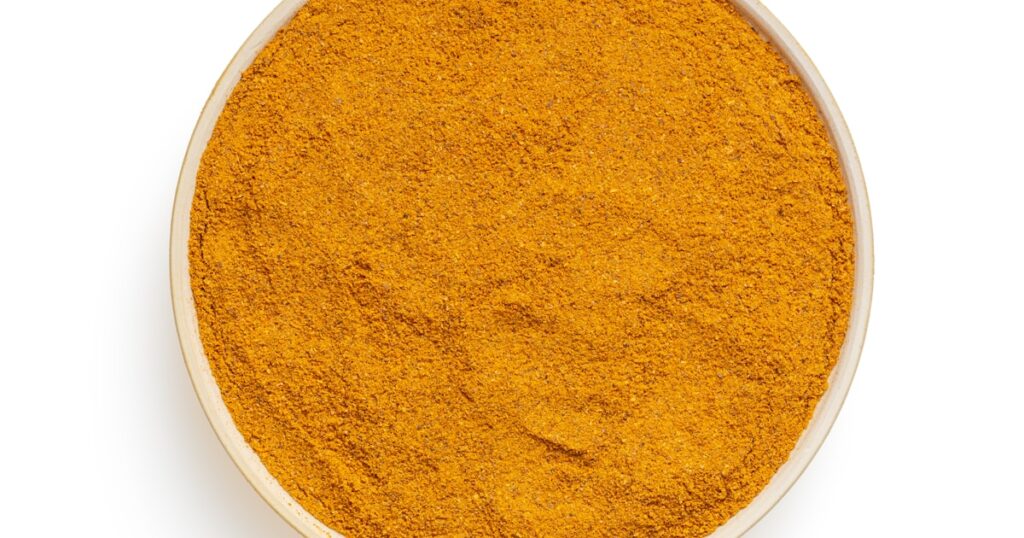
Turmeric has spent centuries in Indian kitchens and Ayurvedic apothecaries, but in the past two decades it has also become one of the most studied plants in modern medicine. The interest comes down to a single yellow pigment: curcumin, the active polyphenol in turmeric root that gives curry its color and powers most of the spice’s medicinal reputation. Researchers have now run hundreds of clinical trials on curcumin, and the picture that emerges is more interesting than either the hype or the skepticism would suggest.
Here is what current evidence actually shows about turmeric and curcumin, where the science is strongest, and what to know before reaching for a supplement.
What Is Curcumin?
Curcumin is one of three curcuminoids found in the rhizome (underground stem) of Curcuma longa. By weight, dried turmeric root is only about 2 to 5 percent curcuminoids, which is why most modern studies use concentrated extracts rather than the spice itself. According to the U.S. National Center for Complementary and Integrative Health (NCCIH), turmeric has been used for thousands of years for digestive, skin, joint, and respiratory complaints, and curcumin is the compound most often credited for those effects.
In the lab, curcumin behaves as both an anti-inflammatory and an antioxidant. It interferes with signaling molecules involved in chronic inflammation, including NF-kB and several inflammatory cytokines. Whether those laboratory effects translate to meaningful results in people depends on the condition, the dose, and the formulation.
Inflammation: The Core of the Claims
Most of curcumin’s benefits trace back to its effect on inflammation. A 2022 meta-analysis published in Frontiers in Immunology pooled randomized trials and found that curcumin supplementation significantly lowered C-reactive protein (CRP) and interleukin-6, two of the most widely used blood markers of systemic inflammation. The effect was larger in people with elevated baseline inflammation, which fits the broader pattern across natural anti-inflammatory compounds: bigger benefits when there is more inflammation to reduce.
That said, lowering a biomarker is not the same as preventing or treating disease. The clinical question is whether those changes show up as better symptoms or outcomes, and that is where the evidence varies by condition.
Joint Pain and Osteoarthritis
Knee osteoarthritis is where curcumin has the most consistent clinical track record. A 2016 systematic review in the Journal of Medicinal Food identified randomized trials in which curcumin extract reduced osteoarthritis pain scores comparably to nonsteroidal anti-inflammatory drugs (NSAIDs) like ibuprofen, but with fewer gastrointestinal side effects. Several more recent trials, including head-to-head comparisons with diclofenac and acetaminophen, have reached similar conclusions over 8 to 12 weeks of use.
The catch is that the studies use standardized extracts, often combined with absorption enhancers, not raw turmeric powder. Sprinkling turmeric on food is unlikely to deliver pharmacologically meaningful doses for joint pain.
Brain Health and Mood
Curcumin has drawn interest from neuroscientists because it can cross the blood-brain barrier and, in animal models, reduces the buildup of amyloid plaques associated with Alzheimer’s disease. Human data are more preliminary. A widely cited 2018 trial in the American Journal of Geriatric Psychiatry reported that a bioavailable curcumin formulation improved memory and attention in older adults without dementia over 18 months, with PET-scan signals suggesting reduced plaque and tangle accumulation in memory-related brain regions. Larger trials are still needed before curcumin can be considered an evidence-based intervention for cognitive decline.
For mood, several small randomized trials have found that curcumin produced antidepressant effects similar to standard medications in people with mild to moderate depression, particularly when used as an add-on to therapy. A 2020 meta-analysis in the Journal of Affective Disorders concluded that curcumin produced “clinically meaningful” improvements in depressive symptoms, though the authors noted that trials were short and sample sizes modest.
Heart and Metabolic Health
Curcumin’s anti-inflammatory and antioxidant activity also shows up in cardiometabolic studies. Pooled analyses report modest but consistent reductions in LDL cholesterol and triglycerides, improvements in endothelial function (the responsiveness of blood vessel linings), and small drops in fasting blood glucose and hemoglobin A1c in people with type 2 diabetes or metabolic syndrome. The effects are not a substitute for first-line treatments, but they suggest curcumin behaves as a useful adjunct in a broader lifestyle and medication strategy.
How Much, and What About Absorption?
Curcumin has a well-known weakness: on its own, it is poorly absorbed and rapidly metabolized. A landmark 1998 study in Planta Medica by Shoba and colleagues found that adding piperine, the active compound in black pepper, increased curcumin’s bioavailability by about 2,000 percent. Modern supplements now use a range of approaches to address absorption, including phytosome complexes (such as curcumin bound to phospholipids), nanoparticle formulations, and combinations with oils or piperine.
Doses in clinical trials typically range from 500 to 2,000 mg of curcumin extract per day, often split into two doses with food. Higher doses are not necessarily better and increase the risk of digestive side effects. Whole turmeric in cooking provides much smaller amounts, but it is still a reasonable everyday addition to meals, especially when paired with black pepper and a source of fat.
Safety, Side Effects, and Who Should Be Cautious
For most healthy adults, curcumin supplements appear well tolerated at typical doses. The most common side effects are mild and digestive: nausea, bloating, or loose stools. The U.S. National Institutes of Health’s LiverTox database and the FDA, however, have flagged rare but real cases of liver injury linked to high-dose curcumin supplements, especially highly bioavailable formulations. The cases are uncommon, but they argue for using the lowest effective dose and avoiding products with vague or unverified labels.
Curcumin can also interact with medications. It may enhance the effects of blood thinners such as warfarin, increase the risk of low blood sugar in people on diabetes drugs, and interfere with iron absorption. People who are pregnant or breastfeeding, those with gallbladder disease, and anyone scheduled for surgery should talk to a clinician before starting a curcumin supplement.
Bottom Line
Turmeric and curcumin are not a cure-all, but they are not just kitchen folklore either. The strongest evidence supports curcumin extract as a complementary option for chronic inflammation, mild to moderate knee osteoarthritis, and certain metabolic and mood symptoms, particularly alongside standard care. The most useful framing may be the oldest one: turmeric is a daily kitchen ingredient with measurable biological activity, and curcumin is a concentrated extract worth treating like any other supplement, with attention to dose, quality, and individual context.
Disclosure: This content is for informational purposes only and is not medical advice. Always consult a qualified healthcare provider before making changes to your health regimen.