For decades, oncologists have faced a difficult question every time a woman is diagnosed with the most common form of early-stage breast cancer: does she truly need chemotherapy, or would the drugs cause more harm than benefit? On May 6, 2026, the U.S. Food and Drug Administration (FDA) authorized a new tool that uses artificial intelligence to help answer that question — the first AI test of its kind cleared for breast cancer treatment decisions.
The test, called ArteraAI Breast, was developed by the digital pathology company Artera. According to the company’s announcement, it is “the first and only FDA-cleared digital pathology-based risk stratification tool in breast cancer.” For the millions of women diagnosed each year with hormone-driven breast cancer, the clearance marks a meaningful step toward more personalized, less aggressive care.
What the AI Test Actually Does
ArteraAI Breast is designed for patients with early-stage, hormone receptor-positive (HR+), HER2-negative breast cancer. This subtype accounts for roughly 70% of all breast cancers, according to the American Cancer Society, and is often treated with a combination of surgery, hormone-blocking therapy, and — in many cases — chemotherapy.
The challenge is that not every woman with HR+/HER2- disease benefits equally from chemo. Some have tumors that respond well to hormone therapy alone, while others have a genuinely high risk of metastasis. Distinguishing between the two has historically relied on tumor size, lymph node status, and gene-expression panels.
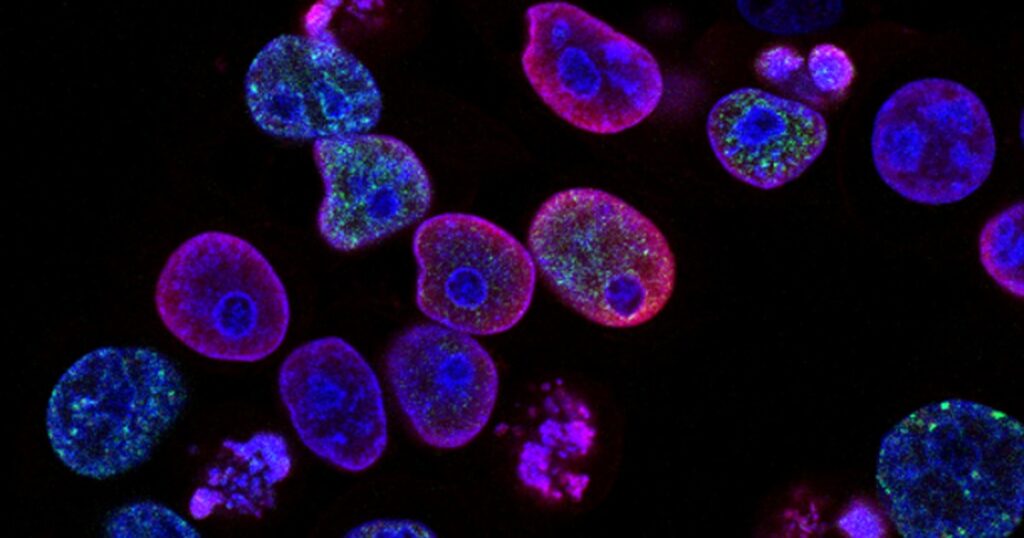
ArteraAI takes a different path. It is a multimodal AI model, meaning it combines clinical data with high-resolution digital images of a patient’s tumor biopsy. The algorithm analyzes microscopic patterns in the pathology slide that human eyes cannot reliably quantify — the architecture of the cells, how they are arranged, and how they interact with surrounding tissue. It then produces a risk score predicting the likelihood of distant metastasis over time.
For low-risk patients, that score may support a decision to skip chemotherapy and rely on hormone-blocking therapy instead. For higher-risk patients, it can reinforce the case for adding chemotherapy to their treatment plan.
Why This Matters for Patients
Chemotherapy saves lives, but it is not a benign treatment. Common side effects include fatigue, hair loss, nausea, neuropathy, and a higher risk of infection. Long-term, chemotherapy is associated with cardiotoxicity, cognitive changes sometimes called “chemo brain,” and an elevated risk of secondary cancers.
Research published in major oncology journals has consistently suggested that a meaningful share of women with HR+/HER2- breast cancer receive chemotherapy without measurable benefit. The landmark TAILORx trial, published in the New England Journal of Medicine in 2018, found that roughly 70% of women with intermediate-risk, node-negative HR+/HER2- breast cancer could safely skip chemotherapy when guided by a 21-gene expression test.
ArteraAI extends that idea using image-based AI rather than gene expression. Because pathology slides are already produced for nearly every breast cancer diagnosis, the test fits into existing clinical workflows without requiring an additional tissue sample.
How the FDA Reviewed the Tool
According to coverage in MedTech Dive, the FDA cleared ArteraAI Breast through its de novo authorization pathway, which is reserved for novel devices that are low-to-moderate risk but lack a comparable predicate already on the market. As part of that decision, the agency established a new product code category for AI-powered digital pathology risk-stratification tools — laying the regulatory groundwork for similar tests to follow.
De novo authorization requires manufacturers to submit clinical evidence demonstrating that the test is both analytically valid (it produces consistent results) and clinically meaningful (the results help guide care). Artera’s submission included data showing the AI score independently predicted metastasis risk across multiple patient cohorts.
What It Doesn’t Do
It is important to be clear about what an FDA-cleared decision-support tool is and is not. ArteraAI Breast does not diagnose cancer, replace a pathologist, or make treatment decisions on its own. The American Society of Clinical Oncology has long emphasized that risk-stratification tools are most useful when interpreted by an experienced oncology team alongside a patient’s full clinical picture, including age, comorbidities, and personal preferences.
The test is also not yet validated for every breast cancer subtype. Women with HER2-positive disease, triple-negative breast cancer, or metastatic disease at diagnosis fall outside its current indication.
The Bigger Picture: AI in Cancer Care
The clearance is part of a broader wave of AI tools entering oncology. The National Cancer Institute has highlighted machine-learning models for cancer detection, prognosis, and drug discovery as a research priority for the next decade. Earlier this year, NIH-funded researchers published a model that forecasts cancer survival from single-cell tumor analysis — another example of pattern recognition succeeding where traditional staging falls short.
Experts caution that AI in medicine is only as good as the data it is trained on. Models trained on narrow patient populations can underperform — or worse, mislead — when applied to underrepresented groups. Ongoing post-market surveillance, transparent reporting of performance across demographic subgroups, and regular re-validation are essential to making these tools genuinely safer than the status quo.
Questions to Ask Your Care Team
If you or a loved one is navigating a recent breast cancer diagnosis, this clearance does not change the standard of care overnight. The tool will need time to roll out in pathology labs, and oncologists will integrate it into shared decision-making conversations gradually.
Patients with HR+/HER2- early-stage breast cancer may want to ask their oncology team:
- Does my tumor type qualify for AI-based risk stratification testing?
- How would the result fit alongside other tests like Oncotype DX or MammaPrint?
- What are the realistic benefits and risks of chemotherapy in my specific case?
- What does my long-term recurrence risk look like with hormone therapy alone?
For now, ArteraAI Breast represents something patients have wanted for years: a clearer, data-driven way to weigh the real trade-offs of cancer treatment. As more AI-based diagnostic tools move through the FDA’s de novo pathway, the hope is that women will increasingly be spared treatments they never needed — and offered the ones that genuinely improve their odds.
Disclosure: This content is for informational purposes only and is not medical advice. Always consult a qualified healthcare provider before making changes to your health regimen.